
https://www.youtube.com/watch?v=0LHRTgngzfo&list=RD0LHRTgngzfo&start_radio=1
(personal underlines)

Here we go again. Every year, with the inevitability of death, taxes and political regicide, the BBC’s Eurovision coverage reminds viewers that most pop music produced in European countries is of a terrible standard, and that our country’s banal offering is never going to inspire any patriotic fervour. This year, British hopes are pinned on an electropop act called Look Mum No Computer, with a truly terrible sub-Depeche Mode song called ‘Eins Zwei Drei’ that contains the lyrics ‘Counting in English doesn’t cut the mustard / So sick of munching roly-poly with custard.’ Don’t call me Cassandra, but I suspect that Look Mum No Computer (real name: Sam Battle) will be receiving rather fewer than drei punkte from many of the international judges.
However, Eurovision is what it is. Since it began in 1956, it has produced the odd brilliant song (most notably ‘Waterloo’ and Sandie Shaw’s ‘Puppet On A String’), along with a huge amount of dross, much of which is forgotten immediately after it is performed. And every year, there are the usual political and nationalistic shenanigans, more pronounced than ever this time round, as several countries including Ireland, Spain and the Netherlands are refusing to participate in the contest in protest at Israel’s inclusion in the event. Similar uproar arose last year and ultimately resulted in the Israeli singer Yuval Raphael – a survivor of the October 7 attacks – having protesters attempt to storm the stage as she performed her song ‘Brand New Day’.
In the event, Raphael came second and won the public vote. Some have suggested that the reason why she didn’t win was because of anti-Israeli bloc voting by juries; others surmised that the reason why she came top in the public poll was because of Israeli government social media pressure for their citizens and sympathisers to vote for her. In either case, it was clear proof that, for all Graham Norton’s arch eye-rolling and sarcastic one-liners when he presents the BBC’s coverage, the event is far from a bit of harmless fun, and that there is a real sense of aggression lurking beneath the kitsch and autotuned pop songs.
This aggression is increasingly channelled by many of the most fervent viewers of Eurovision, who spend every year preparing for their very own slice of organised fun. If you can be bothered to check social media, you will see a certain kind of person assembling with like-minded friends in large groups to watch Eurovision, dressed up in costumes and armed with brightly coloured drinks and snacks, and determined to laugh along as to how CRAZY! and ZANY! and MAD! it all is. That many of these people are the kind of characters who will use hashtags like #PrayForGaza and think that Zack Polanski is the answer to all our prayers will give you a fairly good idea of their politics. It is a fair bet that some of the most fervent will themselves be ostentatiously boycotting this year’s event – or, perhaps, taking a leaf from the Irish national broadcaster RTÉ’s book and instead watching the famous Father Ted Eurovision episode, ‘A Song For Europe’.
That episode, incidentally, featured two Neil Hannon-penned songs, ‘The Miracle Is Mine’ and, of course, ‘My Lovely Horse’, which are infinitely better than virtually anything that you will hear this year. They are supposed to be funny, and they are, but they’re also superbly crafted songs: unsurprising, really, given that Hannon is one of the greatest living songwriters, who also, casually, produced another Eurovision send-up, ‘Trafalgar’, that skilfully parodied all of the silliness and excess of the novelty pop on display. (‘Oh-oh-oh Trafalgar, I’m looking through the wrong eye at ya’, etc.)
In a sense, Eurovision is far beyond parody. So ridiculous and so absurd are many of the acts who come forth to do their patriotic duty, only to hear the predictable clang of ‘nul points’, that they bring shame on their families and their names. But it is the spectacle of the braying Eurovision fanatics, who live for this Saturday night absurdity, that transforms the whole affair from being simply an inconsequential piece of silliness into something more unsettling.
At best, you want to say to these people that they should find a more worthwhile means of channelling their desire to have a good time. But as their increasingly anti-Semitic and anti-Israeli chants drown out the plasticised choruses, it is not hard to feel that Eurovision’s most committed supporters are no longer the kind of people who you would want to sing from the same songbook as, even if the lyrics are as banal as our entry’s: ‘I’ve always been a fan of aviation / I’m jumpin’ on a plane to another nation.’ Not to Israel, probably.
(personal underlines.
LBC - there in UK,...as here...)

The football season lurches into its final week, with Arsenal, the newly-crowned champions of England, trying to win their first Champions League trophy. But there will be no summer-long reprieve from the round ball game. A World Cup begins next month in North America, and dozy folk who fail to pay attention may hear a knock on the door at midnight. Only 48 teams this time. What fun.
If there’s a World Cup you can bet your last farthing there will be a ‘conversation’ about ‘national identity’. The BBC have already cleared their throats, with a four-hour adaptation of James Graham’s stage play, Dear England. That’s three hours too many.
Meanwhile David Baddiel, the comedian-philosopher, has launched a six-parter on Radio 4 called Sixty Years of Hurt – 60 years, that is, since England won their only World Cup. Baddiel co-wrote a song for the 1996 European Championship which measured ‘30 years of hurt’, so only one word requires revision.
Fingers on the buzzers, therefore, to spot the jargon and self-congratulatory twaddle favoured by the faux-patriots of television. In the realm of replica shirts and twirling scarves the game is always ‘beautiful’, and ‘Ingerland’ always ‘we’.
The zealotry occasionally bolsters spirits. In 2010, when Germany caned England’s ‘golden generation’ 4-1 in Bloemfontein, the BBC commentator Guy Mowbray sounded close to tears. ‘How many Germans’, he wailed, bottom lip a-quiver, ‘would get in the England team?’ The answer, flung back from thousands of living rooms, was brutal. ‘All 11, matey’.
Graham’s bloated drama, quarried from his 2023 play at the National Theatre, is unconvincing. The writer, as ever, tries to cram a quart of sentimentality into a pint pot in his search for ‘significance’, with predictable consequences. Viewers learn a lot about him, and nothing worth knowing about England.
In a drama about identity, personal and national, it might be a good idea to get the small details right, but Graham’s grasp of football is loose. In another TV drama, Sherwood, one of his characters refers to ‘Notts’ Forest. Oh dear. In Nottingham, the city closest to Graham’s hometown, that error is unpardonable.
He presents Gareth Southgate, England’s manager, as a secular saint, and the players as urban warriors with hearts of gold. The real Southgate is indeed impressive, and some of his players did come from rough streets, but the dialogue, with its ‘caring and sharing’, is adolescent mush.
Graham’s heart may be in the right place, even if his pen is not. Clever-clogs Baddiel, who gets a nosebleed every time he steps north of Dollis Hill, has never yet met a cliché that did him harm. So our national anthem is ‘a hymn to power’, our country ‘fractured and disparate’, and our suspicion of non-conformists as English as Dandelion and Burdock.
Even Association Football, drawn up in 1863, represents ‘another form of imperialism’. A fairly benign form, he must admit, because the world has not withheld its gratitude.
Roping in a few tame ‘historians’, he rolled out that old favourite, ‘class barriers’. One of those historians pronounced Bobby Moore, the victorious captain in 1966, guilty of ‘deference’ for wiping his hands before he accepted the trophy from the Queen. To most people it was good manners.
To borrow a phrase from Karl Kraus, Baddiel has nothing to say and is determined to say it. He knows little of England, and even less of football. Anybody who believes that Rodney Marsh, a Seventies boulevardier, should have been the first name on the team-sheet has an imperfect understanding of what constitutes a team. Mavericks don’t win tournaments.
Despite that glorious July day in 1966 England has always been a middle-ranking football nation. The game this country helped to create has been defined in its highest moments in continental Europe and South America.
If we’re being truthful England has produced two outstanding teams (1966 and 1970), and six great players: Tom Finney, Stanley Matthews, Gordon Banks, Bobby Charlton, Jimmy Greaves and Moore. There can be no comparison with Germany, Italy, Argentina and Brazil.
But the chest-beating is about to begin, and don’t be surprised if our Prime Minister pulls on a beautifully laundered replica shirt to send the valiant lads into battle. There will be talk of ‘pride’ and ‘passion’. There always is, in other lands, and other sports. Football is one game among many.
England has given so much of value to the world, and sport is part of that bequest. The great team games, and most of the individual ones, are English in origin. But football should never speak for England, no matter how fiercely metropolitan comedians press the case.

(sublinhados pessoais)
Andam pelas televisões numerosos especialistas de lagares de azeite a explicar-nos, com a solenidade do disparate, que o JCPOA (Acordo Obama) era uma obra-prima diplomática, que Obama foi um visionário e que Trump só o denunciou por despeito.
A profecia seguinte, embrulhada no mesmo papel de fantasia desejante, é que Trump será obrigado a assinar um acordo pior.
No fundo, é como se o problema tivesse sido a vaidade de Trump, e não a natureza profundamente defeituosa de um acordo que dava ao Irão dinheiro, legitimidade, tempo e um caminho calendarizado para regressar ao objectivo de eliminar a “entidade sionista”.
Ora isto é mero catecismo e dos maus. É dizer que qualquer acordo é melhor do que nenhum, desde que seja assinado por pessoas suficientemente elegantes, sorridentes e engravatadas.
A verdade é que o Acordo Obama não desmontou a ameaça. Limitou-se a etiquetá-la, adiá-la e, de caminho, financiou o regime. Voaram, literalmente, aviões dos EUA para Teerão, carregados de notas de dólar.
Há acordos maus porque não funcionam. E há acordos perigosos, que são maus precisamente porque funcionam durante algum tempo. O Acordo Obama, assinado em 2015, é o exemplo perfeito. Funcionava suficientemente bem para apaziguar ansiedades, animar comentadores engajados e permitir a Obama vender ao mundo uma vitória diplomática que justificasse à posteriori o esperançoso Nobel da Paz. O único problema é que era apenas uma bomba com retardador e não resolvia o problema nuclear iraniano.
Convém começar pelo óbvio: o acordo limitou temporariamente o programa nuclear iraniano. Reduziu o stock de urânio enriquecido, travou o enriquecimento acima de 3,67%, limitou o Irão a cerca de 300 kg de urânio enriquecido e restringiu durante dez anos a operação de centrifugadoras em Natanz. A instalação subterrânea de Fordow, construída sub-repticiamente, não podia enriquecer urânio durante 15 anos. Tudo isto estava lá escrito, tudo isto era largamente duvidoso, e tudo isto comprava tempo.
Mas comprar tempo não é o mesmo que resolver uma ameaça. Na melhor das hipóteses é prudência, na pior é táctica de avestruz.
Os defensores do Acordo diziam que a peça aumentava o tempo necessário para produzir material físsil suficiente para uma arma e Obama vendeu-o exactamente nesses termos. Só que aumentar o tempo necessário para chegar à bomba, não eliminava a capacidade, não desmontava a infraestrutura, não punha fim à ambição, não resolvia o problema. Empurrava-o para a frente com a barriga, como um mau pai que deixa as dívidas para os filhos pagarem.
Em troca de quê? De legitimidade internacional, alívio financeiro e reconhecimento de que o Irão, depois de anos de clandestinidade, mentiras e instalações subterrâneas, tinha afinal direito a manter uma indústria de enriquecimento. Um excelente prémio para um infractor reincidente.
Aceitar o enriquecimento iraniano era pois primeiro pecado do Acordo Obama. Durante anos, a posição ocidental era que um regime que escondeu Natanz, construiu Fordow debaixo de uma montanha, enganou a AIEA e patrocinou milícias e terrorismo por todo o lado, não precisava de enriquecer urânio em casa para “fins pacíficos”. Para isso podia comprar combustível nuclear no mercado internacional, como fazem países muito menos suspeitos e muito mais civilizados. Mas Obama abandonou essa linha sensata e prudente, na ânsia de declarar sucesso.
O segundo pecado eram as cláusulas de caducidade. Algumas restrições expiravam ao fim de 10 anos, outras ao fim de 15, 20 ou 25. Isto significava que o Irão, cumprindo o acordo, podia esperar. Esperar é uma especialidade revolucionária moderna. Ao regime iraniano bastava sobreviver a várias administrações americanas, a várias eleições europeias e à capacidade inesgotável do Ocidente para confundir tinta num papel com realidade estratégica. No ano 15, o problema regressaria, com certificado legal de baptismo.
O terceiro pecado era Fordow. Uma impressionante e dispendiosa instalação nuclear subterrânea e fortificada, construída secretamente, é mais uma declaração geológica de má-fé do que um atestado de boas intenções. O Acordo Obama assobiou para o ar perante Fordow, sugeriu apenas que fosse convertida e que não enriquecesse urânio durante 15 anos. É como encontrar uma oficina clandestina de bombas e permitir que continue aberta, desde que por enquanto fabrique apenas carvão para grelhadores.
PUB • CONTINUE A LER A SEGUIR
O quarto pecado foi deixar os mísseis balísticos fora do acordo. A Resolução 2231 da ONU “apelava” ao Irão para não desenvolver actividades relacionadas com mísseis balísticos concebidos para poder transportar armas nucleares. Não proibia, não criava uma arquitectura de sanção automática, não tratava o vector como parte essencial da ameaça.
O Irão andava e anda a ameaçar continuamente a “entidade sionista” de erradicação. Ora uma arma nuclear não é apenas urânio enriquecido. É também ogiva, sistema de detonação, cadeia de comando e vector de entrega. Separar a bomba do míssil é como dizer: “calma, eles só estão a construir a espingarda, a bala não interessa”
O quinto pecado foi ignorar Hezbollah, Hamas, Houthis, milícias xiitas iraquianas, Síria, Guarda Revolucionária, terrorismo, subversão regional. Ora o problema iraniano nunca foi apenas nuclear. O nuclear era a apólice de seguro de um projecto imperial revolucionário e o derradeiro meio para destruir o inimigo cósmico. Ainda há dias ( 25 de Maio), na mensagem para o Hajj, Khamenei (ou seja a Guarda Revolucionária) disse que o “regime sionista”, o “tumor canceroso de Israel” não existirá dentro de 15 anos.
Aliviar sanções a este fantástico projecto e fingir que o resto é apenas business as usual, é confundir ingenuidade com estupidez.
O sexto pecado foi o passado militar nuclear iraniano. Em 2015, a AIEA concluiu que o Irão desenvolvera actividades relevantes para um explosivo nuclear antes de 2003, com algumas actividades depois disso, embora dissesse não ter indicações suficientes de actividades relevantes depois de 2009. Esta formulação generosa permitiu fechar politicamente o dossiê das possíveis dimensões militares, ou seja, pôs-se uma tampa em cima da panela e fez-se de conta que não havia nada lá dentro.
Depois veio o arquivo nuclear iraniano revelado por Israel em 2018. 55 mil páginas e ficheiros, desviados do Irão pela Mossad, a prova insofismável de que o Irão mentiu descaradamente sobre o seu programa militar nuclear. Ou seja o projecto Ahmad era mais avançado e organizado do que se sabia, e visava expressamente obter armas nucleares e vectores para as lançar para os alvos. Ficou pois provado que o Acordo Obama fora assinado com um regime que mentira sobre a própria natureza do problema que o Acordo pretendia resolver. A diplomacia baseada na confiança pode ser aceitável com a Noruega, mas com a República Islâmica é humor negro.
Há ainda o sétimo pecado: as inspecções. A AIEA tinha, no papel um regime de verificação robusto. Mas a questão é mais fina. O Acordo não dava acesso imediato, irrestrito e automático a qualquer local militar suspeito. Havia procedimentos, prazos, mediações, acesso gerido, avisos com quase 30 dias de antecedência Quando lá chegava a AIEA podia contar zeros sacos de farinha, mas era incapaz de saber se, na sala ao lado, se tinha escrito a receita do bolo. E, para não escavacar o Acordo, a AIEA ia suavizando os relatórios, a pedido dos ouvidos sensíveis que não queriam ouvir más notícias.
Trump fez bem em denunciar o acordo? Fez.
Não porque o JCPOA fosse totalmente inútil, mas porque aceitava como solução aquilo que era apenas uma pausa; aceitava como moderação aquilo que era táctica; aceitava como verificação aquilo que não resolvia a intenção; normalizava uma anomalia intolerável.
A Casa Branca alegou que o Acordo Obama apenas adiava a capacidade iraniana, preservava investigação e desenvolvimento nuclear e não protegia adequadamente os interesses de segurança dos EUA. E era tudo verdade!
Pode discutir-se a execução posterior, a falta de uma estratégia diplomática alternativa robusta, o choque com os europeus e os efeitos da retirada unilateral. Tudo isso merece debate, mas a crítica central estava certa: o acordo dava ao Irão um caminho legal e internacionalmente tolerado para se tornar um Estado nuclear com expressas intenções genocidas.
Os resultados prováveis do Acordo Obama, se tivesse sobrevivido intacto, seriam:
Primeiro, o regime iraniano ganharia tempo e dinheiro. Segundo, preservaria conhecimento, pessoal, instalações e orgulho tecnológico. Terceiro, continuaria a desenvolver mísseis e a reforçar os proxies. Quarto, esperaria pela caducidade das restrições mais pesadas. Quinto, regressaria rapidamente ao nuclear já não como pária apanhado em mentira, mas como signatário de um acordo internacional que simplesmente chegara ao seu termo.
Nessa altura, os mesmos que em 2015 disseram que não havia alternativa, diriam outra vez que não há alternativa. A grande vantagem dos maus acordos é que criam as condições para que o próximo mau acordo pareça inevitável.
O Acordo Obama foi vendido como uma ponte para a paz, mas era um mero pontão para a próxima chantagem. Comprou tempo ao vendedor errado e pagou-o caro.
Trump percebeu que quando um regime revolucionário aceita adiar uma ambição estratégica, significa apenas que olhou para o relógio e concluiu que podia encanar a perna à rã.
O Ocidente, como sempre, confundiu a perfídia iraniana com moderação. Continua a fazê-lo. É um erro e, em política internacional, os erros não costumam explodir no dia em que são cometidos, mas quando os seus autores já estão a escrever memórias, a dar palestras e a explicar, com superioridade moral, que a culpa foi da realidade.
Se, como profetizam os especialistas dos lagares de azeite com a habitual acidez anti-americana, Trump se prepara agora para assinar um JCPOA com bigode postiço, trunfa laranja e mais fanfarra, o erro será monumental. Não porque o Acordo Obama fosse fantástico, mas porque será difícil explicar ao mundo que se rasgou um mau acordo para, anos depois, regressar com uma cópia pior, apenas carimbada com outro logótipo e vendida como triunfo pessoal. Se isso se concretizar, eu serei o primeiro a grelhá-lo, porque será uma rendição com maquilhagem e uma capitulação em letras grandes. O Irão não precisa de mais tempo. Já teve décadas. Nós é que parecemos precisar sempre de mais uma oportunidade para não aprender nada.
(sublinhados pessoais)
O silêncio de Pedro Passos Coelho nunca foi uma ausência, foi sempre uma incubação. Na política portuguesa, onde a sobrevivência mediática exige uma tagarelice diária e uma opinião sobre tudo, a recusa em participar no ruído transformou o antigo primeiro-ministro num fenómeno psicológico invulgar. Sempre que ele decide falar, o sistema não se limita a ouvi-lo. O sistema sofre um espasmo. As suas intervenções recentes confirmam esta regra, operando menos como declarações políticas e mais como testes de esforço à maturidade institucional do país.
Para compreendermos a coreografia de pânico que se instala, na esquerda que o diaboliza e na direita que se encolhe, é preciso ignorar a espuma dos comentadores e atentar na mecânica do poder. O atual ecossistema político, ancorado num centro que gere equilíbrios de curto prazo, especializou-se na administração de paliativos. Discute-se a décima da taxa, o bónus mensal, o cheque setorial. É uma política de anestesia. Quando Passos Coelho surge, traz consigo algo que o atual debate excluiu por conveniência: a gravidade.
O que ele afirmou recentemente não é uma provocação reacionária, como a oposição logo tentou enquadrar, mas uma constatação factual que a governação contemporânea tenta desesperadamente ocultar. Portugal atingiu um paradoxo histórico: consolidou uma estabilidade contabilística superficial enquanto presencia o colapso estrutural das funções soberanas. Temos impostos de padrão nórdico a financiar serviços públicos de matriz balcânica.
Neste contexto, o discurso de Passos Coelho rasga a ilusão de ótica do “contas certas”. Ele expõe que um Estado não é forte apenas porque não entra em bancarrota técnica, é falhado se, cobrando o máximo histórico em receita fiscal, se revela incapaz de garantir saúde, justiça ou segurança sem empurrar o cidadão para o setor privado. A ferida que o antigo líder do PSD toca não é a da austeridade passada, mas a da mediocridade presente.
A reação partidária às suas palavras é, por isso, um compêndio de psicanálise. Para o Partido Socialista, Passos Coelho é o espantalho utilitário. A esquerda portuguesa há muito que deixou de ter um projeto transformador para o futuro, substituindo-o pela evocação perpétua do “tempo da Troika”. Ao agitar o fantasma de Passos, a esquerda tenta mobilizar o eleitorado pelo medo, camuflando a sua própria incapacidade de reformar o país ao longo da última década.
Mas é na direita que o sintoma se revela mais severo. O atual PSD sofre de um trauma freudiano em relação ao seu antigo líder. A liderança atual procura uma quadratura do círculo impossível: quer os votos da moderação, mas teme a fuga do eleitorado para as margens radicais, quer ser vista como reformista, mas foge de qualquer rutura que incomode corporações ou lóbis instalados. Quando Passos fala, com a clareza cortante de quem já não tem eleições para ganhar, expõe a timidez tática dos seus sucessores. Ele lembra a uma direita complexada que a moderação não significa a aceitação pacífica dos dogmas do adversário.
Não há, no discurso de Passos Coelho, o apelo de um populista que promete soluções fáceis para problemas complexos, o oxigénio que alimenta o radicalismo atual. Pelo contrário, há a secura de quem avisa que a fuga à realidade tem sempre um preço diferido. É exatamente por isso que as suas palavras geram tanta rejeição no espaço público. O eleitorado português, habituado a ser tratado como um menor de idade pelo Estado-providência, detesta ser confrontado com a exigência da responsabilidade.
A tragédia do debate público português não é Pedro Passos Coelho continuar a ensombrar a política nacional, é o facto de, dez anos após a sua saída do poder, o país não ter produzido um único líder político, à esquerda ou à direita, com a mesma densidade conceptual e a mesma imunidade ao ciclo noticioso de 24 horas.
Aqueles que analisam as suas declarações à procura de sinais táticos para uma candidatura presidencial ou uma conspiração interna no PSD não estão apenas errados, estão a medir um problema tectónico com uma régua de plástico. Passos Coelho não é um candidato em espera. É um espelho. E a imagem que a classe política e o país lá veem refletida, a de um país viciado no declínio suave, assustado com o seu próprio futuro, é insuportável de encarar.
(personal underlines)
Is it worth going to university? Since 1999, when Tony Blair declared higher education the answer to all society’s problems, it has been a question Britain prefers not to ask. Every September, hundreds of thousands of school leavers pack their bags, wait for their maintenance loan to arrive and head off to their chosen city to drink, go clubbing and occasionally hand in an essay.
Does this well-trodden path leave young people better off? It’s almost impossible to find out, not because the information isn’t available but because the government won’t let us see it. The Department for Education knows very well what graduates can expect when they start looking for work. The Longitudinal Education Outcomes (LEO) database, produced by the DfE, contains extensive data on labour market outcomes for students leaving university. It is described as ‘a unique source of information, with the potential to provide transformative insight and evidence on the long-term employment outcomes and educational pathways of around 39 million individuals’.
So you might think it would be quite helpful if the rest of us could see it. But access to LEO data is only granted to ‘approved third party researchers’. If you want to know what’s happening in our universities, you must be a ‘full credited UK statistics authority’ able to prove ‘clear public benefit’ for your work. So no chance for students hoping to avoid wasting 50 grand.
Lawrence Newport, whose campaign group Looking For Growth is calling for the release of LEO data, thinks that ‘the government is hiding behind easily resolved concerns about anonymity’ and allowing universities to sell a bad product. As a former academic at Royal Holloway, University of London, he adds that he has been ‘directly told by people in admissions at universities that entry requirements are a marketing scam’ used to foster an air of credibility for courses with no corresponding academic rigour. Sadly, as with data about education outcomes, there is almost no information on the A-level grades attained by successful university applicants.
Newport also fears that many universities hide behind the fact league tables count further study alongside employment, allowing them to funnel students through endless education (and debt) to avoid facing the real-world irrelevance of what they’ve learned.
Despite the government’s obstinance, there are ways of identifying universities and courses that are failing students. While it’s hard to get detailed data, some third-party sites such as Discover University, which uses LEO data, paint a grim picture.
Unsurprisingly, creative students have the worst post-university outcomes. The average graduate with a BA in professional acting at Drama Studio London isn’t even breaking minimum wage, with earnings of £18,500 three years on; only 30 per cent are using skills they learnt during their studies. Meanwhile, those who study film production at Southampton Solent University bring in just £24,000 on average 15 months after graduating.
Some universities seem to be actively harming students’ chances of success. An Institute for Fiscal Studies (IFS) and DfE report found that women graduating from the University of Bolton, now renamed the University of Greater Manchester, earn around 10 per cent less by the age of 29 than women who didn’t attend university at all. Further analysis from the IFS suggests that one in five students who go to university will earn less than their counterparts who didn’t.
Attending a Russell Group University provides no insurance against poor outcomes, either. Three years after completing a sociology degree at the University of Glasgow, the average graduate is earning just £23,000. Even the Oxbridge name won’t save you. Fine arts graduates from Oxford earn £26,000 15 months after leaving, while only 30 per cent of Anglo-Saxon, Norse and Celtic graduates from Cambridge are working 15 months after graduation.
These students are not paying a penny of their loan back each year because their income is below the threshold. In fact, only 32 per cent of the recent cohort who took out a loan will ever pay off the whole thing. The system was designed with the assumption that university would bring with it a ‘graduate premium’. In many cases, until a graduate earns £66,000 a year, the interest on their debt will outstrip payments made. Cumulatively, students owe a quarter of a trillion pounds to the Student Loan Company.
When a graduate’s media studies career leaves them pulling pints in the local pub, the debt they never pay off falls on the government’s books. It won’t be universities held financially liable, it will be the taxpayer.
(personal underlines)
LBC - "Rough times"; or "strange, very strange..."; or "now? Only now??"

In 2023, I wrote an article about the epidemic of bad behaviour plaguing British schools, blaming screen-obsessed kids and tuned-out parents for the rise in persistent low-level disruption since the pandemic. At the time, almost half of pupils said that they felt unsafe each week because of poor behaviour: a worrying but unsurprising statistic given the rise in permissive parenting styles means that behavioural boundaries are never properly established. Too many children never learn to properly respect teachers because their will always overrides the authority of the adults (or, dare I say it, adult) at home.
Three years on, and little seems to have changed; in fact, things have worsened. In 2024, a survey revealed that 84 per cent of teachers had been victims of physical or verbal abuse in the last 12 months, whilst one in five had been hit or punched by a pupil. In the academic year 2024-25, teachers handed out nearly a million suspensions – again, around a third of these were for physical or verbal assault – whilst more than 10,000 pupils were permanently excluded. Shockingly, nearly 2,000 children were suspended 10 times or more, which is a rise of 448 per cent since 2016-17.
What is particularly terrifying is how young some of these suspended pupils are. In the 2024-25 autumn term, over 7,000 children under the age of six were suspended. Nearly half of these suspensions were repeat incidents, which is a 64 per cent increase on the previous year. The number of primary school-aged children suspended six or more times in just one term is now the highest since records began, as is the number of primary school children being permanently expelled – a 23 per cent increase on last year. The number of primary school children expelled for physically assaulting adults is also now double what it was in 2022.
I am normally a proponent of the argument that we can only blame lockdowns for so long, but I think it’s important to remember that the children currently in Reception and Year 1 are Covid babies. Born during the pandemic, they have spent the majority of their lives umbilically tethered to screens (over a third will have had a tablet before they started school, whilst a quarter will already own their own smartphone). As a result, many are simply not ready for school.
An increasing number of children are starting school socially underdeveloped: unable to dress themselves or use the toilet properly; unused to eating at a table or holding cutlery; behind on gross motor skills like holding a pencil; and lacking the communication skills needed to be able to take part in lessons and – crucially – behave well.
A quarter of four- and five-year-olds are now not able to use basic language skills like being able to say their name or answer questions. Is it any surprise, then, that the number of five-year-olds being suspended is increasing year on year?
We know that school suspensions and exclusions can impact children for life: 90 per cent of children excluded from primary school will not pass GCSE Maths and English, whilst over 40 per cent of prisoners were permanently excluded from school. We also know that suspensions and exclusions are being cruel to be kind: teachers expending disproportionate amounts of time and energy on the disruptive minority also affects the life chances of the other pupils in the class, who do want to learn.
So what options do we have? Schools can tighten up discipline, as we have seen in super-strict academies like Michaela, but they need parents on board. Education starts at home, and too many parents, afraid to say no to their children or undertake a family digital detox, are still absolving themselves of responsibility. One option could be to follow our European counterparts and start formal schooling later, with a ‘kindergarten stage’ between the ages of 4 and 7, which would allow more emotionally and physically immature children to ‘catch up’ first. More focus on physical play-based learning (which has been lost as children spend less and less time exercising or being outside) would not only help behaviour and school attendance but could help to stem the overdiagnosis of special education needs, particularly amongst summer-born children.
Alternatively, as well as thinking about how we protect teenagers from the dangers of social media, the government could also consider how to protect toddlers and primary school children from the over-stimulating screen time that is frying their attention spans. If four-year-olds spend all their time at home watching short-form videos on an iPad then it is no surprise that they can’t sit still in a classroom environment: this doesn’t necessarily make them neurodivergent but sorely neglected. These digital pacifiers are undermining their ability to learn, and so are ruining their school experience before they have even started. Nothing is going to change until we do.
LBC - "Estranho! Muito estranho..."; ou "Tempos difíceis"; ou "Só agora é que viram?"
1.A democracia política não é um simples método aritmético de transformação dos votos em mandatos parlamentares. É muito mais exigente do que isso pois que a legitimidade democrática tem de passar outros testes. É que há outras fontes da legitimidade democrática. Claro está que as eleições livres são absolutamente incontornáveis mas a legitimidade que delas resulta deve prolongar-se através da escolha dos dirigentes por concurso.
É, aliás, isso que estava na mente dos primeiros teóricos modernos da democracia. Para Madison nos conservadores EUA e para Sieyès na França revolucionária a democracia não era a competição entre os programas partidários mas sim uma maneira de colocar nos postos dirigentes os homens que se revelassem mais sábios e competentes para tratar dos interesses comuns. A generalidade que presidia à sua actividade era a da razão, não apenas a da eleição. Se eles ressuscitassem e vissem que os partidos monopolizaram a democracia e a reduziram ao triste espectáculo da luta partidária, ficariam chocados. Que desilusão.
2.A selecção dos mais aptos faz-se por concurso público. Este e só este prolonga a escolha democrática e nela insere um elemento de racionalidade e competência que Max Weber já dizia característico da burocracia indispensável em todas as sociedades modernas, plurais e fragmentárias. O concurso permite a governação dos mais aptos. Esta realidade é absolutamente indiscutível.
Ora, é precisamente por isso que o regime democrático português abomina o concurso público. Quando timidamente o consagra para o acesso aos altos cargos administrativos, seja no estado, seja nos institutos públicos, seja nas entidades administrativas independentes, seja no sector empresarial do estado, logo o desvirtua e diminui. Pudera, percebe-se bem porquê.
Pessoalmente estou à vontade para falar nisto porque a minha profissão é a mais escrutinada e sujeita a mais concursos e dificílimas provas públicas perante júris implacáveis que há no nosso país. Começa pelo concurso para acesso a docente universitário e seguem-se as provas públicas de mestrado, de doutoramento e de agregação, tudo isto perpassado de concursos documentais. É preciso sofrer muito para lá chegar e dar provas e mais provas de sabedoria, e então em áreas como o direito, sem esquecer obviamente outras.
3.Mas voltemos aos concursos públicos para acesso ao estado (em sentido amplo). Neste especialíssimo país as coisas passam-se assim: casos há em que os dirigentes das entidades administrativas ditas «independentes», p. ex., são pura e simplesmente nomeados pelo Governo mas, para salvar as aparências, os curricula são sujeitos a uma avaliação prévia sem natureza vinculativa por uma entidade, a Comissão de Recrutamento e Selecção para a Administração Pública (CReSAP), dita também eufemisticamente «independente», (e digo eufemisticamente porque o seu presidente e vogais permanentes são obviamente nomeados pelo Governo) e também a uma audição (nem é avaliação: é apenas uma audição ) pela Assembleia da República. Claro está que o palavreado oficial diz que aquela entidade está protegida contra a governamentalização que é como quem diz, contra a partidarização. Tudo mentira, obviamente.
É evidente que os critérios de avaliação da tal CReSAP e da tal audição pela Assembleia da República são obviamente partidários e subordinados às maiorias eleitorais no primeiro caso porque a tal CReSAP é uma entidade governa mentalizada e no segundo porque a Assembleia é também um órgão de condução política para além de legislador. Escusado será dizer que os resultados da avaliação feita pela CReSAP e da audição pela Assembleia da República não são vinculativos para o Governo. A Assembleia da República, então, nem decide nada é apenas ouvida.
Noutros casos, como no dos gestores do vasto sector público empresarial, as coisas passam-se assim. O Governo define o «perfil» do gestor que quer, já a pensar em quem vai escolher e nomeia-o, precedendo um parecer não vinculativo da dita CReSAP. Coisa semelhante se passa com os dirigentes dos institutos públicos e dos directores gerais dos ministérios. O Governo nomeia quem quer precedendo parecer da mesma CReSAP com indicação dos 3 candidatos que melhores lhe parecerem para depois o Governo escolher quem quiser. Os presidentes indigitados dos institutos públicos ficam ainda sujeitos à tal audição prévia da Assembleia da República, sem natureza vinculativa, obviamente. Já perceberam? Conheço um caso em que numa determinada direcção geral do ministério da educação houve já mais de quinze nomeações em pouco mais de vinte anos, sendo que alguns dos nomeados, competentíssimos para o lugar, claro está, até eram médicos de profissão. É inaudito.
PUB • CONTINUE A LER A SEGUIR
Como se isto não bastasse, o regime da substituição, designadamente da temporária, dos membros daquelas entidades é manifestamente insuficiente. A coisa é de tal modo que até os membros da CReSAP reconhecem que aquele regime de substituição não assegura qualquer critério mínimo de imparcialidade e competência.
A CReSAP é uma entidade falhada e foi criada para precisamente não funcionar bem. Sem poder emitir pareceres vinculativos serve apenas para ratificar as escolhas já previamente feitas pelo Governo. Toda a gente sabe disso. É uma palhaçada. Faz-me lembrar (creio que) a primeira entidade criada neste país em princípios da década de oitenta do passado século para combater a corrupção, a chamada Alta Autoridade Anti-Corrupção, presidida por um militar nomeado pelo Governo. Ficou logo conhecida pela A! Ah! Ah!
4.E para terminar, claro está que os critérios racionais de gestão que permitem a fiscalização da actividade do gestor público e que ficarão definidos por contrato celebrado entre o Governo e o gestor são de tal maneira vagos que só em casos extremos possibilitam a demissão de qualquer gestor. Tudo está pensado para a sua total irresponsabilidade até porque, repare-se, se o Governo demite um gestor tem de dar a mão à palmatória ou seja, tem de admitir que escolheu mal de modo que o melhor é deixá-lo lá estar até terminar o mandato.
Tudo está pensado para que o estado e o sector público fiquem transformados numa coutada dos partidos que chegam à maioria, sozinhos ou em coligação. E tudo continuará a ser assim por muitas décadas porque os partidos que ocupam o poder não têm o menor interesse em alterar este estado de coisas, Têm é interesse em o perpetuar.
Estamos, portanto, bem servidos, pelos melhores, evidentemente. Que democracia é esta? Só me ocorre um nome: é atípica.
PUB • MAIS CONTEÚDO OBSERVADOR A SEGUIR

(sublinhados pessoais)
Espero que o Visto Prévio — que recusa menos de 1% dos contratos — seja absolvido pelo próprio Tribunal de Contas, que há muito identificou as verdadeiras causas dos desvios nas obras públicas.
O problema não está no Visto Prévio. Está na incapacidade estrutural de assegurar boa gestão do dinheiro público, qualidade dos projetos, controlo de custos e cumprimento de prazos.
O Visto Prévio limita-se, na essência, ao controlo preventivo da legalidade. Não avalia as melhores opções do investimento, a qualidade técnica dos projetos, a competência dos donos de obra ou a boa gestão da execução. A avaliação destas matérias é, no geral, tratada nas auditorias do Tribunal de Contas, que há anos produzem diagnósticos rigorosos e um conjunto de recomendações consistentes. O debate público, porém, insiste em soluções simplistas e ignora os problemas de fundo.
O exemplo mais evidente são os trabalhos a mais nas empreitadas, que incluem o designado “já agora”, pois podem atingir, legalmente, até 50% do valor do contrato sem estarem sujeitos a Visto Prévio. Até 2008 o limite era de 25%, mas o Código dos Contratos Públicos (CCP) duplicou o limite. Ora, uma obra, salvo raras exceções, só acumula mais de 10% ou 15% de trabalhos adicionais quando o dono de obra não sabe definir o que pretende ou quando o Projeto de Execução é apenas uma “vaga ideia”. Sem projetos de qualidade não há rigor na definição da obra nem do orçamento.
As causas dos desvios são conhecidas há muito:
1 Falta de competência técnica dos donos de obra pública
Muitas entidades são donos de obra apenas porque dispõem de verbas, mas não têm capacidade para definir programas, discutir soluções, contratar empreitadas ou gerir empreendimentos. Nas últimas décadas a administração pública central e autárquica perdeu quadros técnicos qualificados, nomeadamente engenheiros com experiência e com as competências exigidas ao dono de obra e outras nunca tiveram. As carreiras técnicas da administração pública não atraem engenheiros. pois estão classificados na chamada “vala comum” indiferenciada.
2 Desvalorização dos projetos
Os projetos são normalmente adjudicados pelo preço mais baixo, num contexto em que os membros dos júris receiam ficar sob suspeita se não escolherem a proposta mais barata. Projetos mal pagos tendem a ser projetos de pior qualidade. Até 2008 esteve em vigor a Portaria com as Instruções para o Cálculo dos honorários referentes aos projetos de obras públicas, o que favorecia outros critérios, que não o preço, para selecionar a melhor proposta. A Portaria de 1972 foi revogada e o CCP ajudou a desvalorizar a importância do projeto. Mas essa desvalorização não é apenas nos projetos de obras públicas, pois também é visível no setor imobiliário privado, onde a soma dos honorários dos projetos de arquitetura e engenharia vale menos de metade das comissões de mediação imobiliária.
Nada disto é novo. Em 2008, o Tribunal de Contas, na auditoria com o Relatório n.º 17/2009-AUDIT, identificou os problemas e as soluções. Em 2015, no Relatório n.º 01/2015, apresentou 27 recomendações e comunicou que cerca de metade não tinham sido aceites.
Entre as recomendações rejeitadas destaca-se a criação do Gestor do Empreendimento, precisamente a solução que poderia compensar parte das insuficiências técnicas dos donos de obra. O Tribunal defendia um responsável técnico dedicado, com competências claras, com a obrigação de apresentar um relatório final sobre a execução do empreendimento.
A figura do “Gestor do Procedimento” previsto no CCP foi uma oportunidade perdida, pois é uma função administrativa, sem competência técnica. Coloca-se um título mas esvazia-se o conteúdo.
Discutir as alterações propostas pelo Governo com os argumentos que têm sido divulgados só serve para atribuir ao “coitado” do Visto Prévio, uma missão que não lhe compete.

(personal underlines)
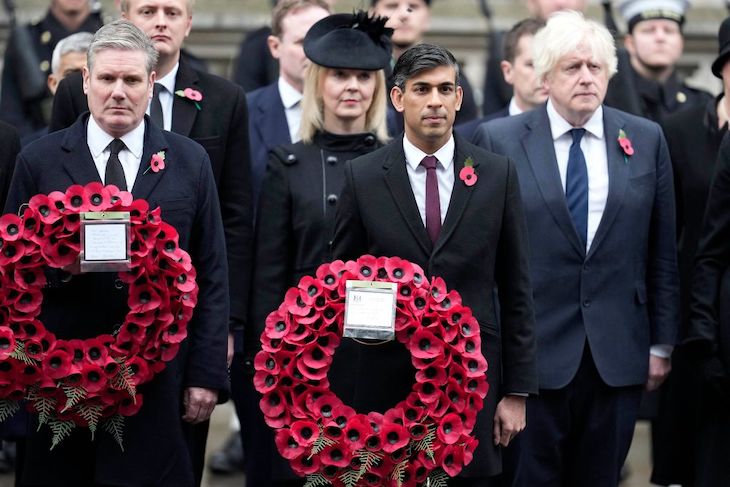
I wrote not all that long ago about this disconcerting situation we’re in where the only news story the Prime Minister seems capable of generating is a news story about the likelihood of his losing his job. Let’s just say, things haven’t exactly changed.
In the first week of January, his nibs thrilled the world by giving an exclusive interview to the BBC’s Laura Kuenssberg (and no doubt he’d think of this as a decisive move to draw a line under frivolous speculation in the Westminster Bubble): “‘I’ll be PM this time next year,’ Starmer tells BBC.” Yesterday he thrilled the world by giving an exclusive interview to the Sunday Times: “Keir Starmer: ‘I can win the next election.’” Another decisive line drawn. The grown-ups are back in charge, and they’re drawing lines. He’s drawn so many lines under frivolous speculation, at this point, that the area under the Westminster bubble must now look like a particularly intense area of Edward Gorey cross-hatching.
To his inward fury and grief, I expect, the rest of the world in January replied, “No you jolly well won’t!”, and the rest of the world yesterday replied, “No you jolly well can’t!” The case he pressed yesterday was that, actually, the “vast majority” of the Labour Party secretly supports him (thinks he’s showing the courage to make the difficult decisions, doing the right thing for hardworking families in this nation he’s so proud to call his own, getting on with the job, blah blah) but you “never hear from” them. Why these admirers are reluctant to speak to the newspapers on or even off the record, or pipe up in Parliament, is just one of those mysteries.
And, as ever, he said all the standard things about how everyone saying he was useless doesn’t bother him. “You can’t be in politics, you can’t be the Prime Minister, if you let these things get to you,” he said. It’s a tough old game, politics. You learn to rise above it. And you show how you’re rising above it, apparently, by giving interviews to newspapers saying how effortlessly you’re rising above it. It’s worth noticing, incidentally, that Kemi Badenoch — who is up much the same creek with much the same shortage of nautical equipment — makes exactly the same noises. “I was telling someone only the other day how much I’m enjoying the job,” she said last week; “People who can’t deal with difficult times are not fit for government.”
Why do we go through this ludicrous pantomime? Why must senior politicians spend so much of their time insisting a) that they are not about to get the sack and b) that contrary to all we know about human nature in general and the egos of politicians in particular they positively relish everyone saying that they are useless and about to get the sack. They know they’re fibbing, and we know they’re fibbing, and they know we know they’re fibbing, and we know they know we know they’re fibbing — yet on it goes, like one of those rituals where they carry a duck backwards round the quad of an Oxford college once a year just because that’s what they’ve always done.
In fairness to these hapless politicians, there probably is something in the idea that the job security of Prime Ministers is a media obsession, and a self-fulfilling one at that. We like big stories, and we like human stories, and speculating on whether the PM’s about to lose his job is easy and fun compared to, for instance, trying to make sense – still less front-page box-office – of boring material about infrastructure and gilt yields. And, pleasingly from our point of view and disastrously from the point of view of our victims, enough talk about senior politicians being about to lose their job has a funny way of bringing just that eventuality about.
Never mind that the boring material about infrastructure and gilt yields is, in the end, the important stuff — and that the personality-led drama is an impediment to delivering it. Never mind that as Sam Freedman has argued forcefully in his recent book Failed State: Why Nothing Works and How We Fix It, the problems we have are institutional: “People matter, but systems matter more.” My former colleague Fraser Nelson has made what seems to me a gloomily persuasive argument that it doesn’t follow from even a nailed-on case for ditching Starmer (on grounds of incompetence, weakness, dishonesty, annoyingness, ideological vacuity — take your pick) that what follows will be an improvement. We’ve been churning through Prime Ministers over the last few years, with the same apparent arbitrariness as the apocryphal newspaper proprietor (usually Lord Northcliffe) who complained that he’d had no luck with two fat editors on the jog so was going to try appointing a thin one. We’ve tried having a rogue as Prime Minister — now how about a maniac? Now let’s try a wetty. Hm. A dullard next? And so on.
Look, I do not come here to try to defend the PM. Even – perhaps especially – those of us inclined to give him a chance in the first place stand agog at quite what a disappointment he has been, quite how little he seems to stand for even the dismal competence he offered as a selling point at the last election. History’s dustbin yawns hungrily. But if we keep feeding that dustbin with quite such frequency, it won’t just be a succession of Prime Ministers it ends up swallowing.

(personal underlines)
I have spent the past week marvelling at the behaviour of our commentating class. They seem to have whipped themselves back into that familiar frenzy which must lead, inexorably, to the Prime Minister stepping down. ‘He has to go’; ‘The most incompetent prime minister of my lifetime’; ‘Things can’t go on like this’ – these were the general sentiments revolving around Keir Starmer even before his party’s thumping in last week’s local elections.
The problem is that some of us have a long-ish memory. So when people say the Starmer government is uniquely incompetent or ineffectual, a tiny flare goes off in my mind. Have these people forgotten Theresa May? Do they not remember the snap election of 2017 which was meant to deliver a ‘strong and stable government’, but which resulted in this country almost suffering a parliamentary coup enabled by – of all people – John Bercow? Are the people who claim we have never been so badly governed lucky enough to have overlooked the years when Anna Soubry was forever on the airwaves?
Some of us also remember the Boris Johnson years. In my own view, Johnson ought to have been rinsed for tripling net immigration to the UK after promising that leaving the EU would enable the exact opposite. Instead, Britain spent months becoming acquainted with the investigations and character of Sue Gray. In parliament Starmer spent weeks forensically getting to the bottom of exactly where Johnson was when a cake arrived in the same room as him.
Along the way the media class had multiple ‘he must go’ moments. I remember sitting in the green room of Newsnight when the entire media and parliamentary class was in meltdown because Johnson had dared to use the word ‘humbug’ in reply to a female Labour MP. ‘Were you actually in the House when he used the word?’ one of the presenters asked an MP, as though it was like being present when the Washington Post received the Pentagon Papers or when Harry Truman got the news that the bomb was deliverable.
Once again the ‘never been worse governed/things can’t go on like this’ class got their way. And so the Conservative party membership, in their infinite wisdom, gave us the pleasure of Liz Truss. I suppose recollections may vary, but I for one recall that the prevailing sentiment during those weeks was that we had never been worse governed and that Britain’s problems could only be addressed – once again – by a change of prime minister.
The Rishi Sunak years are close enough in time to speak for themselves. But pray remember that when they were brought to a merciful halt there was also a strong belief that a change of prime minister would once again fix all of our ills.
After Starmer’s election victory, the left and centrist crowd spent some weeks crowing about how the grown-ups were back in the room. ‘Isn’t it nice that things are calm and professional again?’ they said. Now those same people are insisting that we once again need a change of prime minister.
Instead of joining these excitable cries, it seems to me that we would do better to ask: what exactly will be achieved if Starmer is replaced? Where is the bench of talent in the Labour party that will then lead our country? Ed Miliband was roundly rejected as a candidate for prime minister back in 2015, and it is hard to think of a more anti-democratic manoeuvre than the net-zero zealot and destroyer of industries being crowbarred in to address the nation’s woes.
The other candidates? Wes Streeting? Seriously? People think that someone who made his way seamlessly from far-left student politics to parliament and then the cabinet – a man of no outstanding talent – is the man to represent Britain on the world stage? Is this really the answer? How many weeks before people decide otherwise? Nothing will improve in our country if a lacklustre and ineffectual Labour party leader is replaced by someone who couldn’t even beat him to that job.
My point is that none of these swap-eroos of prime ministers led to a better outcome. The problems we need to address far outstrip the abilities of any member of the parliamentary Labour party – or even the King over the Irwell, Andy Burnham – to resolve.
What are those problems? I would throw just a few out there. Our electoral system is meant to avoid continental-style coalition governments. But since 2010 we have been haunted by first-past-the-post plus Italian-style coalition politics. When the public do turn out to deliver a clear verdict (2016, 2019) their reasons for doing so have been roundly ignored. Starmer has shown that again this week by arguing that Britain – stuck in a crevice after trying to Brexit – could solve its issues by crawling back on to the soothing cliff edge of the EU.
In reality we spend beyond our means and borrow more than we can afford. A tiny number of medium- and high-earning tax-payers are expected to endlessly foot the bill for the indigent class and those who have just arrived to take what they can from us. We have a health service which is the envy of the third world but admired by no one who has actually paid for it and is forced to use it. We have an economy which has been flatlining, with a rising left who have decided that the answer to this is to attack the few successful people.
So my own advice to the Labour party and their leader is: ‘Hang on, Sir Keir.’ Give the political right time to get their house in order and then let’s have a nice big election.
New Labour’s anthem was ‘Things Can Only Get Better’. It is surely the insight of any true conservative that the opposite tends to be the case. My own song version might not top the charts as D:Ream’s did, but mine has the benefit of being true. ‘Things Can Always Get Worse.’ I, for one, will be humming this over the days to come.
