Duas coisas são infinitas: o universo e a estupidez humana. Mas, em relação ao universo, ainda não tenho a certeza absoluta.
(Einstein)
But the tune ends too soon for us all (Ian Anderson)
Bolo rainha do novo rumo (carregado de frutos secos!), barrado com chocolate preto embebido em whisky de Islay, acompanhado por um Caol Ila de 12 anos. Divinal!
Home is where the art is: inside J.M.W Turner’s last house
The eight-bedroom property is on the market for £11 million
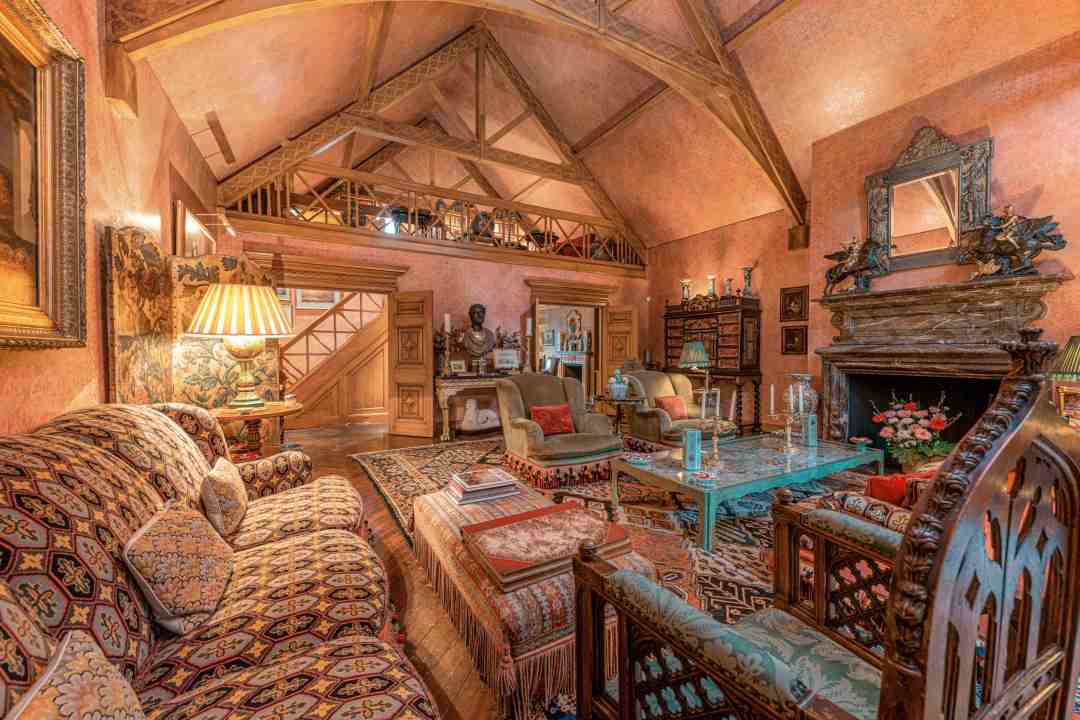
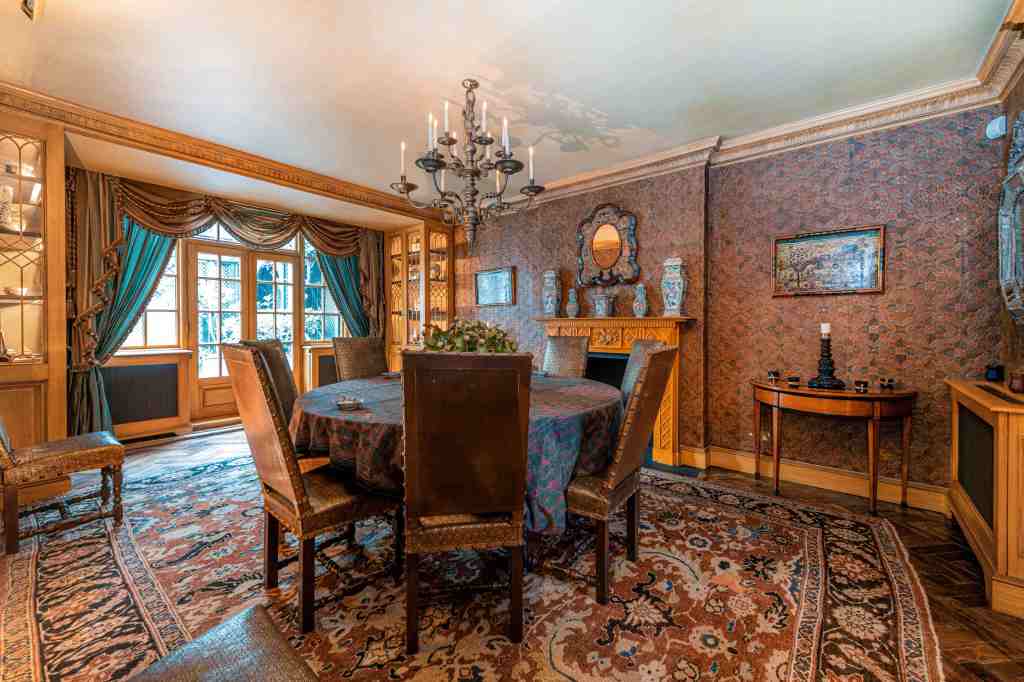
The main reception room with its four-metre vaulted ceiling [Carter Jonas in affiliation with Christie’s International Real Estate]
Joseph Mallord William Turner continues to occupy a singular place in British cultural consciousness. The English Romantic artist, watercolourist and printmaker – often referred to as ‘the painter of light’ – elevated landscape painting to high art and, when he died in 1851, left a legacy of 550 oil paintings, 2,000 watercolours and 30,000 works on paper.
When one of these surfaces at auction, it sells for tens of millions of pounds. However, most of his works – with the power of nature, the sea and the industrial revolution as central themes – were bequeathed to the nation. A collection of 300 oil paintings in the Clore Gallery, at Tate Britain, are some of the museum’s most visited; ‘The Fighting Temeraire’ – an 1838 depiction of the last journey of the celebrated gunship, being taken down the Thames before being broken up – has been voted Britain’s favourite painting.
Although the Covent Garden-born artist travelled widely across Britain to research his subjects, he remained at heart a Londoner – he was played with a guttural Cockney accent by Timothy Spall in the Mike Leigh-directed 2014 biopic Mr Turner. Reputedly eccentric and often ill-humoured, Turner – a creative prodigy who studied at the Royal Academy of Art school at the age of 14 – had homes and workspaces across the capital.
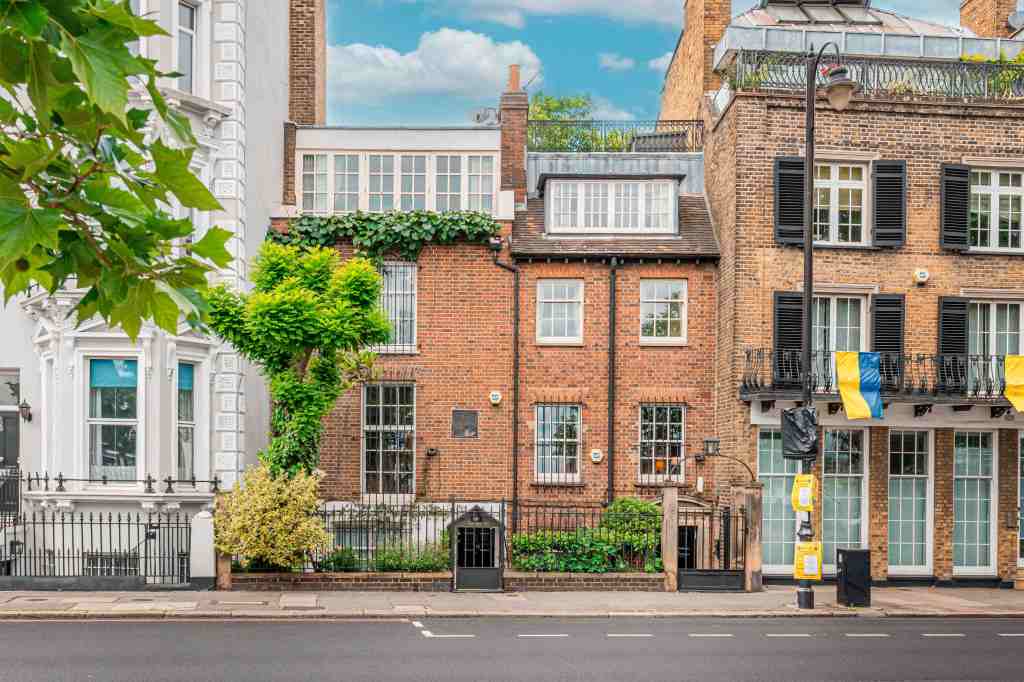
J.M.W. Turner spent the final decades of his life in Cheyne Walk, Chelsea [Carter Jonas in affiliation with Christie’s International Real Estate]
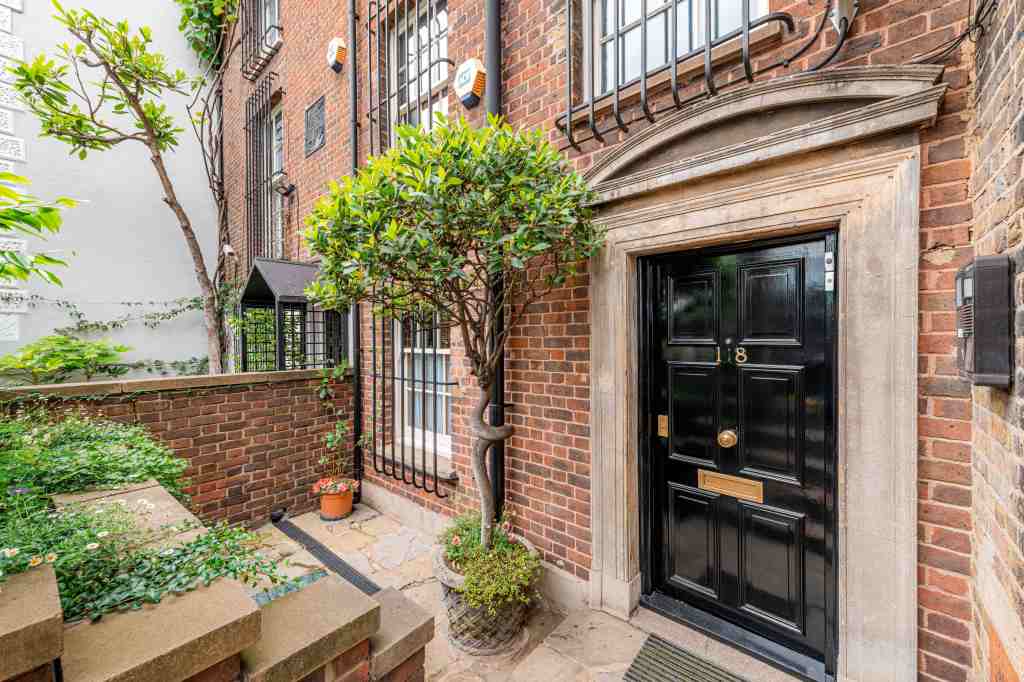
In 1804 he opened a studio on Queen Anne Street West, Marylebone, and kept a permanent home there, although in 1813, to his own designs, he built neoclassical Sandycombe Lodge in Twickenham. He shared that home with his father, a retired barber and wigmaker, before selling it in 1826. Then, having developed a relationship with Margate widow Sophia Booth, the unmarried Turner moved into a house which now forms part of Nos 118 and 119 Cheyne Walk, then a single home overlooking the Thames in Chelsea. He spent the rest of his life in the property, which bears a plaque engraved with a sun, palette and brushes to commemorate his time there.
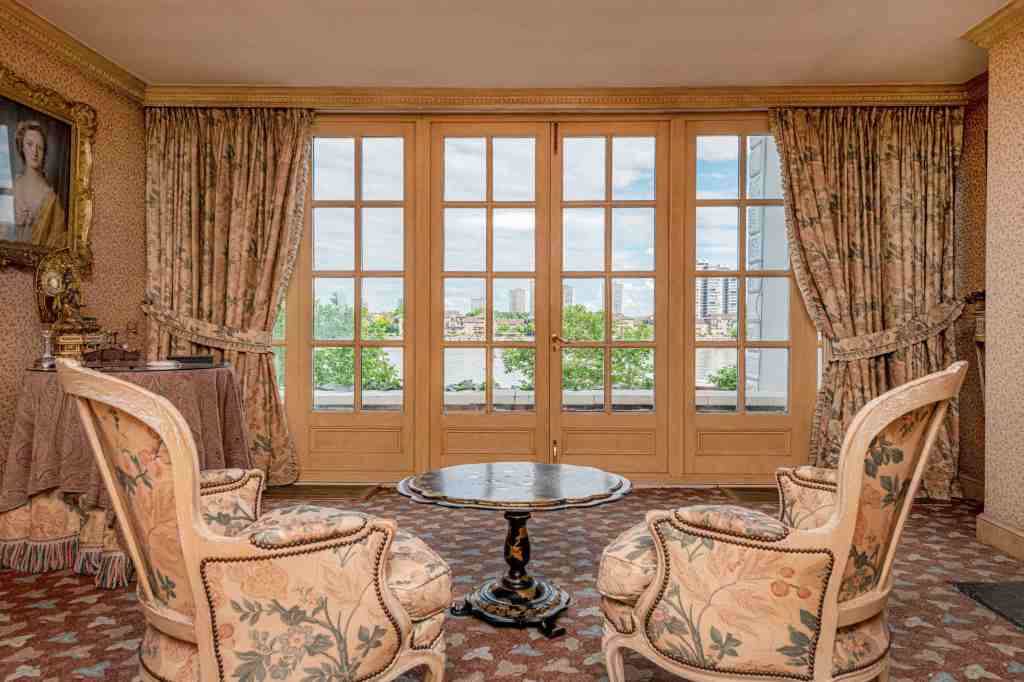
The property overlooks the Thames [Carter Jonas in affiliation with Christie’s International Real Estate]
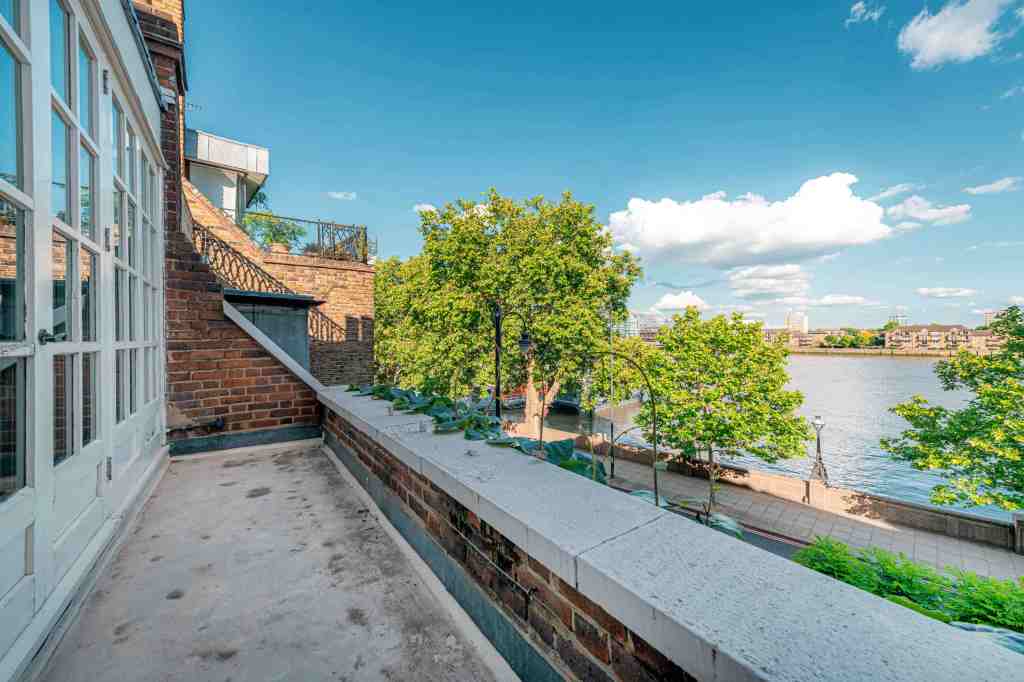
The eight-bedroom, five-bathroom, Grade II-listed house has now hit the sales market for £11 million with Carter Jonas. In Turner’s day, it was a simple three-storey, one bay-wide structure, one of seven homes built in the grounds of what was King Henry VIII’s Chelsea manor house. Turner had the roof flattened and added a railing to make a balcony from which he could observe the river, sketch and paint. But the creator of masterworks such as ‘Tintern Abbey’ and ‘Snow Storm: Hannibal and his Army Crossing the Alps’ reportedly lived incognito here, known by his neighbours (which included a boat builder and shops selling beer and wine) only as ‘Mr Booth’ or ‘The Admiral’, due to the naval greatcoat he habitually wore.
J.M.W. Turner added a balcony from which he could observe the river [Carter Jonas in affiliation with Christie’s International Real Estate]
Although we can’t be sure exactly what he produced at Cheyne Walk, his time there certainly coincided with some significant events in his career. In 1850, at the age of 75, Turner – described by seminal critic John Ruskin as the artist who would most ‘stirringly and truthfully measure the moods of Nature’ – exhibited at the Royal Academy four paintings from the story of Dido and Aeneas.
In the late 1890s the property was restored by Arts and Crafts architect and designer Charles Robert Ashbee [Carter Jonas in affiliation with Christie’s International Real Estate]
The present owner of the property, who prefers not to be named but who has used it as a family home, still enjoys those same river views, although the house has changed much since the mid 19th-century. After Turner’s death (his final words, it is said, were ‘The sun is God’), the home fell into a parlous state, and there was even a call for its demolition. In the late 1890s, architect and designer Charles Robert Ashbee, a key player in the Arts and Crafts movement, came to its rescue, connecting it to the neighbouring house, restoring windows and repointing brickwork. A scullery and outbuildings replaced some wretched tumble-down buildings and a garden studio was created.
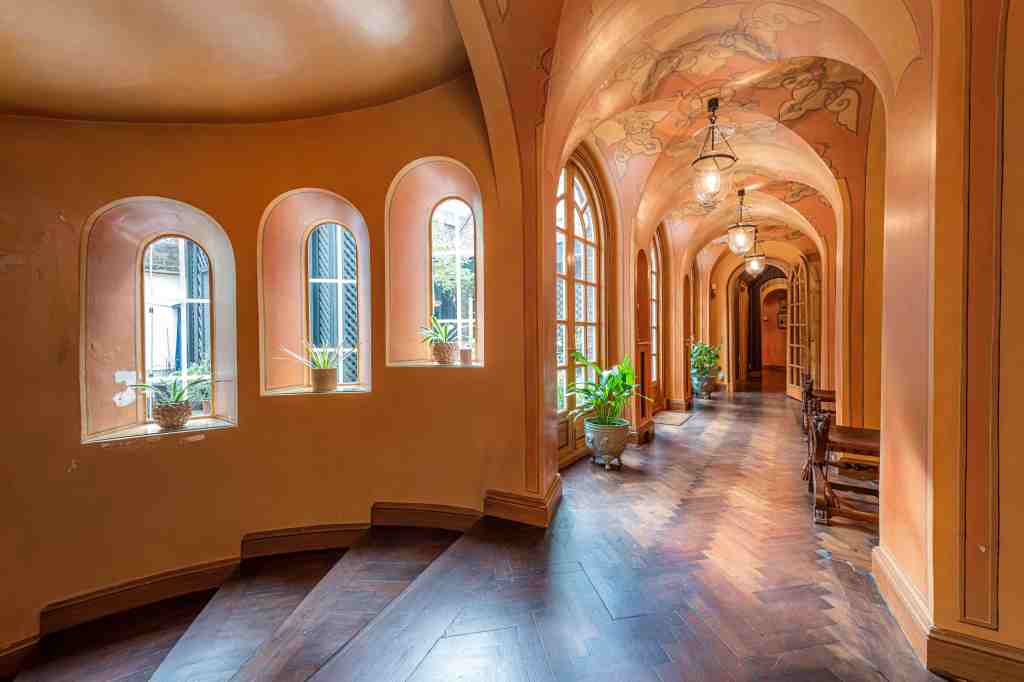
The original herringbone parquet flooring and cloistered ceiling have been retained in the hallway [Carter Jonas in affiliation with Christie’s International Real Estate]
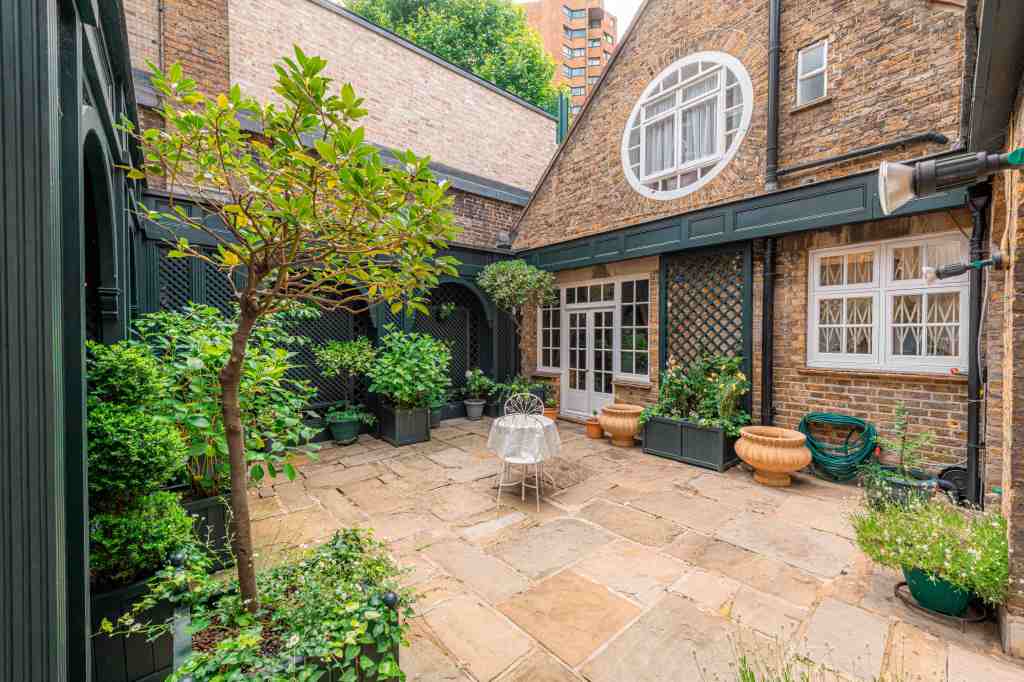
Inside, rooms were panelled with wood, fireplaces restored, oak beams added to support ceilings and cupboard recesses fitted, with much of the work still in evidence today. The hallway has a striking cloistered ceiling and its original herringbone parquet flooring, and the main reception room features a vaulted four metre-high ceiling. Within the 5,200 sq ft of living space, there are two kitchens and a grand formal dining room, with a central courtyard plus three patio gardens and two balconies.
The property has a central courtyard and three patio gardens [Carter Jonas in affiliation with Christie’s International Real Estate]
In the 1920 and 1930s, English society beauty Evelyn Fleming, mother of James Bond creator Ian, owned the home – joining a roll call of well-known past and present residents of Cheyne Walk, including Dante Gabriel Rossetti, Sylvia Pankhurst, T.S. Eliot, Mick Jagger and Marie-Chantal, Crown Princess of Greece. The present owner has decorated the property in traditional style, with rich red wall hangings and drapes, four-poster beds, antiques and sculptural busts.
The house on Cheyne Walk was also once home to Evelyn Fleming, mother of James Bond creator Ian [Carter Jonas in affiliation with Christie’s International Real Estate]
‘Homes with history will always be distinctive, but Cheyne Walk really is one of a kind,’ says Samuel Richardson, head of Carter Jonas’s Mayfair office. ‘It’s a real gem with an extraordinary past, stunning original period features, grand rooms, several terraces and patios, all in the heart of Chelsea on the banks of the River Thames. It’s extremely rare for a home of this magnitude to be available on the open market.’ Whoever buys it should probably just ensure they bring a decent art collection.
De vez em quando, as estrelas alinham-se e o hospital aberto é servido por um autocarro cuja paragem está protegida do frio e do vento. Por azar, nesses dias o Quim nunca fica doente.
Alguns factos: a) a idade de reforma tem aumentando progressivamente; b) tenho 46 anos e meio; c) com a evolução demográfica em Portugal a tendência é em breve haver um contribuinte por pensionista; d) a maioria dos jovens entra no mercado de trabalho depois da licenciatura de 3 anos. Na posse dessas informações, é possível afirmar com confiança que na semana passada nasceu o bebé que, daqui a 21 anos, quando eu me reformar e ele arranjar o primeiro emprego, vai começar a descontar para me pagar a pensão.
Antigamente, por cada aposentado havia 4 ou 5 trabalhadores a descontarem para a Segurança Social. Era uma espécie de vaquinha, que tornava a relação mais impessoal. Agora, não. Cada reformado tem apenas um contribuinte a pagar-lhe a pensão e isso cria uma maior afinidade. A relação entre um reformado e o trabalhador que o suporta seria umbilical, se fosse o bebé a alimentar a mãe.
É por isso que tenho curiosidade em conhecer o petiz que me vai pagar as contas na velhice. Quem será este jovem? Que tipo de vida terá até à idade adulta? Onde viverá? Para conseguir imaginá-lo, preciso de lhe dar um nome. Chamar-lhe-ei Joaquim. Joaquim Tribuinte. Conhecido por todos como Quim Tribuinte. Um nome que é destino, na medida em que a qualidade do meu trabalho, demonstrada pelo trocadilho que fiz para se aproximar de “contribuinte”, obriga a que o rapaz trabalhe muito para eu conseguir sobreviver à custa da pensão.
Quim Contribuinte. Um nome que soa alentejano. O que quer dizer que o Quim deve ser natural do Km27 do IP2. Foi onde encostou a ambulância que transportava a mãe, quando andava entre Évora e Beja à procura de uma maternidade aberta. É um rapaz que nasceu logo a apanhar com força. O bombeiro que o trouxe ao mundo teve de lhe mandar várias palmadas no rabo até ter a certeza de que o Quim estava a chorar. Com o barulho dos carros na via rápida, não conseguia ouvir.
Neste momento, vive no T1 que partilha com os pais, três irmãos e a avó. Como se sabe, o alojamento local em Lisboa é responsável por não haver habitação no Baixo Alentejo. É uma casa que vai conhecer muito bem nos próximos anos, pois não há lugar para ele na creche da área de residência. Apesar de terem mudado a lei para acomodar mais crianças, já não há prateleiras para todas. A sorte é que a mãe é professora do liceu e, sempre colocada em escolas na outra ponta do país onde acaba a ter de pagar para trabalhar, prefere ficar em casa a tomar conta dos filhos. Nem todos são tão afortunados.
Aos 6 anos começa o seu percurso académico na escola pública ao pé de casa. É uma escola sem condições mínimas, onde chove no Outono, faz frio no Inverno e chove e faz frio na Primavera, porque o aquecimento global escangalhou o clima e está sempre mau tempo. Felizmente, entre atrasos nas chegadas dos professores, greves de professores depois de chegarem, greves de funcionários quando não há greves de professores, greves de transportes quando não há greves de professores nem de funcionários, o Quim só tem oportunidade de apanhar a primeira pneumonia em Março do segundo ano de escola. Começa então a saga do SNS. Como o Quim não tem médico de família, todas as primeiras segundas-feiras do mês o pai tem de dormir à porta do Centro de Saúde para poder marcar a consulta de pneumologia que ele precisa. Como o seu não é o único pai a ter de se sujeitar a isso, é raro o Quim conseguir ter uma consulta marcada. Por isso é que, com 10 anos, já vai conhecer todas as urgências hospitalares a sul do Tejo. Só não conhece mais porque, sem eleições à vista, o Governo já pôde carregar forte no IUC dos carros velhos e os pais tiveram de vender o chaço. Para ir às urgências, é preciso que a que está a funcionar esteja no caminho de uma carreira de autocarro. Às vezes, muito de vez em quando, as estrelas alinham-se e o hospital aberto é servido por um autocarro cuja paragem está protegida do frio e do vento. Por azar, nesses dias o Quim nunca fica doente. “Parece que faz de propósito, o miúdo!”, reclamará a mãe.
Quando chegar ao 12º ano, o Quim vai perceber que entre as aulas que não teve por faltarem professores, por a escola estar fechada ou por ter estado doente, na realidade só tem o 9º mal amanhado. Mas, como vamos estar em 2041 e no ensino superior vai haver três vezes mais vagas do que candidatos, o Quim vai obter uma bolsa para o Politécnico da Vidigueira, onde se licenciará como Técnico de Design das Redes Sociais. Em Setembro de 2044, ao abrir o seu primeiro recibo de vencimento, constatará com surpresa que dos 1000 euros de salário que pagam a um caixa da Mercadona, quase 150 vão para a Segurança Social. Ou seja, para mim.
Talvez não tenha sido boa ideia querer saber que é o meu contribuinte. Agora estou com pena do rapaz. Não me sinto bem a aceitar o seu dinheiro. Deixa estar, Quim. Não te preocupes. Eu cá me arranjo. Guarda para ti. Poupa para o teu filho. Ele vai precisar de ajuda para sustentar os 7 pensionistas que lhe vão calhar. Boa sorte, rapaz!
Em 21 de novembro de 2023, eu o Carlos Poppe e o Pedro Almeida Henriques, promovemos um almoço no CIF, em Monsanto de antigos jogadores do Técnico e de veteranos do núcleo do Valsassina
Eu e o Francisco Vaz
António Pires, Alfredo Duarte, João Pires, Daniel Machado e Francisco Vaz
Carlos Poppe, João Calixto, João Almeida Henriques, Carlos Canas, Raúl Costa e João Raimundo
José Artur, Raúl Carregoso ,?,?,?, Cunha Pereira
Fernando Costa, José Costa, Francisco Sanchez, Arnaldo e Élio Franco
Danielle Epstein’s story is a sad one; last year she was in the process of buying a house with her boyfriend when he was diagnosed with a brain tumour, underwent a serious operation and had to learn to walk again. He wasn’t the only one who walked; Miss Epstein did also, and not just down the road where she could keep an eye on him, but all the way to sunny Thailand. She said in her defence: ‘I felt like the most awful person, leaving somebody because they have cancer, but it was damaging my mental health and it wasn’t helping him… I couldn’t sleep or eat, I was having panic attacks and was on so much medication to sort myself out I just couldn’t function.’ But that’s not the end of the story; Miss Epstein is to run in the London Marathon in her ex’s name to raise money for the charity Brain Tumour Research. She said ‘I felt so helpless watching all this unfold – I knew I had to do something’ while her ex, Jelle Fresen, commented ‘I will be there on the day to cheer Danielle on. I think it’s incredible what she’s doing – I’ve got so much respect for her discipline and perseverance.’
We live in an age where a healthy level of self-respect in women is reviled as selfishness
What a lovely man! And what a sensible woman. Inevitably the cry-bullies of social media have been wishing seven sorts of damnation on her. But in my opinion, she’s done the right thing. Of course my own history as a bolter might influence my feelings; I spent a sizeable part of my youth abandoning husbands and children in pursuit of my own selfish desires, at least according to some of my colleagues in the press. And though there’s always more nuance to life events than a headline about being Britain’s Worst Mother (the Daily Mail) can communicate, it’s roughly right. My selfishness means, according to received wisdom, that I should have ended up guilt-wracked, regretful and alone. But I’m not – and I’m basically an OAP (albeit a YOLOAP) now. So when’s it going to happen?
It’s interesting that what is often called selfishness in women is easily forgiven in men – seen as part of their natural make-up, even. Though women initiate most divorces, they are six times more like to stay with seriously ill husbands than men are with wives in a similar condition, according to a study published in the journal Cancer which took the examples of 500 patients with brain tumours. I’m not saying that these men are monsters – they may be simply acting sensibly in their own self-interest. My sister-in-law Charlotte Raven in her excellent book Patient 1 describes her husband deciding to leave her when she was diagnosed with a terminal condition; she understood that she had been difficult to live with when enjoying perfect health and would now be an even less appealing prospect. But sometimes male selfishness does make monsters; those who murder their entire families – often when their wives dare to leave them – and those ‘suicide pacts’ in which mostly the men miraculously survive. One of the reasons I’m very much against ‘assisted suicide’ is that women are particularly prone to ‘not wanting to be a burden’.
We live in an age where a healthy level of self-respect in women is reviled as selfishness, which is weird when you think that we’ve had four waves of feminism. This is largely down to woke ideology – the most misogynistic western credo since Catholicism, which may explain why Ireland has transitioned so seamlessly from being bossed about by one set of men in dresses to another. To every other oppressed group, woke says ‘RIOT!’, to women: #BeKind. A friend told me: ‘I was buying my children clothes and I noticed so many items that say Be Kind – all in the girls’ section, none in the boys’ one. It’s like indoctrination.’ If you get raped, don’t report it because that would be ‘carceral feminism’. Don’t be a ‘dinosaur’ who ‘hoards rights’ – let men take everything from toilets to trophies away from you. Smile as you are erased, Transmaid, until only your rictus Cheshire Cat grin is left of you. Of course, it’s not just women who are called upon to bend the knee to the tyranny of #BeKind; Dominic Raab lost his job basically because a few posh men complained that this rough son of immigrants looked at them funny. But the anger and abuse which was meted out to the Suffragettes back in the day is indistinguishable from that aimed at Terfs by the trans rights activists – the same sexualised fury of male anger at uppity women.
To signal their virtue (and to keep their jobs) many sneaky women now identify as ‘empaths’ – I’m not just kind, I’m super-kind! It’s the most pathetic kind of pick-me posturing – Josephine Bartosch put it well in the Critic:
For women, being seen as being ‘kind’ is a form of social currency. We gain status by being unkindly kind – by ripping into others when they’re seen as insufficiently emotional. To put the truth above another’s feelings is a social sin that we are rarely allowed to get away with. Given these brutal “be kind” rules, it follows that a greater number of women than men may see a social advantage in calling themselves ‘empaths’.
I’d wager that the empath brigade is well represented in the below-the-line bed-wetters now demanding Danielle Epstein’s head on a plate. But I wonder how many of them have parents in care homes? I volunteered in one once and I’ve never been so sad in my life. The vast majority of the old ladies had been married, widowed and had grown-up children – who they rarely saw. Sometimes they would seek me out at the reception desk ‘to hear a young voice’ – I’m not young, but my voice is – and, even more heartbreakingly, to listen to the automatic doors to the street opening and closing so that they could feel connected to the world outside. The brilliant artist Miriam Elia illustrated this sad situation in her book We Do Lockdown in which the mother says ‘Oh no, we can’t see Grandma’ and the child points out that they haven’t seen her since last Christmas anyway.
The anger and abuse which was meted out to the Suffragettes back in the day is indistinguishable from that aimed at Terfs by the trans rights activists
But I don’t blame people for putting their parents in care homes, either; I’d just prefer it if young women weren’t demonised for leaving sick boyfriends when people who outsource parental care are quite acceptable. Looking after people who are frail in any kind of way is difficult; one of the things people say in an effort to help destigmatize mental illness is that ‘You can’t catch it’ but that’s not strictly true. The Mental Health Foundation estimate that the primary carers of the mentally ill suffer widely from depression, with around 70 per cent of them having poor physical and/or mental health. For years I was the primary carer for my son Jack, who would go on to commit suicide, and it’s the only time I’ve ever felt the need to take anti-depressants – my GP told me that this was par for the course. Those who can retain their equanimity through such a trial – one thinks of John Lydon, whose wife Nora recently died – are rare. Though his self-sacrifice was admirable, Age UK estimate that 68 per cent of caregivers are women.
That feminine compassion can be exploited; when it happens, kindness ceases to be something lovely and becomes something between complicity and stupidity. The Canadian track and field champion Linda Blade, author of Unsporting: How Trans Activism and Science Denial are Destroying Sport, put it well: ‘Our patience is being severely tested – we are beginning to realise that our kindness as women is being weaponised against us.’ Seeing the savage swathe of depression, anxiety and self-harm hurting the #BeKind generation of girls, I believe that what the world needs now are a few more females who put themselves first – yet by their very daring to be disliked, they make the world a better place for females yet to be born. So I’ll be sponsoring, not slandering, Danielle Epstein when she goes the extra mile for a man she – quite rightly – refused to sacrifice her health and happiness for.
Uma economia a derrapar, um governo paralisado e impossível de remodelar, um ex-ministro desse mesmo governo todas as semanas na televisão a questionar o primeiro-ministro, um presidente da república ferido no seu orgulho e os serviços públicos num caos. Estavam reunidas as condições para que o futuro político de António Costa se reduzisse a um mero arrastar no tempo. O tempo, esse, que nos faz crer que a reacção de Costa não terá sido tão intempestiva quanto pareceu. Foi rápida, certo. Mas preparada, com certeza.
PUB • CONTINUE A LER A SEGUIR
Foi da inconsistência do seu governo que António Costa se libertou. É verdade que, após as graves intromissões políticas na administração de uma empresa pública como a TAP, a mera suspeição de mais um caso a pairar sobre alguns ministros e o seu chefe de gabinete seriam motivos mais do que suficientes para a demissão imediata do primeiro-ministro. Até porque o próprio tinha colado o seu destino político a João Galamba, que foi constituído arguido. Só por estes factos a sua demissão seria o desfecho mais natural.
No entanto, António Costa quis aproveitar o momento. É possível que desde a Primavera pensasse num pretexto para sair. Só não podia ser por iniciativa do Presidente ou derivado do mal-estar social.O ideal é que fosse por uma razão exterior ao mundo político. Assim, pegou num parágrafo do comunicado da Procuradoria-Geral da República para se justificar. E se vitimizar. Ao sair, com o pretexto dessa dúvida que paira sobre a sua honorabilidade, visa criar condições para se redimir. A sua saída terá sido impulsiva porque honesta. Esta já é a narrativa que se conta por aí. Com esta acção pretende condições para se apresentar à corrida a Belém, em 2026, libertar-se de um governo moribundo, obrigar Pedro Nuno Santos a largar a televisão e vir a jogo, exonerar o PS da crise económica e responsabilizar o Ministério Público (e o Presidente da República) pela crise política. Ao fechar a porta para se ir embora, e enquanto deitava uma última vista de olhos ao que restava, ainda se lembrou de Mário Centeno e entalou-o.
A vingança serve-se fria e a política é o lugar ideal para isso. António Costa é um político amoral. É isso que o torna num táctico genial e num fraco governante. Alguém que não vai além das jogadas de bastidores, quem sabe até seja um exímio jogador de xadrez, mas que não tem mais nada. Chegado ao governo pouco mais fez que continuar com os golpes, jogadas, tácticas, rodeios que tiveram como resultado oito anos de governação terminarem desta maneira. Foi um bom espectáculo de um homem que deu, baralhou e voltou a dar as cartas do jogo. E o que resta depois de um boa noite de póquer? Além de um ganhar e os outros perderem, nada. Absolutamente nada.
Gosto de ver séries. Inglesas sobretudo. Incomoda-me a crescente preocupação que existe, por parte dos argumentistas, em "rebuscar à exaustão" os argumentos.