quarta-feira, 29 de outubro de 2025

The Spectator - Running is being ruined by the ‘wellness’ brigade


(personal underlines)

Running is being ruined by the ‘wellness’ brigade

It’s become all about expensive gear and gratuitous posturing
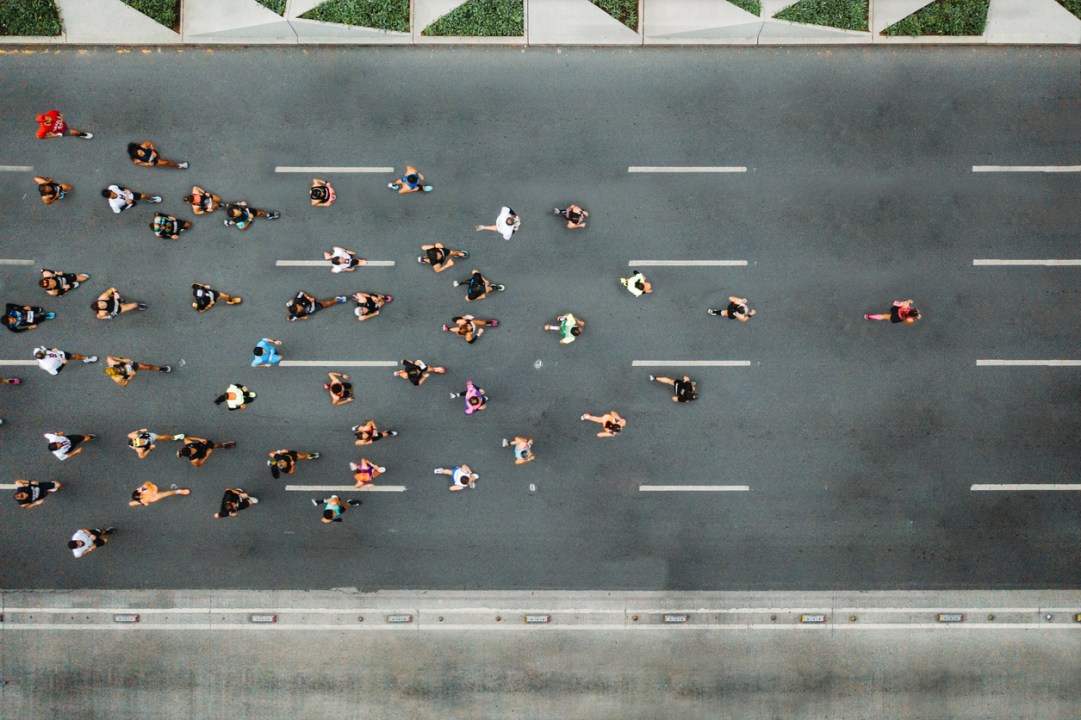
[iStock]

Is there a more obnoxious introduction in 21st-century Britain than the words ‘I’m a runner’? ‘I’m a runner,’ followed by the gulp of a protein shake or (shudder) the announcement of a 5k personal best. ‘I’m a runner,’ from a wheezing wannabe in carbon-plated trainers: ‘The shoes Kelvin Kiptum wore when he broke the marathon world record? Yes, yes they are.’

I am no Kelvin Kiptum. I’m not even Simon Pegg in Run Fatboy Run. But I am a runner, with the blackened toenails, tight hamstrings and race medals to prove it. It seems that those things are no longer worth much, though. Just as walking was subsumed by step counts, food by calorie trackers and sleep by eight-hour monitors, running has fallen foul of the bourgeois commodification that veils itself as ‘wellness’. So much for gentrification: these days, we’re seeing the plague of middle-class runnerfication, as swarms of joggers in ludicrously expensive gear and hi-tech gadgets become as common a sight as gastropubs and branches of Gail’s.

Take a stroll (or jog) on any given weekend and you’ll see what I mean. Last year record numbers of Britons took up running, according to Sport England, with 349,000 more regular joggers than in 2023. Much of this, no doubt, was fuelled by Parkrun – the weekly 5k event turned global sensation – which celebrated its 20th anniversary last autumn with a 6,000-plus turnout in Bushy Park, south London. 

But you don’t even need to step outside to see the evidence. Look at Instagram, where bright young ‘runfluencers’ such as Mary McCarthy, Jennifer Mannion and Savannah Sachdev have cultivated thousands of followers through their swift (or proudly snail-like) paces and multi-year run streaks. Look at the running apps – a market expected to grow by more than 14 per cent in the next eight years – such as the £1.6 billion route mapper Strava and its recently acquired AI ‘coach’, Runna. Look at the London Marathon website, spangled with the smug announcement that it’s registered a world-record-smashing 1.1 million ballot entries for next year’s race. 

Even dating apps have cashed in on the boom, with Tinder launching its own run club last year. And celebrities aren’t immune, with singer Harry Styles the most recent addition to the coveted ‘sub three-hour marathon’ club after completing the Berlin course last month. No wonder the Atlantic called running the ‘new quarter-life crisis’: if you have pre-rheumatic knees and live anywhere near a pavement, the chances are you’ll be pounding it. 

‘What’s so wrong with that?’ you may ask as you slurp on your isotonic energy gel. After all, the lure of running is obvious: it’s free (in theory), it’s demonstrably good for your wellbeing and it’s an effective way to shed the pounds. To protect a National Health Service panting beneath the pressure of the obesity crisis and mental ill health, becoming a ‘runner’ is arguably a noble – nay necessary – pursuit. 

And yet, of course, it’s not that simple. Long gone are the days when you could pull on a moth-eaten T-shirt and go for a ten-minute pootle round the block. Unless you’re clocking up the kilometres for ‘kudos’ (that’s Strava’s equivalent of social media ‘likes’) with a Garmin watch, hydration vest and £150 heart rate monitor strapped around your chest, it simply doesn’t count. You don’t even have to be running to see this consumerism in action. Nike and US brand Hyperice will launch their ‘hyperboot’ in the UK this month: battery-powered trainers you can pop on for 15 minutes before or after a run to improve blood flow, for the princely sum of £699.99.

Nowhere is this tedious commodification more obvious than where I live in south-west London – a tarmac idyll for Lululemon-clad athletes. During my last evening loop around Battersea Park, I counted no fewer than 28 fellow runners clogging up the pathways. So ubiquitous are the pavement patrols that even a friend of mine, who once missed a flight to Buenos Aires because he refused to run for it, caved into the pressure and signed up for the Barcelona Marathon. When building up to 26.2 miles from no miles at all, little wonder that he (like many) ended up with shin splints, dodgy ankles and a torn ACL. (By the way, for the purposes of this piece, he’s still asked I call him a ‘runner’.)

Just last week I saw three posts from a runfluencer on the verge of despair because he’d completed ‘the worst half-marathon of his life’ in – horror of horrors – one hour, 23 minutes. This, to be clear, is not an elite athlete; just an ordinary man with a few dozen brain cells and copious time to train. His is hardly the plight of Pheidippides, the legendary marathoner who ran to Athens to announce the Ancient Greeks’ victory in battle and promptly died from the effort. But, then again, even Pheidippides might have pulled through for a Puma sponsorship deal and some high-protein ready meals to flog.

This isn’t the first running boom in the past 50 years. Nor will it be the last. And yet it’s notable that this latest explosion comes hot on the heels of the Covid years, when once-daily exercise was one of the only legal reasons to leave the house and ‘staying healthy’ took on a more sinister significance. Against that backdrop, the posturing of ‘runners’ – the obsession with pace and over-priced gear and carbohydrate consumption – is almost gratuitous. At best, running is about the freedom of dirt on your shoes, strength in your legs and not a thought in your head. At worst, it’s a dangerous cycle of control and comparison, the most grotesque type of consumerist culture in which food becomes fuel, bodies become gym equipment and personal bests become just another number to beat. 

Perhaps the best runner to look to, then, is the great Japanese novelist Haruki Murakami, who has been running every day since 1982. While promoting his 188-page ode to the sport, What I Talk About When I Talk About Running, he wrote simply: ‘I’m not a great runner, but I’m a strong runner. That’s one of the very few gifts I can be proud of.’ Is there a more humble, more worthy way of explaining why you run? Not for style, speed or to log on social media, but simply because you can? 

So much for ‘I’m a runner’. Ask yourself: why, exactly, are you?

Fotos - Mais um treino

 Uma viagem de barco para o treino dos Vetvals no colégio Valsassina em 28.10.2025


The Spectator - Why don’t we know how many people are in Britain?


(personal underlines)

Why don’t we know how many people are in Britain?

How many people live in Britain? You would think there would be a straightforward answer, but it eludes some of the nation’s brightest statistical minds.

This week the Office for National Statistics (ONS) projected that our population will grow by some 4.9 million people over the next seven years, bringing Britain’s official population to over 70 million. The bulk of that population growth will come from immigration – nearly ten million people.

But can these projections be trusted? Never mind how many people will live in Britain in seven years, we do not know how many people are living here now. This is despite the fact that – going by the number of CCTV cameras per (estimated) capita – Britons are among the most surveilled people in the world. Big Brother may be watching, but he isn’t counting.

While the ONS does produce mid-year population estimates, these are often considerably wide of the mark. The last national census, in the spring of 2021, proved that point. The total reported population was off by nearly 300,000 from the ONS’s estimate for the year.

Other estimates fare even worse. The Annual Population Survey, which samples about 150,000 households nationwide, has seen response rates plummet from around half in 2017 to less than one in five last year. The APS is so useless that its national statistical accreditation was suspended in October.

Unlike some other countries, such as Sweden, Britain has no centralised population register. We don’t count people in or out of the country, so our population figures are based on rough estimates. Imposing such checks at the border is more difficult than it sounds. Dual passport holders and the UK-Ireland Common Travel Area both present logistical hurdles.

If the British state is bad at population estimates, the private sector is no better. A recent report conducted by Edge Analytics on behalf of Thames Water suggested that as many as one in 12 people could be living in London illegally. However, the methodology was far from robust. Rather than measuring actual water usage, it used out-of-date migration estimates from 2017 and assumed the irregular migrant population peaked the previous year.

Yet even though no company or organisation can give a complete picture of how many people are in the country or who they are, one trend is clear. Whenever official population figures are tested against real-world data, the population is almost always undercounted.

In England alone, nearly 64 million patients are registered with GP practices, higher than the ONS’s estimated national population of 58 million. In 2021, NHS figures indicated a Covid vaccination rate of more than 100 per cent in some areas. In other words, more people had received Covid jabs than were registered as NHS patients.

The problem of population undercounting isn’t new, but it has worsened in recent years, largely because of unusually high post-Brexit migration (both legal and illegal). The surge of non-EU migrants after the end of the Covid lockdowns – the so-called ‘Boriswave’ – represented such a radical increase in numbers that statisticians have struggled to keep up. The ONS’s estimate for net migration in 2022 alone has been revised upwards three times, from an initial figure of 606,000 to 872,000.

This estimate is mostly for legal migrants. Illegal migrants are even harder to track. Though discussions about illegal immigration often focus on the ‘small boats’ crossing the Channel, this is not the only way to achieve undocumented residence in the UK. The vast majority of illegal immigrants arrive legally and then overstay their visas. Many of these overstayers fade into the ‘grey market’, taking up unofficial positions in the gig economy and renting from landlords who are willing to turn a blind eye.

The state’s record at removing these illegal migrants is remarkably poor. The number of ‘enforced returns’ has fallen sharply in the past 20 years, from 21,425 in 2004 to a mid-pandemic low of around 3,000. Last year’s figure of 7,706 represents a slight improvement, but it is still well below the pre-pandemic average. 

If 7,706 returns sounds low, that’s because it is. Though estimates range widely, the latest figures suggest that Britain could be home to 745,000 illegal immigrants. That’s more than any other country in Europe, and the true number could be higher still. In October 2017, David Wood, the former head of immigration enforcement at the Home Office, suggested that the figure could be as high as 1.2 million. 

Against these enormous numbers, 7,706 is a drop in the ocean, particularly when inadequate record-keeping and porous borders ensure that the illegal immigrant population can replenish itself year on year. For every return which the Home Office enforces, how many new visa overstayers does it miss? We simply do not know.

What’s to blame for the country’s data deficiency? Officially, stretched resources are at fault, and this is partially true. The ONS faces the mammoth task of collecting, recording and reporting hundreds of different datasets each year. From time to time, efficiencies will need to be made. None of this will have been helped by the ONS’s relocation in 2006, when around a thousand jobs were transferred to Newport. This early example of ‘levelling up’ has made it difficult for our national statistical body to recruit top talent: as many as nine in ten staff members did not follow their jobs to Wales, while a grand total of seven senior civil servants chose to make the move.

Ultimately, the failure to collect accurate population data is also a product of deliberate decision-making. When time and money are limited, bodies such as the ONS must decide which datasets they want to keep publishing, and which they want to discontinue. And when potentially controversial migration datasets happen to fall out of publication, ministers are unlikely to clamour for their return. Collecting more accurate data on the population at large risks exposing the scale of our national failure on migration, and would force the government to confront the fact that so many British businesses now rely on illegal immigrant labour.

‘Well, no one told me there was a new world order.’

Efforts to spare politicians’ blushes have real-life consequences. At every level, public policy decisions rely on the assumption of accurate demographic data. An inflated population puts unexpected pressure on public services and infrastructure. It means increased water and electricity usage, more cars on the roads and more passengers on public transport. If the figures being used for investment decisions underestimate the true size of the population, then the investment inevitably won’t be enough. 

Population undercounting also means more strain on the NHS and on schools. It means a tighter-than-expected housing market, as fewer homes are built than are needed and there is more competition for rental properties. It means that many small business owners have to compete with unscrupulous firms that use grey-market labour to suppress wage costs. Those working here illegally are unlikely to report their employers to the authorities for underpaying them.

Britain’s phantom population problem affects nearly every aspect of life in this country. What can be done to address it? We must at least improve our national data collection capacity. Some have suggested that we might need to conduct an emergency census, to allow us to fully grasp the scale of the Boriswave – though this will be a challenge to organise without taking a serious look at how the ONS collects and processes data.

There are lessons from the US, if we care to learn them, about how to combat illegal migration. In the first days of his second term, a reinvigorated President Donald Trump has already suspended new visa applications at the southern borders, redeployed active duty troops to help with removal flights and allowed authorities to arrest illegal migrants in schools, churches and hospitals. On Monday alone, Immigration and Customs Enforcement arrested 956 people.

Whether or not Trump’s successes will inspire a similar flurry of activity from our own government remains to be seen.

The Spectator - The political resurrection of Christianity

 (personal underlines)


The political resurrection of Christianity

There is a passage in Milan Kundera’s novelisitic essay ‘Testaments Betrayed’ where he writes about the nature of history. Man walks in a fog, Kundera observes. He stumbles along a path and creates the path as he walks it. When he looks back, he can see the path, he may see the man, but he cannot see the fog. Everything looks inevitable after it has happened.

So we have the ‘sleepwalkers’ explanation of how Europe stumbled into the first world war. We have the ‘inevitability’ of the slide into the second world war. It is perhaps the greatest of all idiotic modern presumptions that so many people imagine while looking back that they would have known better or acted differently.

Which brings me to the present. Because the only thing you can do if you are going to try to tread a path well is to use what senses you have to work out what the next step might be. In the past week there have been two events, one on each side of the Atlantic, which have revealed a very interesting sense of the path we are on.

Charlie Kirk was a proud and devout Christian. When asked what he wanted his legacy to be (a question it is awful to think that a man only just through his twenties was often asked), he always said that he wanted to be remembered first and foremost for his faith. Before being an American, a Republican, an activist or a supporter of Donald Trump, it was that which he wanted to be remembered for. His faith in Christ was the rock on which everything else stood.

Since Charlie’s assassination there have been many gatherings around the world in his memory, from cities in America and Britain to as far away as South Korea. And these have so far been notable for a number of things. Unlike those in response to, say, the death of George Floyd, these gatherings have not compelled local businesses to board up their windows. They have not, so far, been despoiled by significant violence. What they have been dominated by is prayer. Indeed the memorial gatherings to Charlie have so far been defined by their Christian content more than anything else. That is a rather remarkable thing: in response to a political assassination, the people on the side of the victim have gathered to pray.

In London last weekend Tommy Robinson held his ‘Unite the Kingdom’ rally. There is the usual dispute over the number of people who attended, but the area around Whitehall was full enough to suggest that it was more than 100,000. As Rod Liddle mentions, it has been attacked in the media as some kind of far-right, white-supremacist gathering, but was in fact marked by its racial inclusivity and peaceable nature.

Something that the media coverage almost completely ignored were the efforts to insert a Christian element into the proceedings. Yes, there were various anti-mass migration activists and politicians. Yes, there were musicians, including black gospel singers. But to me one of the most interesting aspects of the events on the main stage was the prominence of overtly Christian figures – including the Maori men who performed a haka with a Christian pastor. The proceedings were kicked off by a slightly Black-adder-esque clergyman called Bishop Ceirion Dewar from something called the Confessing Anglican Church.

I found his performance a tad bizarre. He seemed to mix up the role of public prayer with that of a wizard in Tolkien warding off the hordes of Isengard. But that is a matter of taste. And I can’t help noticing that various bishops of the established church were not available last Saturday. Perhaps like the bishops of Dover, Southwark and Barking, they were too busy denouncing the event to bother praying anywhere near it, or even speaking to the sort of people attending.

Still, it is noteworthy to me that two movements within a week, at the very edge of the cultural and political struggles of our time, should end up leaning so heavily into the Christian element. Especially in Britain, where the role of Christianity in public life has become no more distinct than a whistle in the midst of a hurricane.

It is perhaps inevitable. The concern that many people have about the levels of legal and illegal migration over recent decades has a great deal to do with the fact that many people arriving into the West have no desire to integrate into our traditions and a distinct desire to spread their own way of doing things. Prominent historians, including Tom Holland, have noted entirely correctly that Islam seems to have things about it which make it uniquely indigestible to the modern secularised state.

In reality it is a double whammy. The deep cultural concerns of our time are caused both by the challenges which Islam poses to a secularised society and the push that a new religion of ‘progressivism’ has made into the space where Christianity once was. The concerns are by no means dampened by the way that elements of these two other faiths have found a way, for the time being, to march together, creating a hybrid that might be summed up as ‘Trans for Palestine’: a clown-car which will inevitably come off the road.

Amid this fog it is probably inevitable that people will try to return to their firmest orientations. This is what R.R. Reno, the editor of the Catholic magazine First Things,has described as ‘the return of the strong gods’. Though deeply moving at times and slightly comical at others, there is something significant going on here.

A sensible society and a wise Church would do something to speak to these urges. But I don’t expect it. The Bishop of Barking, the Rt Revd Lynne Cullens, could be found this week claiming that Robinson’s rally showed it is time for a ‘refreshed, contemporary and broad-based understanding of British values’. Treading wisely and treading timidly are not always the same thing.

The Spectator - There’s something vulgar about Freemasons

( personal underlines)

no news!


There’s something vulgar about Freemasons

The Met Police ought to disclose membership

(Getty)

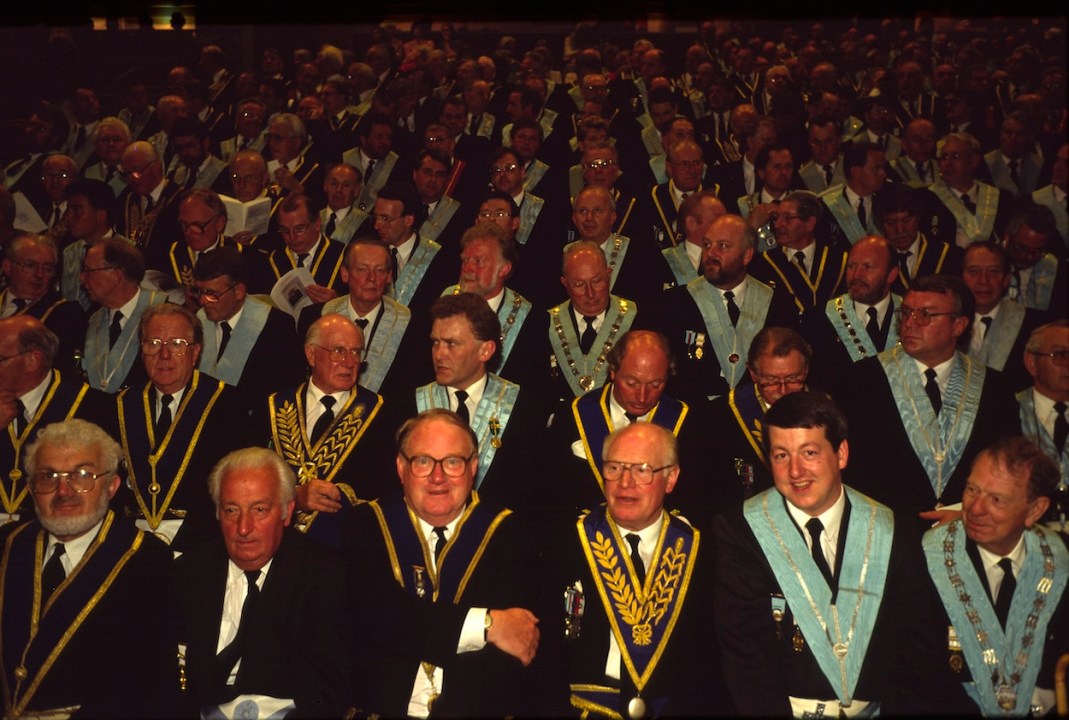
Goodness, isn’t there something a bit hoary about the notion that members of the Metropolitan Police may have to declare if they’re Freemasons? The idea has come up recently in the context of discussion on ‘declarable associations’ – those organisations you’re obliged to admit to belonging to if you’re a London copper. 

A spokesman for the Mayor of London, Sadiq Khan, who is in charge of the Met, has previously ruled out a compulsory register of Freemasonry in the force, but a spokesman for the mayor said improving standards in the Met ‘involves looking at organisations, including the Freemasons, and consulting to see if membership of these groups could call impartiality into question or give rise to any conflicts of loyalty when it comes to investigations, misconduct and promotions’.

So, senior police officers will be sitting down with the United Grand Lodge of England, presumably in its grandiose building in Great Queen Street, to talk things over. On the one hand, there’s the principle of transparency; on the other, the contemporary pieties about freedom of association… human rights, in other words. The panel that looked into the very murky inquiry into the death of the private investigator Daniel Morgan in a pub car park in Sydenham in 1987 has recommended that full disclosure be considered.

Personally, I can never repress a thrill when it comes to Freemasonry, chiefly because, even if they’re letting in women, I wouldn’t be able to belong to it. Catholics aren’t allowed to be Freemasons, a) because the organisation was for quite a long time pretty well a synonym for anti-Catholicism (lots of Orange lodges were associated with the movement), and b) because it’s a secret organisation and, as the nun at school explained, if you’re bound by an oath taken when you join you may be obliged to do something against your conscience.

I don’t know whether b) is true, but what I do know is that for absolutely ages it was a given that half the coppers in London belonged to the Masons and ditto half the movers in the City. In the rather grand stockbroking firm where I misspent two years after university, it was common knowledge that one of the senior partners was a Mason and he’d occasionally sound out promising young men about whether they fancied coming along. In fact, as I understood it, you didn’t even need to ask if someone was a Freemason; merely a handshake would do it. I was thrown as a young journalist when a Labour MP asked me, after shaking hands, whether I was a Mason… plainly I’d gripped him in some significant way.

Anyway, the combination of prohibition, alleged influence, mysterious ritual and exciting symbolism was sufficient to give the thing, for me, a certain allure. That was until I found out some years ago that the Grand Lodge in Great Queen Street was, mirabile dictu, throwing open its doors to the general public. How odd, I thought, as I hastened to the opening. But what a mistake that was. 

It turned out that the temple, or whatever, is not like, as I imagined, the inside of a pyramid or thrillingly reminiscent of Solomon’s Temple. It was quite remarkably dull and in horrid taste; the central hall was more like a 1930s Odeon, and you half expected an organ to rise from the floor. The symbolism was all right, but I was used to that in the context of religion generally. 

The trappings were – how can I put this? – vulgar. It was a lesson, if ever there were one, that you should never let daylight in on the magic. Once you open up the ritual to outsiders, the spectacle of men hopping around blindfold with aprons and rolled-up trousers (this is probably a travesty of more exciting activities) starts to look silly rather than reminiscent of The Magic Flute, an opera which is meant to be stuffed with Masonic symbolism.

But back to the question of full disclosure. Of course the Met should be obliged to say that its officers are Masons, because it would help determine whether promotion, for instance, could be affected by a superior officer being in the same lodge as the subordinate. It’s the secrecy which is potentially troubling. And since the Freemasons now maintain that they’re a body engaged in tireless charitable work, there can’t be much to hide. Because there are still concerns about its influence. I can’t say Freemasonry scares me any more than the Rotarian Association nowadays, but I was troubled by James Tidmarsh’s report for this paper recently that President Macron had received some sort of endorsement from the organisation… why? To what end?

Once the police admit to being in the Freemasons, the thing becomes unthreatening. Trouble is, it also becomes humdrum and commonplace, but that may be a price worth paying.

sexta-feira, 24 de outubro de 2025

Música - Chimène Badi - Je viens du sud


https://www.youtube.com/watch?v=pYv_oP5F7GI&list=RDpYv_oP5F7GI&start_radio=1

Música - Flunk Blue Monday


https://www.youtube.com/watch?v=wbgd2ZpZWBU&list=RDwbgd2ZpZWBU&start_radio=1


The Spectator - cartoons

 O roubo do Louvre...

Os media...

E o resto...


The Spectator - Why the row about the England flag matters


 (personal underlines)

Why the row about the England flag matters

At the end of Sky News’s coverage of last year’s Notting Hill Carnival, its correspondent recited the usual list of arrests, stabbings and so on before concluding her piece to camera by saying: ‘But overall it’s been a really peaceful and enjoyable day.’ This year the honour of summing up the beauty of the event was left to Sky’s arts and entertainment correspondent, Katie Spencer. The reason it is important for two million people to gather in the tight streets of Notting Hill over the August bank holiday, she said, is because of ‘resistance to racism’. ‘This is a place where community comes together,’ she went on, ignoring all the shops in the area that had been boarded up. ‘You don’t walk around constantly looking over your shoulder.’

This year, over the two-day event, there were 423 arrests, 32 assaults on police, only a couple of stabbings (down on last year), fewer than 50 guns, machetes and knives seized, and a mere 18 sexual offences. Safe spaces, which were introduced last year, were back. As one female Metropolitan Police officer explained: ‘Women and girls who might feel sort of vulnerable in Carnival – unfortunately there are incidents of sexual assaults – can go and be supported in those areas.’ It is hard to think of another cultural event in this country where dedicated areas have to be set aside in advance for people who will be sexually assaulted. The BBC Proms, for instance, do not have an area set aside for people who have been raped by other Prommers.

‘Does [the Notting Hill Carnival] feel any unsafer than being at, say, Glastonbury?’ asked Spencer, before answering herself: ‘Not particularly.’ Which, if true, is another reason never to go to Glastonbury.

The gated institutional narrative around events such as the Notting Hill Carnival is that ethnic minorities need a ‘safe space’ in order to have a day or two off from the racist nightmare that is life in the UK. What is interesting about this year’s Carnival is that it comes at a time when a different grass-roots movement is springing up – and attracting a very different response. That is the decision by a large number of people, mainly in England, to start flying our national flags more prominently. One part of this movement is called Operation Raise the Colours, and of course the people involved have already come in for the usual smears and guilt-by-association.

The BBC this week ran a report on the phenomenon of people flying our nation’s flag. As you might expect, the subject was approached in the manner of a hanging judge who’s donned the black cap before asking for the first defence witness. Indeed, the BBC outsourced its expertise on this matter – as on all matters to do with anything patriotic – to the radical leftist campaigning group Hope Not Hate (a group which, as I have said here before, has its name precisely the wrong way around). As the BBC said: ‘According to the research group Hope Not Hate, Operation Raise the Colours was co-founded by Andrew Currien, otherwise known as Andy Saxon, who has allegedly had links with the English Defence League and Britain First.’

One might note that this is a textbook effort at smearing an entire people. First of all, the radical activists at Hope Not Hate are described merely as a ‘research group’. And then they say that someone involved in one of the organisations that has encouraged flag-raising is someone who has been ‘alleged’ to have had links with the defunct EDL. This is the journalistic version of the 1920s hit song ‘I’ve danced with a man, who’s danced with a girl, who’s danced with the Prince of Wales’.

Yet Operation Raise the Colours brings to mind the occasional times in recent decades when MPs from the Labour and Conservative parties have talked about the importance of having more pride in our culture and about how we should ‘reclaim’ our national flag. Here is a movement that is responding to some of the downsides of mass migration by showing pride in our flag. And the response from much of the media is to say: ‘The flag you’re flying is the flag that is flown by someone who we’re told might have links with groups we deem unsavoury.’

So we return to that age-defining question: what are you actually allowed to do or say if you don’t like the direction this country is going in? If you join a rally against the rape of young British girls, you will be marked as a racist. If you go to a demonstration against putting up illegal migrants in expensive hotels, you will be branded far right. If you put up a flag, you will be smeared by the most distant possible association with someone you’ve never met who might have put up the same flag for the ‘wrong’ reasons.

Perhaps it is just about possible that the public could be kept down forever, our national story trashed and our flags said to be toxic. The problem is trying to maintain that stance while at the same time encouraging everybody else to have a whale of a time with their own emblems and traditions, even traditions where laws are broken.

We are informed that some migrants may feel concern at going down a street festooned with our national flag. But it’s an odd thing to move to a country and then say that its emblems scare you. Still, I find the argument unconvincing. I felt concern recently going down a street in east London where every lamppost was bedecked with signs saying ‘Trust in Allah’. But I never heard of anyone caring about my feelings.

I suppose people can vote Reform. But the next election is four years away. And just guess what the media will do to voters who even think of putting their cross in that box.


The Spectator - Can Pope Leo end the liturgy wars?


 (personal underlines)


Can Pope Leo end the liturgy wars?

Last weekend, under windswept banners depicting the Sacred Heart of Jesus and the Virgin Mary, nearly 20,000 young pilgrims marched through fields and forests between the cathedrals of Paris and Chartres. All of them carried rosaries and chanted in Latin, sometimes breathlessly: it’s a punishing 60-mile trek through mud and rocks.

Each ‘chapter’ of the column was accompanied by priests. Like the lay pilgrims – drawn from 30 countries but dominated by French teenagers in scouting uniform – they wore backpacks and trainers, but also full-length cassocks or habits. They were traditionalists and so were the young people: despite their informality, they were utterly committed to intricate Latin worship.

Making peace is the first great challenge of his pontificate

From a distance, the banners and fleur-de-lys flags summoned folk memories of St Joan of Arc. When the Maid’s forces approached Orléans in 1429, her English enemies were startled by the hymn ‘Veni Creator Spiritus’ sung by priests emerging from the woods. Was this an army or a religious procession? It’s tempting to ask the same question about the Chartres pilgrimage, an event that grows bigger every year. Though the atmosphere was joyful, this time the gathering was overshadowed by the ‘liturgy wars’ raging most fiercely in the United States and France. Pope Leo XIV, himself an American, must know how desperate the situation is; making peace is the first great challenge of his pontificate.

The casus belli is the old Latin Mass that a growing number of young Catholics are discovering, more than half a century after the Church decided that it was too reactionary for their grandparents’ generation. Celebrated ad orientem (facing east), it follows a rubric of crossings, bows and genuflections that can take years to master. Until recently it was known as the Tridentine Mass, a name derived from the Council of Trent that codified it in 1570. Now its devotees call it the Traditional Latin Mass or ‘TLM’, recognising that most of its prayers and ceremonies long predate the Counter-Reformation.

In other words, it was already centuries old when Joan of Arc attended it. The Traditional Latin Mass is the western counterpart of the ancient eastern liturgies that Pope Leo praised within days of his election, telling Catholics whose rituals developed in Byzantium or the Holy Land that ‘we have great need to recover the sense of mystery that remains alive in your liturgies’. But was that sense of mystery lost or thrown away? In 1970, after the Second Vatican Council, Latin-rite parishes – making up most of the world’s Catholic congregations – were ordered to ditch the TLM in favour of simplified vernacular masses, often badly translated and influenced by Protestant models. Pope John Paul II tried to purify the new mass by curbing the excesses of priests who, grinning like game-show hosts, turned the Holy Sacrifice into a ‘communal meal’ in which the ‘people of God’ worshipped themselves. He was widely ignored.

He also faced the challenge of the Society of St Pius X (SSPX), founded by the ultra-conservative French archbishop Marcel Lefebvre, who broke away from the main Church. John Paul excommunicated Lefebvre after he illicitly ordained bishops. Yet the SSPX flourished, and when the Pope set up a rival body, the Priestly Society of St Peter, whose priests had permission to celebrate only the old mass, that also flourished.

Then came Benedict XVI, who declared that ‘what earlier generations held as sacred, remains sacred’. In 2007 his apostolic letter Summorum Pontificum horrified liberal cardinals. From now on, any priest could say the TLM in parish churches so long as people wanted it – and a small but formidably well-organised Catholic subculture wanted it very much. But in 2013 the conclave elected Francis. In his native Argentina he was a merciless opponent of the TLM – but as Pope he held fire because Benedict was still alive. By 2021, however, Francis’s health was failing. Worried that his predecessor might outlive him, he tore up Summorum Pontificum.

Francis’s Traditionis Custodes banned the TLM from parishes and forbade new priests from learning it. However, many bishops found ways of circumventing the carelessly drafted ruling. They weren’t necessarily fans of the old mass, but they deplored the brutal tactics of the Pope’s enforcer, the Yorkshire-born Cardinal Arthur Roche. ‘It was like watching some monstrous child pulling the wings off flies,’ says one source.

With Leo XIV’s election, traditionalists hoped for reprieve. But it was only a faint hope, because the new Pope – who combines a quiet charisma with a certain frustrating inscrutability – was so fond of quoting their tormentor Francis.

Then the liturgy wars went nuclear. Bishop Michael Martin of Charlotte, North Carolina – a Birkenstock-wearing Franciscan with a Trumpian ego – announced that from 8 July the old mass would be banned from the four parishes where it was celebrated. Ignoring protests from their pastors, he designated an out-of-town chapel as the location of just one TLM on Sundays.

Other bishops had taken similar actions, but what disgusted traditionalists was Martin’s tone, dripping with contempt for anyone who preferred the ancient rite. Someone then leaked a memo in which the bishop planned a dumbing-down of the new mass, removing all traces of Latin, ripping out altar rails, banning kneeling for communion and even forbidding women readers from wearing head coverings.

This scorched-earth policy caused such outrage from priests that he withdrew the memo. Too late: overnight Martin became the most reviled bishop in the United States, and not just in Latin Mass circles. Catholic YouTube channels went into overdrive. Was Martin implementing Leo XIV’s secret agenda, or was he trying to force the Pope’s hand?

Last week, though, something odd happened. Martin announced that he was pausing the TLM restrictions until October, something he’d previously ruled out. He did so immediately after a meeting between Pope Leo and Cardinal Roche, who is expected to retire soon as the Vatican’s head of liturgy. Also, Martin said that if the Vatican changed the rules restricting the TLM, the Diocese of Charlotte ‘would abide by those instructions’. What did that mean? Everyone is sick of the confusion.

Things are no better in France. On Monday there was a glorious Solemn Mass in Chartres Cathedral – but it nearly didn’t happen. Some French bishops wanted to slam the doors in the face of the pilgrims for wanting the wrong sort of ‘youth mass’.

A moment in the ceremony explains why boomer Catholics are so alarmed. The dozens of priests genuflecting before the altar, birettas in hand, were only a few years older than the worshippers. Something similar is happening in some of London’s Anglican churches, where Generation Z are flocking to old-fashioned evensong. The difference is that the Church of England long ago stopped harassing anyone attached to the Book of Common Prayer, agreeing with Pope Benedict that what earlier generations held as sacred remains sacred.

Progressive cardinals and bishops, by contrast, freak out at the sight of a maniple, a strip of silk worn over the arm of a priest celebrating the old mass. To be fair, they have always hated this sort of vestment; but Pope Francis and Cardinal Roche encouraged them to channel their dislike into the sort of petty-minded persecution that English Catholics endured under the penal laws.

Pope Leo cannot allow the liturgy wars to drag on. He may choose to dismantle Traditionis Custodes gently, employing loopholes rather than trashing his predecessor. That’s fine. But dismantle it he must.

Contrary to some reports, it’s not true that significant numbers of young people in the West are turning to Catholicism. But among those few young Catholics who practise their faith, a rising proportion are drawn to the ‘Mass of the ages’, as it’s sometimes called. If Pope Leo wants their loyalty, enabling him to pass on the spiritual gifts of tradition to his successors, then he must learn one lesson now, in the first months of his pontificate: he cannot square the circle of singing plainchant from his balcony while suppressing the supreme expression of Latin worship.

Reflexão - as Autárquicas e os "boqueiros"

 ANTES


DEPOIS


...quase, quase...

Série - O Conselho Judaico

 Série muito interessante: para recordar o que se passou e para perceber o que se está a passar...


Livro - Revolucionários que eu conheci

Uma linhagem... 

Urbano Tavares Rodrigues
Luis Stau Monteiro
Luis Francisco Rebelo
Miguel Urbano Rodrigues
Artur Ramos
Baptista Bastos
Mário Castrim
Artur Portela filho
Luso Soares
Ary dos Santos

Livros - A cambada

Realmente, anos depois, é o termo!