


Proust can keep his soggy madeleine. For me the word ‘Prague’ is a trigger of memory like no other. It stirs me up like some plaintive half-heard tune, or the faint scent of lavender in sheets left folded for years.
Evil news from Prague, in another stuffy August long ago, turned my world over completely. This was 1968, a year of wonders, none of them very nice, which will not easily leave my recollection. It was the year I joined a Trotskyist sect. It was the year I punched a man (in self defence). It was the year I attended my first violent raucous demonstration, against the war in Vietnam, with the police horses thundering through the March mud in Grosvenor Square. A few weeks later Paris was full of tear gas and flying cobblestones, and how I wished I was there. It was an age when, if your head was not hot, you weren’t thinking or fully alive. I was on the wrong side – and I was on the right side. I will never be able to unscramble the messy omelette of opinions I then held, to separate the good from the bad.
Then came Prague, and the Soviet tanks flattening a brief flowering of freedom, just about this time of year. I knew, or thought I knew, that revolutionary socialism did not need to lead to the cement-headed repression of the USSR. I despised that as a tyranny and a failure. Freedom under communism was like fire under water. But what was this mysterious city, Prague?
My geography lessons had been traditional, about the Empire or the Home Islands, so that I knew much of the Western Ghats or the Carse of Gowrie, and nothing of the Danube or the Carpathians. Now I was learning about a part of Europe I had never previously considered, and beginning to understand that it might be important in my life. And like a grey haze just behind the modern headlines, I could also see another Prague and another Czech crisis, in another stifling late summer then (amazingly) only 30 years before.
In 1968, the Munich crisis was about as distant in time as Princess Diana’s divorce from the present King is now. I imagined Prague’s baroque towers in a dark bend of the river Vltava, but what we saw on our TV screens was a jazzy city mainly of the 1930s, lots of glass and concrete, streamlined yet old-fashioned, and now full of stupid violence and righteous anger. Film of a tank smashing into a barricade of trams, as if it were made of biscuit tins, made me realise for the first time what a terrifying thing a tank must be. I had never before seen shameless power being exercised in plain sight.
In Vietnam you saw the bombs going off in the distance and heard the crackle of gunfire, but here people in civilian clothes, much like us, were being intimidated by iron-faced men in armoured vehicles, while their leaders were carted off in manacles to Moscow. We were all outraged. I remember fiddling late one evening with our elderly wireless, which had one of those illuminated dials promising transmissions from Kalundborg, Hilversum, Athlone, Droitwich, Königsberg… and Prague. I hoped absurdly to pick up a last whisper of protest on the night airwaves. Shocked and distressed as we were, we knew that our government would do nothing, because at Yalta we had promised to stay out. We hated what was happening, but our anger was empty and so rather shameful.
Partly for that reason, I never forgot it, and ten years later, when the chance came to go to Prague itself, I had to go. I really owe the journey to Evelyn Jones, wife of the once-mighty trade union leader Jack, and a friend of my wife’s parents. Evelyn had been a courier for the Comintern in the 1930s, carrying messages to Moscow from western communists and bringing gold back. She said: ‘You must go to Prague. Nowhere else still has the spirit of Europe between the wars. It is utterly beautiful and surprisingly easy to get to.’ As I was by then a Fleet Street journalist, my visa took some weeks to arrive, while the Czech secret police dismantled, photocopied and reassembled my passport. As we planned our railway journey (Paris, Heidelberg, Nuremberg) we noticed that the official map stopped at the Iron Curtain – from Nuremberg there was just an arrow pointing to ‘Praha’.
So, on an early spring day our train crossed from dozy Franconia into the evil empire, through a web of barbed wire, and if I had not thought this was an evil empire before, I certainly did then. The country was a sort of prison. Men in grey uniforms swarmed over, through and under the carriages, searching every corner of the train and every pocket and bag of the passengers. The seats were hard plastic. The compartments were decorated with a large Red Star. The cities we passed through were smoke-blackened and hung with red-and-white propaganda banners. Our fellow passengers had stainless-steel teeth.
As we ran into the outskirts of Prague, we began to see Soviet railway carriages marked with the hammer and sickle, and to feel as if we were being pulled into the orbit of a darker sun. As we rode the tram from Wenceslas Square to our hotel, we were approached and befriended by the first secret police spy I have knowingly met. Later we would meet all kinds of other people, one of them almost in tears about the comfort the BBC World Service brought him, another an Anglophile black Cuban comrade on an exchange, anxious to share his splendid rum. (We did so. The rum broke several language barriers at once.)
Beyond all this lay the city, oddly reminiscent of Oxford with its crooked, narrow streets, bells and spires, best seen from the hill above, much of it black and held up only by ancient scaffolding. The communists did not treasure it. There were no tourists. The staple diet seemed to be dumplings. It reeked of oppression. We learned for the first time what it is like to be afraid to say what you think. And it did indeed whisper from its towers the last enchantments of the 1930s, as Evelyn Jones had promised. History, the real, dangerous sort that frightens and unsettles you, came rushing into my mind – and all this in the middle of one of the most movingly beautiful places I had ever seen. I am sorry, but you cannot go there now. The modern world has scrubbed it clean of the past. But we will always have Prague, the greatest history lesson I ever experienced.
Waiting for a tunnel between Algés and Trafaria...
while colapsing...and waiting for big money, big companies, and real estate developers


(sublinhados pessoais)
As acções híbridas russa, chinesa, iraniana e da Irmandade Muçulmana na Europa, não tem o romantismo e a patine das histórias de John le Carré. Faltam as mulheres fatais, os sobretudos Burberry, a chuva londrina e os encontros à meia-noite junto de uma ponte envolta em neblina.
Em compensação, há funcionários públicos ressentidos, militares do reviralho, páginas falsas de jornais verdadeiros, professores mais ou menos universitários, jornalistas, empresas tecnológicas, organizações de fachada, comentadores engravatados e uma extraordinária quantidade de cidadãos ocidentais absolutamente convictos de que a culpa daquilo que os nossos inimigos fazem não é deles, mas sim nossa.
Talvez por isso, a UE trata a combinação de espionagem, ciberataques, sabotagem, intimidação, manipulação informativa e interferência política como uma ameaça híbrida crescente, cujos métodos variam, mas cujo objectivo é levar a que uma sociedade livre se enforque com as suas próprias liberdades.
Comecemos pelos profissionais.
Em Portugal tivemos, por exemplo, Frederico Carvalhão Gil, do SIS, detido em 2016, a entregar documentos a Sergey Pozdnyakov, do SVR russo em troca de dez mil euros. Foi condenado a 7 anos de prisão. Vender a Pátria é bastante mais barato do que comprar um carro utilitário em segunda mão.
Lá fora, o catálogo não desmerece.
-Herman Simm, alto funcionário do Ministério da Defesa estónio, passou informação ao SVR e apanhou 12 anos de prisão.
-Peyman Kia, dos serviços de segurança e das Forças Armadas suecas, forneceu informação ao GRU, e recebeu prisão perpétua. Na Suécia, sabemos agora, a expressão “temos de compreender o contexto” não produz redução de pena.
-Walter Biot, capitão-de-fragata italiano, foi apanhado a entregar documentos a um russo por cinco mil euros. Há garrafas de vinho que custam mais e não comprometem tanto.
-David Smith, segurança da embaixada britânica em Berlim, coleccionava material sensível, simpatia por Putin e antipatia pelo próprio país. Acabou condenado a mais de 13 anos. Tinha em casa uma grande bandeira russa e memorabilia soviética. A contra-informação britânica podia ter começado por reparar na decoração.
-Thomas H., capitão alemão, resolveu oferecer documentos aos russos. Segundo o tribunal, agiu sob a influência de uma voz pró-russa que seguia. Foi condenado a 3,5 anos.
Os serviços de informações resumem tradicionalmente as motivações do típico traidor na deliciosa sigla zoológica “MICE” (Money, Ideology, Coercion/Compromise, Ego).
Não são propriamente quatro virtudes teologais.
Significam que uns querem dinheiro, outros gostam do inimigo ou detestam o grupo a que pertencem (oikofobia), e outros fizeram qualquer coisa embaraçosa, de que Moscovo, Pequim ou Teerão possuem uma cópia. No fim vem o Ego e o narcisismo das pequenas diferenças, porque há pessoas que precisam de atenção, acesso, importância, o telefonema confidencial, o almoço reservado, a crença de que sabem o que a plebe desconhece. Um bom recrutador vende-lhes um espelho e afaga-lhes o ego, sugerindo que são portadores de supina inteligência.
E assim nascem as clássicas toupeiras como Kim Philby, que acabou a miserável vida a rastejar com uma medalha Lenine, na União Soviética em vésperas de implosão.
Todavia a espionagem custa dinheiro, exige contactos, comporta riscos e pode acabar com dois estarolas presos num café em Roma.
Muito mais fino é conseguir que o adversário faça o trabalho voluntariamente e é aqui que as toupeiras se transmutam em papagaios.
Para Moscovo, roubar um relatório secreto da NATO é óptimo. Conseguir que um europeu maquilhado e escanhoado apareça na televisão a reproduzir a narrativa do Kremlin é melhor.
É público, legal, barato e, caso alguém proteste, pode sempre invocar-se a liberdade de expressão, uma das coisas que Moscovo ou Teerão muito apreciam, mas não costumam facultar aos seus próprios cidadãos.
Foi para isto que surgiram operações como a Doppelgänger, que imitou páginas de jornais e instituições europeias, e redes como a Portal Kombat/Pravda, constituída por centenas de portais que reproduzem conteúdos pró-Kremlin em múltiplas línguas.
O objectivo não é fazer o europeu médio apaixonar-se por Vladimir Putin, mas convencê-lo de que ninguém sabe nada, todos mentem, a verdade é impossível de estabelecer, a NATO começou tudo, Israel é o Mafarrico, a Ucrânia talvez se tenha invadido a si própria e aquilo de Bucha foi produzido pelos mesmos tipos que filmaram a alunagem da Apolo 11 num estúdio secreto em Hollywood.
Para evitar que os mais excitáveis desmaiem, importa aqui fazer a elementar distinção de que debitar propaganda russa, chinesa, islâmica ou do Hamas, embora não autorize um diagnóstico favorável sobre o estado cognitivo de quem o faz, não transforma automaticamente o papagaio num agente dessas honoráveis entidades.
O papagaio do meu vizinho grita repetidamente “abaixo o Governo” e, até ao momento, não se descobriu qualquer transferência bancária da oposição para a gaiola.
Mas, uma coisa é acusar que existem recibos e documentos a circular debaixo da mesa, e outra, perfeitamente legítima, é analisar aquilo que determinada pessoa diz de forma reiterada, e comparar essas afirmações com os panfletos difundidos pelo Estado que beneficia delas.
Tomemos por exemplo, o major-general Carlos Branco, que apresentou o Euromaidan como um golpe de Estado “orquestrado por Washington”, “perpetrado por grupos paramilitares neonazis”, e levantou dúvidas sobre a autoria russa do massacre de Bucha, chegando a sugerir a possibilidade de as vítimas terem sido mortas por forças ucranianas. São posições públicas dele, que não demonstram qualquer relação clandestina com Moscovo mas mostram que a sua interpretação coincide admiravelmente com a narrativa que Moscovo deseja ver difundida no Ocidente.
Também o major-general Agostinho Costa, entre infindáveis dislates, apresentou Jens Stoltenberg como “o porta-voz do Pentágono na Europa”, declarou, face às crianças ucranianas capturadas pela Rússia, que “naturalmente não houve raptos”, e classificou militarmente a fuga dos militares russos de várias regiões da Ucrânia, como “gesto de boa vontade”.
Sim, é possível que tenha sido generosidade de Putin, da mesma maneira que também é possível que o Papa seja porta-voz do Primeiro Comando da Capital.
Já o professor Tiago André Lopes (TAL), depois de o Irão lançar mais de trezentos drones, mísseis de cruzeiro e mísseis balísticos contra Israel, explicou que o ataque tinha sido “uma resposta diplomática e não uma resposta ofensiva”.
É verdade que a diplomacia evoluiu extraordinariamente desde Talleyrand. Antigamente havia embaixadores, notas verbais, recepções e champanhe. Actualmente, pelo periscópio do professor TAL, um míssil balístico é basicamente uma nota diplomática que chega mais depressa.
TAL participou igualmente em iniciativas do Conselho Português para a Paz e Cooperação, onde as narrativas russófilas e pró-Hamas, encontram acolhimento especialmente caloroso. Isso, obviamente, não prova nada. Pessoas livres frequentam as sessões que querem, usam as melancias que entendem e cultivam as companhias que preferem.
Mas, como diz o povo, “diz-me com quem andas, dir-te-ei quem és”.
O CPPC, que funciona na órbita do PCP, faz parte do Conselho Mundial da Paz, organismo cripto-soviético durante a Guerra Fria e que chama “intervenção militar” à invasão da Ucrânia, culpando a NATO, evidentemente. É, portanto, uma organização de “paz” segundo a qual, quando um míssil sai de Moscovo, a culpa aterra em Washington.
Na imprensa escrita, por exemplo o “AbrilAbril” tratou Maidan como “golpe fascista”, descreveu a ocupação da Crimeia como “reintegração” na Rússia, e publica repetidamente uma leitura da guerra extraordinariamente coincidente com a da Rússia Today, Sputnik, e os comentadores acima referidos. Nada disto prova que recebam ordens do Kremlin, tal como entrar todas as manhãs numa tasca não prova alcoolismo, mas já permite formular uma hipótese e trabalhar com inferências abdutivas.
De qualquer modo, é assim que funciona a lavagem de informação: uma narrativa nasce num organismo russo, chinês, iraniano, ou no “Ministério da Saúde do Hamas”, passa para uma agência, um portal ou uma organização, é reproduzida nas redes sociais, atravessa um blogue, aparece num relatório da ONU, numa universidade ou numa associação “humanitária”, ganha respeitabilidade, e acaba diante das câmaras, cuidadosamente engomada, apresentada como análise independente por um senhor com gravata, ar grave e verbo expedito.
Já ninguém vê a etiqueta de origem e é exactamente isso que se pretende.
O interessante não é esta gente discordar da NATO, de Israel, do Ocidente ou dos EUA, coisa perfeitamente legítima. Democracias onde ninguém critica por medo, costumam mudar rapidamente de nome. O ponto é que o seu radar encravou e capta sempre e apenas os mesmos alvos.
Para acreditar num crime russo, iraniano ou do Hamas, é necessária uma comissão internacional, imagens de satélite, três autópsias, quatro testemunhas, análise metalúrgica do projéctil e, se possível, uma confissão de Putin ou do aiatola, autenticada por notário.
Para acreditar numa explicação do Ministério da Defesa russo, ou do Hamas, basta o “feeling”.
Ora quando os critérios têm esta geometria variável, quando uma invasão se converte em “reacção defensiva”, 300 drones e mísseis passam a “diplomacia” e quando os comunicados de Moscovo, Teerão ou Hamas chegam em velocidade warp ao comentário televisivo ainda com a tinta fresca e estatuto de revelação, já não estamos perante análise alternativa mas, na melhor das hipóteses, perante stand-up comedy com riso amarelo.
A democracia inclui, evidentemente, o direito de papaguear a propaganda de todos estes agentes, e de explicar que a aliança militar a que Portugal pertence é a verdadeira ameaça, enquanto os países que nos ameaçam e nos nomeiam como “inimigo” são apenas vítimas particularmente musculadas. Inclui até o direito de achar que mísseis balísticos e drones são uma enérgica modalidade de conversação diplomática.
O que não inclui é a obrigação dos restantes cidadãos fingirem que não reparam.
Muito menos obriga a chamar “análise independente” a tudo aquilo que aparece num estúdio, com uma gravata.
Na velha espionagem procuravam-se toupeiras. Na moderna guerra híbrida continuam a procurar-se toupeiras, naturalmente, mas também papagaios, os quais, muitas vezes, acreditam mesmo que aquilo que papagueiam é a “sua” opinião.

Não é raro surgir alguém no espaço público indignado sempre que ouve alguém falar da “política dos últimos 50 anos” ou coisa que o valha. Sob muitos pontos de vista, essa indignação é legítima e adequada: o País, após a adesão às Comunidades Europeias, mudou para melhor; foi capaz de resistir a intentonas pró-soviéticas e refutou expressamente o esquerdismo terceiro-mundista nas urnas; foi, aliás, com um consenso alargado que se europeizou; tornou-se uma democracia de tipo ocidental contra muitas expectativas e desejos. Mas a “política dos últimos 50 anos”, ainda que por facilitismo de expressão, não está imune a críticas, e merece-as violentamente. É verdade que nos tornámos uma democracia, mas há várias décadas que vivemos sob um quadro institucional decadente, promíscuo e fragilizado. É verdade que nos tornámos uma economia aberta, mas não deixámos de funcionar numa espécie de rentismo partidarizado ou de capitalismo de amigos do Estado. É verdade que somos ainda um dos países mais seguros do mundo e que evoluímos muito desde os anos de 1970, mas essa segurança começa a esvair-se em vários pontos do país. É verdade que somos um país que vive em liberdade, mas onde a liberdade de expressão vive sob o manto enorme do peso que o Estado tem na vida de cada um, onde a língua de pau do marxismo continua a vingar por todos os meios culturais, jornalísticos e mediáticos, transformando todos os debates num combate de oprimidos contra opressores, ou onde a liberdade de empreender, de construir, de criar, continua a ser mais uma excepção do que a regra. É verdade que temos inscritos os princípios da solidariedade intergeracional, mas ela teima em ter apenas, e sempre, um sentido, em que os mais novos devem ser solidários para com os mais velhos e a intergeracionalidade fica-se por aí.
Esta questão da solidariedade intergeracional verifica-se em praticamente tudo. Nas rendas, onde se privilegiam rendas congeladas, ignorando rendimentos e favorecendo o critério da antiguidade. No mercado de trabalho, onde se privilegia quem está e ali deve ficar a todo o custo, em detrimento de quem nele quer entrar. Na função pública, onde durante anos cresceu uma onda de direitos, progressões, regras especiais, e onde hoje só existe para oferecer congelamento, precariedade, contenção. E, claro, no sistema de pensões e reformas.
O sistema assenta no princípio de que quem trabalha hoje paga as pensões de quem trabalhou ontem, confiando que quem venha a trabalhar no futuro faça o mesmo por si, num modelo que podia funcionar perfeitamente se não existisse aquele pequeno inconveniente chamado demografia. Ora, as gerações que beneficiaram do modelo foram as primeiras a descurar a demografia. E os problemas foram-se avolumando até que os partidos reféns dos instalados do sistema descobriram a solução mágica para os resolver: a imigração. Sucede que a imigração, tendo, por várias razões, impactos positivos em sociedades abertas, também tem muitos impactos negativos, e as opções tomadas durante os governos do PS explicam-no lindamente. Não obstante, muitos são imunes a esses impactos negativos e continuam a salientar a importância que o aumento massivo da imigração trouxe para a nossa Segurança Social, na medida em que as contribuições dos imigrantes estão a pagar as pensões dos nossos velhinhos, numa lógica que, se lhe fossem aplicados os mesmos critérios que normalmente usam os seus defensores, podia ser apelidada de neocolonialista ou racista. Afinal, o que tantos fazem é dar de barato que os imigrantes estão aqui a pagar as reformas actuais e que não estão, eles próprios, a constituir direitos seus para o futuro, agravando um problema que, presumo, deva vir a ser resolvido com mais imigração massiva num país onde discutir natalidade é fascista e falar de contas é neoliberal.
Ora, o Governo de Luís Montenegro decidiu fazer uma coisa aparentemente sensata, embora não particularmente inovadora e muito portuguesa: mandou estudar o problema. Criou um grupo de trabalho e pediu-lhe que analisasse a sustentabilidade da Segurança Social e que apresentasse propostas. O grupo de trabalho cometeu um erro crasso em Portugal: fez o seu trabalho. Desde então, temos assistido ao desfile das máscaras do costume: a esquerda descobriu a privatização da Segurança Social, os fundos de pensões, as seguradoras, os interesses financeiros, dando ideologia às contas. É um clássico, de facto: discute-se a projecção, discute-se quem fez a projecção, atira-se o neoliberalismo para cima de tudo e o assunto morre.
O Governo, por seu turno, aceitou desde logo que o assunto morreria. Montenegro podia ter escolhido construir uma maioria política e social reformista, mas nunca o conseguirá, porque não está, nunca esteve, sequer interessado em construí-la. O Partido Socialista, de José Luís Carneiro ou de outro qualquer, não é diferente. E André Ventura e o seu rebanho, ainda que barafustem muito contra a política dos últimos 50 anos, também já está fartinho de explicar que, na verdade, não pretende construir essa maioria política e social que permita ao país fazer as mudanças que o permitiriam vir a ser outra coisa no futuro. Para quê os estudos, afinal?
Há uma razão para que as coisas sejam como são. Os pensionistas de hoje votam; os pensionistas do futuro não vivem ainda preocupados com a sua reforma reduzida a migalhas; os contribuintes do futuro, os menores de idade, não votam, herdam apenas obrigações e não direitos. A competição eleitoral é desequilibrada o suficiente para deixar a descoberto a grande perversidade das democracias envelhecidas como a nossa: descobrimos uma forma extraordinariamente sofisticada de representação política dos presentes e nenhuma dos ausentes, construindo, assim, um Estado Social que não se limita a redistribuir dos mais ricos para os mais pobres, mas do futuro para o presente, alimentando clientelas eleitorais em detrimento do futuro. É uma espécie de fossilização social, em que vinga, acima de tudo, este mecanismo de salvação nacional de políticos de vão de escada, onde tudo se gere e nada de substancial se muda.
Montenegro apresentou-se ao país como alguém disposto a romper com a resignação. Fala a todo o tempo de “reformas”, de “transformação”, num exercício mais retórico do que substantivo. Veio agora, a meio do Verão, queixar-se da censura moderna de que é, segundo o próprio, vítima, fazendo de conta que não vê aquilo que só não é evidente aos olhos dos indefectíveis, dos lambe-botas, dos tansos ou dos que acumulam todas essas virtudes: é que o Governo, apesar de um punhado de bons ministros, não tem um líder nem uma vontade. Tem um chefe que, tal como Costa, Carneiro e Ventura, não é sequer um reformista prudente. É um cobarde moderno.
Why on earth do we have to listen to "woke" theories, environmental nonsenses, idiotic media outlets and transgender crackpots when we have men like this—and others—we can easily learn from?


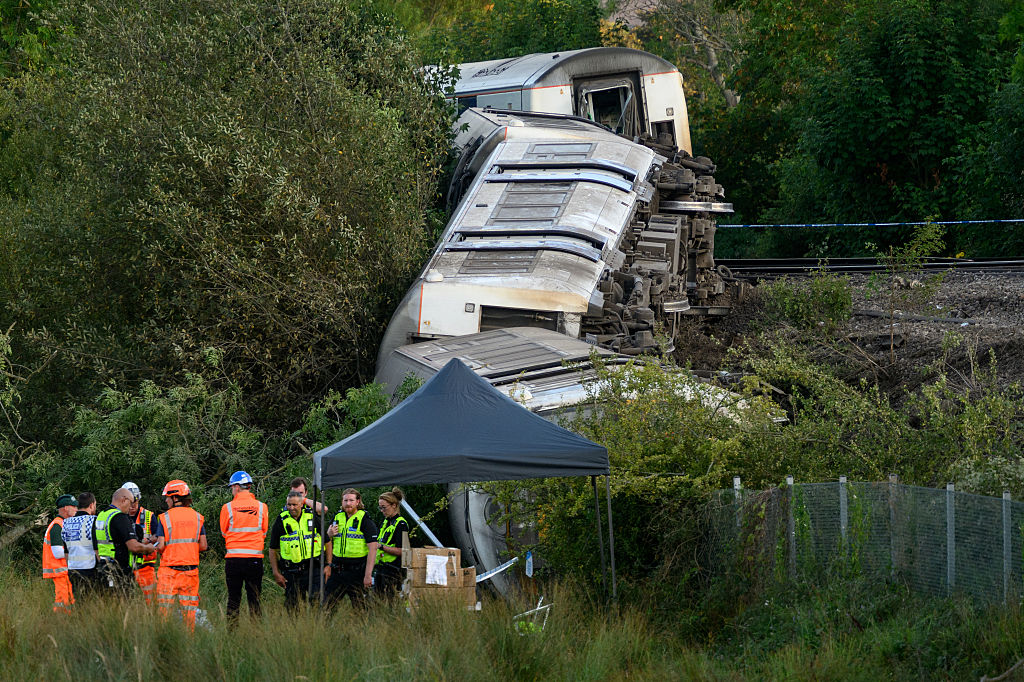
It’s been a bumpy ride for the railways in the past few weeks – quite literally for the passengers on the 14.24 train from Victoria to Eastbourne last Thursday, which derailed near Lewes, resulting in three carriages tumbling down an embankment. This was the latest in a series of incidents in recent weeks that have raised concerns about safety standards in an industry where any mishap immediately attracts huge attention from the media and the public.
The only fatality was on 19 June, when an East Midlands Railways service ran into another train near Bedford, apparently after passing a red signal. The driver was killed in the accident, which is still under investigation by the Rail Accident Investigation Branch.
Then, just under a week later, in an episode that has attracted little media attention, the warning signals at a level crossing near Preston that had recently been repaired failed to sound. As a result, the barriers had not been lowered and a train smashed into a car, in which the driver was killed and a child seriously injured. While most level-crossing accidents are the result of car-driver error, in this case the railway will be held responsible.
While the impact on the people directly involved in these incidents should not be forgotten, in terms of the history of the railways, they are relatively minor. The spectacular pictures of the stricken train near Lewes, with three carriages lying on their sides, would in the past have suggested that there had been multiple casualties. However, thanks to the enormous progress in the design of rail carriages, the coaches were able to withstand the impact and protect the passengers inside. A generation ago, there would not have been such a relatively happy ending.
This is part of the wider story of how the railways have responded to public concerns about safety on the tracks in recent years. A combination of innovative technology and a far greater emphasis on safety has transformed an industry in which lessons were consistently not being learned from successive disasters. For example, it took the 1999 Ladbroke Grove crash in which 31 people died for a basic safety procedure to be implemented that greatly reduced the number of signals being passed at danger – despite it having been available for decades. Today, the general expectation is that there will be no accidents at all across the system.
The improvement has been remarkable. From roughly 150 deaths in the 1970s and 55 in the 1990s, there have been only five fatalities since 2010, including that of the Bedford driver. This reduction, however, has raised fears that complacency has set in. The period included 13 years in which not a single death resulting from a rail accident was recorded (suicides and trespassers, around 275 a year, are not included in the statistics).
Nevertheless, there are concerns among the railway managers I speak to that this record may not be maintained. They are worried that the series of recent incidents that took place in quick succession are not just a blip but, rather, signs that complacency is creeping in. One manager asked, rhetorically: ‘When did you last hear a minister or an industry leader manager speak about safety?’
There is worry, too, that the catalyst may be the structural upheaval caused by the current reorganisation of the railways. The renationalisation and creation of Great British Railways are mostly recognised as a positive move, and it was in fact the Tories who began the process of bringing back together operations and infrastructure in 2018.
The fact that this is a more sensible way of running an industry that was fragmented by privatisation cannot obscure the reality that change can be a poor bed partner of safety. As old barriers tumble and new processes and working methods are established, managers and their staff can lose focus on the basic task of keeping the railway running safely. As one insider put it to me: ‘People become concerned about what role, if any, they will have in the new structure and take their eye off the ball in their day job.’
We have been here before. In the aftermath of privatisation there was a series of four major rail accidents – Southall, Ladbroke Grove, Hatfield and Potters Bar – whose cause could all be attributed to the changes that had taken place in the industry. Fortunately, the gaps in the system were plugged and the safety record immeasurably improved.
Railway managers were, in the past, haunted by recent disasters. But now, with nearly a quarter of a century without an accident that has caused more than a handful of deaths, that collective memory and the consequent attention to safety is being lost.
One industry insider pointed out to me the near-disaster near Wootton Bassett in March 2015. A charter train hauled by a steam engine with more than 500 passengers, mostly rail enthusiasts, and crew aboard passed a signal at danger that was protecting a major junction. The driver had deliberately disabled the warning system, thinking it was malfunctioning and the train came to rest on the junction where a 125 high speed train, carrying more than 200 passengers, had passed just 45 seconds previously. Remarkably, the driver was not jailed for his error but merely given a suspended sentence.
This near-miss should have a permanent place in the railway’s collective memory. The death toll from a 125 train hitting a steam locomotive amidships could well have made it one of the worst, if not the worst, rail accident ever seen within these shores, possibly beating the toll of around 225 at Quintinshill in Cumbria in 1915 when three trains collided. This example is merely to demonstrate that the railways are always just one piece of bad luck and one egregious error away from disaster.
There is still no need for panic. Some 20,000 trains operate safely every day. The car drive to the station remains by far the riskiest part of any journey, given that five people die on our roads every day. But each of these incidents should be a warning: complacency has no place on the railways.
Christian Wolmar’s latest book, Fast Track: The Extraordinary Story of High Speed Rail, has just been published by Penguin.

(personal highlights)
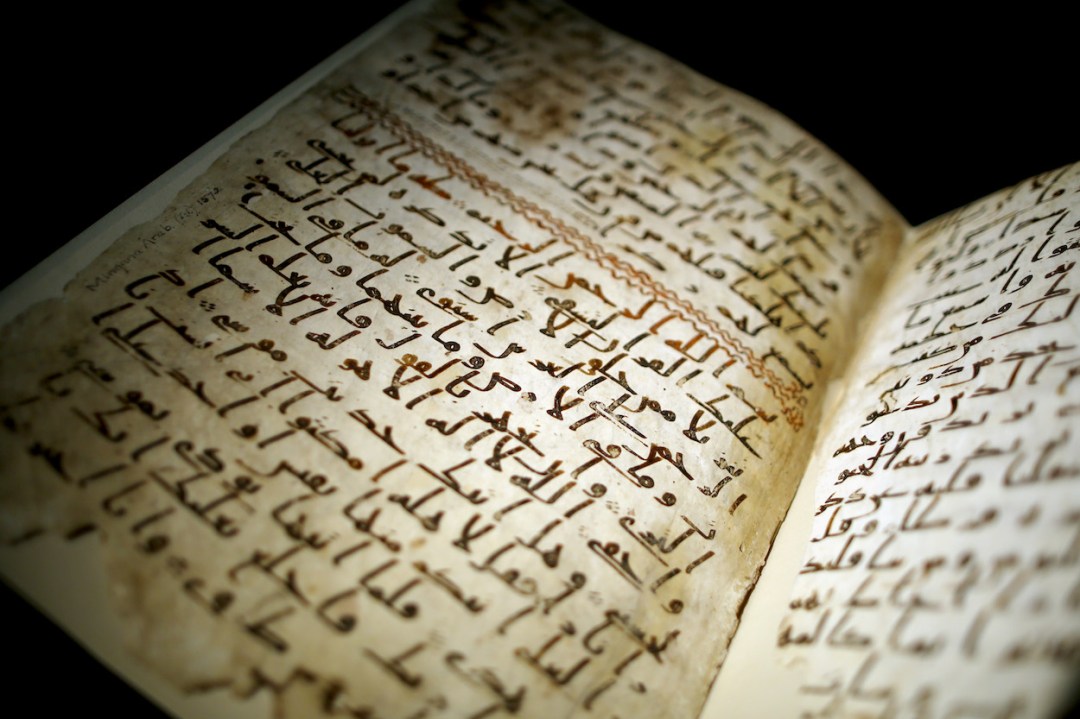
I did not come to Islam through theology. I came to it through fear, threat and hatred directed at me and the world I live in. I think the first time I became aware of something called Islam was in 1989, when Salman Rushdie was sentenced to death by Iran’s ‘Supreme Leader’ for writing his novel, The Satanic Verses. Images of furious men immolating books spread around the world and seared themselves into my childhood mind, fixing fear and confusion to something I did not yet know how to name. My father, a bookseller, insisted on continuing to sell the book, but decided, soberly, that it would have to be kept behind the checkout desk, available only if a customer asked for it by name.
My exposure to Islam grew as I did – through bombings justified in God’s name, through chants that promised erasure of my coreligionists, through the casual way anti-Semitism travelled across borders and languages wearing religious dress. Like many non-Muslim westerners of my generation, my first encounters with Islam were not in a library or a classroom but in the shadow cast by violence: the planes of September 11th, the suicide bombings of the early 2000s, the long years of jihadist attacks in Europe, and now October 7th and what followed. That history does not grant me or anyone else moral authority, but it does impose on us a responsibility. When an ideology repeatedly intrudes into people’s life uninvited, through bloodshed and intimidation, indifference ceases to be a neutral position.
Jews carry an inherited memory of what happens when a minority faith is blamed, caricatured, or collectively indicted, and liberal societies are built, rightly, on restraint, on the instinct to protect belief from suspicion. Criticising another minority’s religion feels perilously close to betraying those instincts. But October 7th and its aftermath intensified an inquiry that had already been running quietly for years. I have reported from the scenes of Islamic terror attacks around the world, from London Bridge to the Manchester Arena, the Bataclan and Le Petit Cambodge to the Brussels Metro, from Tel Aviv, Kibbutz Be’eri and others in between. As the cries of ‘Allahu Akbar’ echoed in the air, mass murder was followed by celebration. Children and journalists were murdered for satire or music. Rape was followed by denial. Jewish deaths were followed by caveats. Slogans promising elimination were waved away as metaphor. Attacks on non-Muslims in western cities were treated as regrettable spillover rather than ideological consequence. Again and again came the reassurance: this isn’t Islam.
The claim itself is familiar and authoritative. Islamism, we are told, has nothing to do with Islam. Extremists are impostors. Their violence represents a distortion of a peaceful faith. Western leaders across liberal democracies have insisted on this distinction for more than two decades. In 2001, speaking at the Islamic Center of Washington, D.C., George W. Bush declared: ‘The face of terror is not the true faith of Islam. That’s not what Islam is all about. Islam is peace. These terrorists don’t represent peace. They represent evil and war.’ In 2014, Barack Obama declared that ‘Isil is not Islamic’. Theresa May spoke of ‘a perversion of Islam’ after the London Bridge attack. Emmanuel Macron described Islamist separatism as ‘a political ideology’ distinct from the religion itself. Anthony Albanese’s language after the Bondi Beach attack likewise emphasised unity and condemned extremist violence, framing the incident in terms of violent ideology, rather than detailed theological distinction.
This reassurance signals decency. It protects innocent believers from collective blame. It allows plural societies to breathe. But as an explanation, it is weak. Comforting language becomes fragile when it cannot bear explanatory weight. Islamism has emerged repeatedly across continents, cultures and generations. It has done so in majority-Muslim states and minority diasporas, in conditions of poverty and relative prosperity, under dictatorships and within democracies. It survives military defeat and rhetorical condemnation. An account that treats this recurrence as accidental strains credibility. An explanation that requires redefining millions of self-identified Muslims out of their own religion sidesteps the phenomenon.
Even many Muslims who oppose extremism reject that move. Several reformist voices I have spoken to insist that denying Islamists their Muslim identity is theologically incoherent and politically counterproductive. Others argue that once theology declares itself irrelevant to violence, the entire burden of containment falls on secular law and security services. The idea that Islamism is not Islam fails because it resolves anxiety rather than answering questions.
Those questions shaped several interviews I conducted over the past year for my podcast series. I deliberately sought out Muslims, ex-Muslims, scholars, reformers, former insiders, and survivors who disagree profoundly with one another, for in-depth, long-form discussions. These were not ‘gotcha’ conversations or exercises in moral exhibitionism. They were stress tests. I pressed where answers hardened into slogans. I asked the same question in different forms, sometimes to discomfort, sometimes to silence. Is Islamism an abuse of Islam, an authentic expression of it, or something uncomfortably in between?
What emerged were four broad frameworks to approach this question, each internally coherent, but each incomplete.
One answer treats Islamism as Islam applied without disguise once political power is available. Mosab Hassan Yousef, the son of a Hamas co-founder who later worked covertly with Israeli intelligence to prevent attacks, was the most uncompromising voice I encountered. Sitting with me in my home, he explained that Islam is not primarily a spiritual faith but a political and legal system, and that movements like Hamas are not distorting it but implementing it coherently. In his view, the illusion lies in ‘moderate Islam’, which he described as people already living outside the doctrine while retaining its label. Yasmine Mohammed, a Canadian activist who escaped an extremist upbringing and later a forced marriage, reached a similar conclusion through her own experience, rather than ideology. She argued that Islamism flows naturally from doctrines governing law, gender, obedience, and supremacy when taken seriously. For both, Islamism is not a corruption but a revelation.
A second framework treats Islamism as a modern ideological mutation rather than a theological core. Dr Qanta Ahmed, a Muslim British-American physician who has practised medicine in Saudi Arabia, Pakistan, and post-Isis Iraq and examined forensic evidence from October 7th, described Islamism as a totalitarian ideology that mimics religion while hollowing it out. In her account, Islamism arises from within Muslim societies but operates like fascism: disciplined, transnational, and adept at capturing institutions and moral language. It draws on Islamic symbols because those symbols mobilise loyalty, even as genuine religious literacy collapses.
A third answer comes from reformist theology. Imam Paul Salahuddin Armstrong, a British convert to Islam, now an imam and founder of the Association of British Muslims, argued that Islamism represents a deliberate misreading of scripture. Islamists, he said, extract fragments, ignore context, and weaponise grievance while abandoning Islam’s ethical tradition. His response lies in education, textual literacy, and firm secular law. Islamists are Muslims, he insisted, but what they do is a betrayal of Islam read holistically.
A fourth framework is structural rather than theological. Professor Mordechai Kedar, an Israeli scholar of Arab political culture and a former intelligence officer, treated Islamism as a civilisational dynamic. In his view, Islam does not separate religion from governance, and once demographic and cultural dominance emerges, political Islam follows regardless of individual intention. In his analysis, even well-meaning moderates are foot soldiers in a broader conquest. Reform, dialogue, and reinterpretation miss the point. Containment is achieved by denying Islamism the conditions under which it flourishes – something western societies struggle with today as it challenges their principles of tolerance, freedom and acceptance.
These positions contradict one another, but all agree on something: Islamism is real, organised and dangerous. More specifically, every person I spoke to about this subject, across every disagreement, treated Islamism as arising from within Islam’s civilisational and theological ecosystem, rather than arriving as an external contaminant. The argument was never about whether Islamists speak Islamic language, cite Islamic sources, and claim Islamic legitimacy. The argument was about what that reality means, and what obligations it imposes on everyone living under its shadow.
Armstrong refused the manoeuvre of removing extremists from Islam by linguistic fiat. When I asked him directly whether Salafist, Islamist, violent readings could be classed as Muslim, he answered in full: ‘If a person says they’re a Muslim, I can’t deny that. That’s between them and Allah. But at the same time, if they are doing things which are either criminal or worse, violent and extremist, I condemn what they do and I don’t see that as a true reflection of Islam or how a Muslim should be.’ He continued: ‘But like I said, I can’t deny. If we say that they’re not Muslims and play takfir [the act of declaring another Muslim an apostate] on them, that’s the game they play. I’m not going to get into that.’ His position leaves no route to denial.
Ahmed went further, because she treats denial as strategically dangerous. She explicitly addressed the post-9/11 instinct among leaders to declare Islamists outside the religion, and rejected it. ‘All Islamists would…say that they subscribe to Islam and describe themselves as Muslim. And I would not disagree with their description…they are coming from among us,’ she told me. She then underlined the point with a bluntness that no political leader has ever risked: ‘But I don’t deny that these individuals are Muslims. They’re part of Muslim society.’ Later in the same conversation she returned to it not just as a regrettable admission, but as a practical rule for liberal societies: ‘If an Islamist says that they’re Muslim, believe them, I can’t deny that they are Muslim. Do I think that they’re following the spirit of Islam? No. But if they say that they are Muslim, I have no choice but to believe them.’
Mosab comes at the same point from a harsher angle, and the significance lies in the direction of his criticism. He does not spend his time arguing that Islamists have mislabelled themselves. On the contrary, he argues that vast numbers of non-Islamist, self-described Muslims have detached their identity from the implications of the belief system they still claim. His wording is abrasive because he wants it to be. ‘You don’t believe in any of the values, you oppose all the values of Islam, but you still identify as a Muslim,’ he said, describing what he sees as the central psychological contradiction of modern Muslim identity, especially in the West. When I pressed him on whether this meant that moderate Muslims should, in effect, explicitly leave the religion, he said: ‘They are already out of Islam.’ Whatever one makes of the claim, it confirms the underlying premise: Islamism remains tied to Islam in his mind, and the burden of inconsistency sits elsewhere.
Yasmine’s account is less doctrinal in tone and more experiential, yet it converges at the same fault line. ‘The entire premise of Islam is wrong,’ she told me. Then she made the political point concrete, naming the mechanism by which scriptural ideology becomes governance: ‘The worst country in the world for women right now is Afghanistan – historically it’s always a Muslim majority country… because of all the Sharia they implement.’ The language around Sharia is not metaphorical for her. It is an operating system that, once installed, governs women first and then everyone. For her, Islam leaves little option: ‘One of the worst parts of Islam is the fact that it’s so totalitarian and it leaves no room for any kind of critical thinking, any kind of humanity really.’ She is blunt about her view of Paul Armstrong’s approach: ‘If somebody like Paul is saying, “No, it’s not a part of Islam. Those guys are just perverting our beautiful religion,” well, that’s just wrong.’ To prove it, she emphasises that the patterns seen across Muslim-majority countries are not accidental or marginal: ‘There’s a reason why when you look across these 57 Muslim majority countries, you’re seeing some very clear common threads.’ For her, Islamist practices follow Islamic edicts: ‘Yes, those people are following the edicts of Islam.’
Loay Alshareef is a Saudi-born Muslim educator and public reformist who has built a large online following by challenging anti-Semitism and Islamist assumptions in Arabic and English. Having once absorbed those ideas himself, he now confronts them openly, arguing that Islamism must be rejected clearly and publicly from within Islam, not explained away or euphemised. He spoke to me as a believer, arguing for reform and moral courage, drawing an explicit line between his own faith and political Islam, framing it as a responsibility crisis within Muslim societies rather than a misunderstanding forced from outside. ‘I love my faith. But I’m against radical Islamists,’ he said. And he insists that moderation without speech becomes complicity: ‘Moderate Muslims now should speak up.’ Yet Alshareef does not pretend the problem floats free of Islamic institutions. ‘We have a problem in the mosques. We have a problem in the madrassas,’ he said, and he tied the issue to interpretative habits, not distant politics. ‘If these verses are taken to the literal meaning that they are applicable every time and everywhere, you would always have a problem.’
Kedar shares Loay’s emphasis on institutions and demographic power, while refusing the western habit of treating Islamism as some secret fringe plot. ‘Conspiracy has the meaning of something which is being done behind the scenes by all kinds of deception. No, this is being done openly,’ he said. Later he offered a definition that matters because it sets a boundary that liberal societies can actually legislate around. ‘Once you spread this, these ideas or others, once you want to implement it on others, you become Islamist,’ he said. In that formulation, Islam as personal devotion remains tolerable; Islamism begins at imposition on others.
So the interviews yield something that slogans obscure. Islamism sits inside the category of Islam as lived identity and as claimed authority, even when its legitimacy is contested. Some of my interviewees treat it as doctrinal consistency, some as ideological capture, some as deliberate abuse, some as a civilisational emergence. But none treat it as unrelated from the original religion. That recognition clears the ground. It forces the conversation away from reassurance and towards strategy.
So how do we respond? The first tool is internal moral confrontation, the Loay model: Muslims speaking plainly, refusing euphemism, refusing the insulation of silence. The strength of this response is that it can puncture the social taboo that protects hatred from scrutiny. Its weakness is that mosques, schools, networks, intimidation and money can overwhelm moral courage, especially in communities where dissent carries social and sometimes physical risk. Reformers often get killed.
The second tool is theological education and contextualisation, the Armstrong model: treating Islamism as deliberate manipulation and answering it with literacy. Its strength is that it engages the text that Islamists use. Its weakness is that ideological entrepreneurs can move faster than educators.
The third tool is institutional disruption and narrative clarity, the Ahmed model: naming Islamist ideology, mapping its networks, refusing to let it disguise itself as a mere religious minority while it works to ‘undermine the very democracy that gives you a home, food, shelter, a political voice’, which Ahmed calls ‘completely hypocritical behaviour.’ This approach offers a realistic diagnosis of how capture happens in the West: committees, councils, curriculum, grievance bureaucracies, intimidation through accusations of bigotry. Its weakness is that it can sound bloodless next to the religious heat that fuels the movement, and it risks fighting symptoms while the underlying theological plausibility remains available for reuse.
The fourth tool is civilisational containment, the Kedar model: denying Islamism the demographic and legal conditions under which it can harden into parallel authority. Its strength is that it treats the phenomenon as cumulative and therefore addresses the cumulative drivers. Its weakness lies in moral discrimination. It can struggle to protect the loyal minority from suspicion, and it can tempt the state towards broad-brush policies that punish integration alongside extremism. If even assimilated or moderate Muslims are part of a rising tide, albeit unknowingly, then even they pose a potential threat to civilisational drowning once the water has risen high enough for extremism to take control.
The first act of policy, however, should be honesty. A society cannot defend what it cannot name. A democracy cannot draw boundaries around an ideological threat while insisting, in public language, that the threat has no relationship to the religion whose symbols and texts it uses, and whose communities it recruits from. My interviews, taken together, point to a grimly practical conclusion: the problem demands protection of peaceful Muslims and confrontation of organised Islamism, at the same time, in the same breath, without resorting to fictions that dissolve under the slightest pressure.
These questions matter because western societies are already acting on assumptions about Islamism while refusing to name them. Institutions accommodate demands they would reject from any other ideology. Language shifts. Boundaries blur. Religious grievance is converted into moral currency and, increasingly, into administrative doctrine. Attempts to formalise concepts such as ‘Islamophobia’ illustrate the pattern: definitions so elastic that they risk collapsing hostility toward people into immunity for ideas, and prejudice into a shield against scrutiny. The result is not protection but confusion. Legitimate critique is chilled, while genuine hatred is neither isolated nor confronted. At the same time, public frustration curdles into suspicion, feeding movements that collapse critique into collective blame. Denial produces appeasement on one side and backlash on the other. Saying that Islamism draws on Islamic sources does not indict every Muslim.
This inquiry has never aimed to put Islam on trial. It asks whether our prevailing narrative has become a shield against thinking. Pretending the problem does not exist helps no one, least of all Muslims who resist extremism under pressures most westerners never face. If we cannot say what Islamism is, where it comes from, and how it relates to Islam itself, then we are not practising tolerance. We are practising negligence.
There is a pattern liberal societies struggle to acknowledge: every idea carries within it the conditions of its own failure when pursued without restraint. The enemy of an idea is often its excess.
Since the end of the Cold War, western democracies have increasingly mistaken moral absolutism for moral clarity. Good principles are treated as if they were exempt from limits, as if freedom, openness, transparency, and tolerance could only ever heal. Yet every intervention operates within a dosage range. Medicines cure at one concentration and poison at another. Political principles are no different.
This is visible in the way liberal states speak about Islamism. The insistence on total tolerance, applied without boundary or hierarchy, has produced a language that cannot name threats without apologising for doing so. ‘The word jihad has a number of meanings,’ said the Metropolitan Police, after a caliphate of clowns called for it on a London street not long after the October 7th massacre. The result is paralysis. Public debate fixates on protocols, optics, and disclaimers, while the underlying question of what preserves a free society remains unaddressed.
The problem is not that liberal values are wrong. It is that they are treated as self-executing. Strategy is assumed to flow automatically from virtue. Yet in reality it requires choosing which goods must yield in order to preserve others. It demands prioritisation, sequencing and limits. A society that refuses to rank its values ends up unable to protect any of them.
Islamism exposes this weakness with particular efficiency because it operates as an absolutist system confronting a relativist one. It does not negotiate. It advances. It exploits procedural openness, moral hesitation, and the fear of appearing discriminatory. It thrives in environments where ideology is mistaken for identity, and where questioning ideas is conflated with attacking people.
There is an uncomfortable symmetry here. Just as western liberalism falters when it becomes absolutist about tolerance, Islam falters when it becomes absolutist about doctrine. Islamism emerges where interpretative restraint collapses, where scripture is treated as total law rather than moral inheritance, and where compromise is recast as betrayal. As a comparatively young religion, Islam may yet develop stronger internal mechanisms of restraint, but that internal evolution may take generations. The pace of that evolution cannot dictate the safety requirements of the societies in which Islam now operates, and we cannot suspend our own safeguards while waiting for it. Plural societies must protect themselves against absolutism, not accommodate it. Otherwise, they will collapse.
What is demanded, then, is the recovery of judgement of the application of liberal values, the critical distinction being not theological but political. Belief as private devotion is compatible with a free society. Belief as imposed authority is not. When western states refuse to enforce that line they outsource coexistence to chance.
Societies fail when they treat their best ideas as untouchable abstractions rather than instruments of self-preservation. They endure when they remember that principles exist to serve human flourishing, not to override it, and that survival is not an embarrassment to liberalism but its precondition.


