


Há muitos anos que não desistia de um livro, mesmo sabendo que tinha sido o meu amigo Manuel Braz a traduzi-lo. Salvam-se as inúmeras referências históricas que apaziguam o carácter de "auto-ajuda" que perpassa no livro. Como sou, desde há décadas, avesso à auto ajuda e a este tipo de divulgação, desisti.


(sublinhados meus)
Lenine tinha um talento singular: conseguir que pessoas aparentemente inteligentes fizessem coisas estúpidas ao serviço de uma causa estúpida. O próprio usava um termo bastante conciso e preciso para designar tais criaturas: idiotas úteis.
O conceito é simples: cidadãos medíocres, mas bem-intencionados, normalmente bem instalados no conforto burguês, convencem-se de que apoiando causas e regimes duvidosos, estão a servir o “progresso” e o “bem”. A sua motivação é a vaidade moral e uma fé inabalável na sua própria superioridade ética.
Imagine-se um sujeito banal, licenciado às três pancadas no ISCTE, incapaz de alinhavar uma frase com mais de seis palavras, que leu meio livro no secundário e é ignorado até pela pouco exigente vizinha do 2.º esquerdo. O que fazer com tanta frustração?
Aderir a uma causa. E, por via disso, transformar-se instantaneamente num ser indignado, e convicto de ser moralmente superior.
Funciona com o clima, com o capitalismo, com o planeta, com Gaza, e com todas as “fobias” e “causas” da moda.
Incidentalmente serve também para tentar engatar alguém na próxima manifestação. Desde as manifes “frifripalestine” até às erupções da Climáximo, passando pelos sunsets de ganza e jambé nos conveses das flotilhas, a libido revolucionária é uma constante antropológica dos activistas e dos idiotas úteis.
In ilo tempore, a fauna era preenchida por artistas de artes duvidosas, que celebravam a Revolução Russa enquanto os camponeses morriam à fome. Depois vieram os intelectuais de Cambridge, que achavam Estaline e a ditadura do proletariado, vias necessárias para os amanhãs que cantam. Hoje o modelo é o mesmo, mas o alvo imediato da “intifada global” é o judeu, como via privilegiada para a Revolução.
O idiota útil contemporâneo já não cita Lenine, de resto nem sabe quem é, mas decora os títulos do The Guardian, do Haaretz e do New York Times, dos “relatórios” da ONU e das ONGs activistas financiadas pelo Qatar e pelos contribuintes europeus. Já não ergue o punho pelo modelo soviético, mas berra pelo clima, grita pelo Hamas, ou por qualquer “oprimido” de ocasião, desde que convenientemente distante. Não corre nenhum risco, mas sente-se heróico. Acredita que o Hamas é um movimento de “resistência”, que Israel é “colonialista” e que a opressão é sempre ocidental.
Se a realidade insiste em contradizê-lo, tanto pior para a realidade. A fórmula é bastante simples: o inimigo é o Ocidente, o culpado é o capitalismo e o “sionismo”, a vítima é sempre o “outro”, seja ele quem for, desde que do outro lado da equação esteja o “heteropatriarcado” ocidental e/ou os judeus. O resto (a verdade, a lógica, os factos) é apenas ruído burguês.
É com naturalidade que o activista berra substantivos tremendos e cita os sagrados números do “Ministério da Saúde de Gaza” , de forma mais reverente que os versículos do Corão numa madrassa, ou os discursos de Francisco Louçã numa reunião do BE.
Jura que luta pela paz, mas chora de raiva quando alguém a propõe, sobretudo se for Trump. Na verdade, a paz é-lhe insuportável, porque não dá selfies, nem manifs, nem subsídio, nem permite sinalizar virtude.
Note-se que não existe activismo anti-chinês pela ocupação do Tibete, nem activismo anti-russo pela ocupação da Ucrânia. Porquê? Porque só o judeu como alvo, confere prestígio moral e nenhum risco físico.
Desiludidos com a classe operária, que prefere o iPhone e o futebol à sua missão histórica de derrubar o capitalismo, os activistas transferiram a fé para várias “minorias oprimidas”, sobretudo para os jihadistas e extremistas islâmicos, que são consistentemente violentos e sinceramente antijudaicos.
As contradições não importam. É por isso que há os “gays pela Palestina” e Mariana Mortágua não hesitou em navegar pela causa, ao lado de quem a atiraria sem pestanejar do alto de um telhado.
Não é incoerência. As “causas” (Palestina, clima, género, raça) são apenas bandeiras descartáveis, pretextos de mobilização emocional para quem precisa de se sentir útil, mas sofre da síndroma do impostor.
Tanto o activista como o idiota útil (diferentes, mas por vezes indistinguíveis), acham-se supinamente informados. Repetem convictamente o que ouviram na bolha da “resistência”, citam “fontes das Nações Unidas” e de obscuras ONG, partilham frases do X e vídeos do Tik Tok, tudo isto com a solenidade e falta de sentido de humor de quem descobriu os segredos do Universo.
Não percebem sequer que são apenas a versão recente do mesmo espécime que Lenine descrevia: um utensílio descartável, não particularmente esperto, entusiasmado no apoio a causas que mal compreende e que o esmagariam se vencessem.
O idiota útil, também movido por uma espécie de culpa burguesa, é basicamente alguém que se odeia a si mesmo.
Como lhe falta coragem para se castigar, renunciar ao iphone, ao ipad, ao Cerelac e ao conforto, procura expiar a culpa apoiando tiranos estrangeiros, terrorismo, ou ideologias falidas, tudo o que seja contra aquilo em que ele prospera, como revolucionário de sofá.
A criatura milita sempre na bolha exígua da esquerda urbana, particularmente em certos campus universitários onde se estudam coisas como “Justiça Climática, Género e Libertação Pós-Sionista na Palestina”, “Epistemologias Interseccionais: Raça, Clima e Identidade nas Fronteiras de Gaza”, etc. Esta esquerda esquizofrénica tem uma admiração patológica por movimentos que, no fundo, a desprezam.
Lenine precisava dos idiotas úteis para dar verniz moral à brutalidade bolchevique. Hoje os aiatolas do Irão, o Hamas em Gaza, os Irmãos Muçulmanos, o Emir do Qatar, ou a nomenklatura de Pequim, precisam deles pelo mesmo motivo: para que a violência pareça virtude e o terror pareça justiça.
E, como há um fornecimento inesgotável de idiotas ansiosos por mostrar virtude, aparecer na televisão e sentir-se do lado certo da História (vejam-se por exemplo os casos de Sofia Aparício e da Greta), o truque continua a florescer.
A simbiose entre a extrema-esquerda e o fanatismo islâmico seria até cómica, se não fosse trágica. De um lado, feministas que marcham ao lado de quem apedreja mulheres; do outro, ecologistas financiados por regimes sustentados pelo petróleo, do outro antissemitas doutrinados por narrativas primárias e antigas. Uns e outros unem-se na mesma cruzada moral: destruir o único sistema político e económico que lhes permite existir.
Ao longo do tempo, os slogans mudam, os cadáveres mudam, mas o mecanismo é o mesmo: alguém mata, alguém justifica, alguém aplaude, e todos dormem tranquilos.
Por cá, a colónia prospera. Houve tempos em que usavam t-shirts com o Che Guevara e boina revolucionária. Nos dias que correm, apresentam-se, elas de marrafa, eles de rastas ou capuchos, gritam “frifripalestine”, tomam banho de mês a mês, e usam kufyas no pescoço e iPhone na mão, os símbolos gémeos da sua “coerência” moral.
No fundo, é fácil reconhecê-los: aparecem sempre em magotes quando há um assassino a justificar e um inocente a culpar. A diferença entre o idiota útil de Lenine e o de hoje é apenas tecnológica. O primeiro usava cartazes, o segundo usa selfies e hashtags. Mas ambos servem o mesmo propósito: dar um ar respeitável à estupidez.
Quando tudo acabar, quando os horrores que defendem lhes baterem à porta, irão jurar que não sabiam. E, tal como os de 1917, serão lembrados não pelo mal que combateram, mas pelo mal que ajudaram a crescer.
(personal underlines)
If they were from any other minority, no one on the left would have the slightest trouble denouncing the deaths of 53-year-old Adrian Daulby and 66-year-old Melvin Cravitz as the result of a lethal racist attack. A terrorist with the resonant name of Jihad Al-Shamie – talk about nominative determinism – went for them because they were Jews.
That’s all there was to it. The assassin, a British citizen of Syrian heritage, showed his appreciation for this country by ramming his car into the grounds of the Heaton Park Hebrew Congregation synagogue in my home city of Manchester and stabbing any Jew he could find.
He had never talked to them. He had never discovered their views about Israel and Palestine. It was enough that they were Jews, and any Jew would do. So he killed one and left the other to be hit by a stray police bullet in the fight that followed. These are racist murders. Just as the huge upsurge in abuse of Jews since the Hamas massacres of October 2023 represents a huge upsurge in racial hatred.
Last night pro-Palestinian demonstrators couldn’t give it a rest – not even for 24 hours. They were outside Downing Street and Manchester’s Piccadilly station, chanting all the old slogans and ducking all the hard questions. ‘Globalise the intifada,’ they cried – does that mean killing Jews in Manchester? ‘Palestine will be free from the river to the sea’ – does that mean driving out all the Jews living between the Mediterranean and the River Jordan?
It should be the easiest thing in the world for pro-Palestinian demonstrators to reject accusations of Jew hate and dismiss these questions as smears. It’s not anti-Semitic to denounce Benjamin Netanyahu and the Israeli far right. Nor is it in any way racist to deplore the reduction of Gaza to a charnel house of rubble and bones.
Yet much of the British left cannot defend itself against charges of bigotry because many leftists (not all, but many) refuse to define anti-Jewish racism and declare it unacceptable. They can’t and won’t because any condemnation of anti-Semitism would imply a condemnation of Hamas, Hezbollah, and the Iranian theocrats. Rather than take a stand against the very people who have led the Palestinian cause to disaster, they prefer to say nothing at all.
I am not nitpicking or raising arcane issues. Three points ought to be obvious. Firstly, the best people to tackle murderous anti-Jewish racism on the left and in Muslim communities are leftists and Muslims themselves. Conservatives will not get a hearing.
The British left ought to have learnt the hard way that a failure to take a stand leads to disaster. The Equality and Human Rights Commission’s finding that the Corbyn-led Labour party was responsible for ‘unlawful acts of harassment and discrimination over anti-Semitism’ allowed Keir Starmer to purge the left.
Left-wing anti-Semitism is a gift that keeps on giving for some conservatives. As Donald Trump is showing in the United States, it allows the radical right to turn the left’s own language of anti-racism and anti-fascism against it. Yet go to the Palestine Solidarity Campaign and all you find is obfuscation.
As with anything else to do with Jews, there are arguments about the correct definition of anti-Semitism. From a Palestinian point of view, by far the most accommodating is contained in the Jerusalem Declaration on Anti-Semitism, written by liberal academics in 2021. It challenged the alleged protection given to the Israeli government by the more widely used International Holocaust Remembrance Alliance definition, which has been circulating in various forms since the early 2000s.
The authors of the Jerusalem Declaration are clear that ‘supporting the Palestinian demand for justice and the full grant of their political, national, civil and human rights, as encapsulated in international law’ is not racist. Nor is supporting a two-state solution or a unitary democratic state. All the Jerusalem Declaration does is say that it is anti-Semitic to imagine that Jewish conspiracies control the world, or to deny the holocaust, or to hold Jews collectively responsible for the behaviour of the Israeli government – as all those who attack synagogues do.
A low bar to jump, you might think. But it was too high for the Palestinian Solidarity Campaign. It denounced the academics’ attempt to protect the fight against racial prejudice without undermining the Palestinian cause. It urged:
Public bodies considering adopting the [Jerusalem Declaration] to consider it with a critical mind in relation to the dangers of it too being used to reinforce the illegitimate policing of speech about Palestine and advocacy for Palestinian rights.
Very well then, if the Jerusalem Declaration on Anti-Semitism won’t do and if the International Holocaust Remembrance Alliance definition of anti-Semitism won’t do either, what will? Apparently, nothing.
The Palestine Solidarity Campaign has said that it finds anti-Semitism ‘repellent’. Yet it offers no definition that might educate its supporters. It draws no lines and sets no boundaries. It just criticises anyone who tries to protect Jews. Any definition of anti-Semitism, however narrowly drafted, would capture the Iranian regime, which engages in holocaust denial; Hamas, whose founding covenant is saturated with the anti-Semitism of fascist Europe; and the Muslim Brotherhood and all the other Islamist organisations that have at some point endorsed the Hamas creed.
The same failure to take a stand is threatening Jeremy Corbyn’s attempt to build a new party to the left of Labour. Zarah Sultana, Corbyn’s rival for the leadership, claimed in an interview with New Left Review that Corbyn ‘capitulated’ when he accepted the International Holocaust Remembrance Alliance’s definition of anti-Semitism.
The obvious follow-up question was never asked: what definition of anti-Semitism will such people accept, then? The answer, in all likelihood, is none. Many leftists dare not define it because any definition, however narrowly drawn, will capture many people that the infantile left regards as allies on the ‘right side of history’ even after they have led the Palestinian cause into Leon Trotsky’s dustbin of history.
To show why these arguments matter, on Wednesday German police arrested three suspected members of Hamas for planning ‘assassination attacks on Israeli or Jewish institutions in Germany’. Can western leftists say that these suspects are potential anti-Semites or do they, like fascists of the 1930s, see the assassination of Jews as a legitimate punishment?
Conservatives may not like me pointing this out but, for all the problems it has had with individual members, the Green party provides a rock of moral clarity in this sea of double standards. Zack Polanski, its (Jewish) leader, spoke honestly and called the Manchester murders ‘anti-Semitic’. The party has cooperated with Lord Mann, the government adviser on anti-Semitism, to combat anti-Jewish racism among its members. There is even a Jewish Green movement which offers a reasoned definition of anti-Semitism and fights attempts by its enemies in the party to overturn it.
Don’t confuse Israeli people and Jews around the world with the Israeli government, it says. Don’t glorify violence, and don’t use ‘Zionist’ as a substitute for ‘Jew’. As anti-Semitic murderers stalk British Jewry, it is both terrifying and disgraceful that there are leftists who cannot echo these sentiments and prefer to whine and equivocate instead.
(personal underlines)

It smells, very badly. And even after decades of complaints, it seems Parisians still consider themselves too chic to pick up after their dogs. Taxis are a nightmare. The traffic makes central London seem like a village in Ireland. Uber drivers park as far away as possible from the designated pick-up point, fail to answer messages or calls, then charge a fortune in waiting time.
The expense is phenomenal. For three coffees, one mint tea and a croissant that had the texture of a carpet slipper, I was charged more than £30. And don’t get me started on the coffee: if Paris is the home of café culture, shouldn’t it also be that of good coffee? Wrong! It usually tastes like recycled dishwater, or as if it’s been dredged from the bottom of the Seine. It must be bad if it leaves me hankering after a Nespresso. I asked a Parisian (who I know, and who is less defensive than many of his compatriots) why it is so bad. He replied, ‘Because Parisians don’t go to cafes to drink coffee, but to socialise, read the paper and watch the world go by.’
Oh, I see! Because in other capital cities, we go into windowless booths, are served the good stuff, and leave after slugging it back without speaking a word to another soul? This arrogance about the unique, cultured ‘Parisian experience’ drives me mad. Another example of this refusal to take criticism can be found in many travel guides: ‘When people hate Paris, it’s usually that they want to travel, but they want everything to be just like home at the same time,’ goes the excuse.
When visitors to London say they hate the city, most Londoners will respond with a sympathetic ‘I don’t blame you’ or ‘I can see why’. I am a huge fan of my city, but this doesn’t blind me to its faults.
This is more than can be said of Parisians. Mention the rude waiters and bartenders, and you will be told in no uncertain terms that this is ‘just their style’. Really? When I ask for something very simple, in straightforwardly accurate French – say, a glass of red wine – why do I have to be met with a blank look before the waiter switches to English in an unfriendly and dismissive manner, leaving me feeling embarrassed and reluctant to speak French again?
Despite being recommended up the wazoo in food guides, and by locals, most of the restaurants are mediocre or bad. They often give the impression that you, the customer, are bothersome, and should be very grateful to have a table, despite the ridiculous prices. If you don’t believe me, try asking for a second napkin – then resist the temptation, following the response from the waiter, to get up, cross the room and find one yourself.
God knows, Italians can be rude, too. But it seems they do it for their own amusement, and it doesn’t feel malevolent at all. However, even the French hate Parisians – possibly because of how dangerous and scary some of the central areas have become in the past decade or so. As I stepped off the train last week, I felt surrounded by groups and pairs of men, all hanging around looking for tourists, and – given that they weren’t offering cab rides or accommodation – I can only assume they were there for the pickpocketing.
The streets stink of urine, and the place is absolutely filthy, including the Métro – way worse than anything you’ve seen on the Underground in London, which is an achievement in and of itself. Locals must drop rubbish, because I have never seen as much trash on the pavement, despite the proliferation of rubbish bins in the city. I asked about this at my hotel, only to be told petulantly: ‘London has trash too!’
Feted in the movies and in literature, Paris has a reputation for being the most romantic city on the planet. I think this only adds to the bitter disappointment many experience when they visit. It’s high time that reputation, built on sand, was finally demolished.
Yes, there are some impressive sights, such as Montmartre and the panoramic views from the Sacré-Cœur – but up close many of those tall, impressive-at-a-distance buildings are grubby, held up by decaying cement and stone. Mildew oozes from cracks, there’s rust on the banisters and used condoms everywhere, from all the prostitution sex that happens in grubby alleyways across the city. In short, there are far nicer cities in Europe, where you will very likely get a far better cup of coffee.
No words, but cartoons full of emotion!


(personal underlines)
LBC - the swamp...(season 2)

As the world’s leaders and foreign ministers meet in New York for the United Nations General Assembly (UNGA) this week, recognition of a Palestinian state is being paraded as progress towards peace. In reality, it is nothing of the sort. It only confirms what has become increasingly obvious to anyone watching the UN over the past eight years: that the organisation is in a state of malaise and its secretary-general, Antonio Guterres, the embodiment of its decline.
The UN is no stranger to dysfunction, which I saw first-hand as a security council counter-terror coordinator for five years. Every secretary-general has faced allegations of irrelevance, hypocrisy or incompetence. But Guterres stands out for having presided over an organisation that is now derided by its own staff. It is not the usual frustrations of understaffing or the griping of a bureaucracy that has never been known for efficiency. It is the weary recognition that the institution has lost its way, and that its leader appears more interested in burnishing his progressive credentials than in delivering results.
Guterres presents himself as a statesman, but in truth he is an old-fashioned European socialist with all the expected traits: endless preaching, no moral courage, and a fondness for rewarding loyal friends with plum jobs they seem unqualified for. The result is a hollowed-out organisation where personal loyalty and national patronage count for more than competence.
The UN has always had its share of cronyism – but under Guterres, that has become the organising principle of appointments, in contravention of the current imperative to make cuts. High-calibre officials with relevant experience are sidelined while mediocrities from the secretary-general’s inner circle are parachuted into high-profile posts. There was particular disquiet among UN staff earlier this year, when Guterres promoted fellow Portuguese national Miguel Graca to assistant secretary-general in March, making him a director in Guterres’s own executive office. Critics observed that a sideways move could have been made at zero cost, rather than incurring the salary burden of creating a new ASG at this time of austerity.
Guterres is an exceptionally poor leader. I will never forget the vacuum at the top during and after Covid, when the UN became the laughing stock of New York for its excessive attachment to working from home. Instead of leading the calls to get staff back into the office, he devolved decision-making to middle management who ultimately had to bear the brunt of staff complaints about returning to Turtle Bay. As one senior UN manager said to me: ‘Guterres gets to sound like the one who cares about staff welfare, while we have to impose operational necessity on them.’
The charge sheet does not end there. Equally glaring is an inconsistency in his loud campaign for gender parity in senior appointments. This has sometimes extended to throwing carefully compiled interview shortlists back at his top aides and demanding a woman be selected. When his own re-appointment was at stake in 2021, all talk of female empowerment conveniently evaporated. There was no question of stepping aside to support a woman candidate; equality, it seems, was good enough for the bureaucracy but not for him. This hypocrisy is noticed, and it corrodes morale. In the case of the new Portuguese ASG, this particular ‘Global North’ male was allowed to buck the trend of promoting ‘Global South’ females wherever possible.
Guterres’s crusade for fashionable causes does not end with gender politics. However noble his dogged progressivism may seem in the West, such an approach has proved catastrophic in conservative host countries. I am no fan of the death penalty, but when three of the five permanent members of the Security Council have it (China, the United States and technically Russia) what justifies the UN in adopting such an inflexible stance against it in Iraq? When UN overreach leads to expulsion, it leaves the host country and its citizens without the support and protection they desperately need. In recent years, we have seen the UN effectively forced to leave Mali, Sudan and the Democratic Republic of the Congo, and to abandon its work in Iraq on securing justice for the victims of ISIS.
Even staff who still believe in the essential role of the UN despair of the Guterres effect. Speaking of his attendance at the Brics summit in Russia last October, where he was photographed sharing what looked like a very deferential handshake with Vladimir Putin, one official said: ‘Nato wouldn’t put Guterres in a difficult position by inviting him to their summit, but even if they did he wouldn’t attend.’ What this conveys is not just frustration, but a recognition that the UN under Guterres has lost its way. He, however, remains deaf to these warnings, apparently more interested in applause from the lowest common denominator of the general assembly than in preserving access to make a positive difference in Baghdad or Bamako.
For all the malaise inside the organisation, the UN still enjoys reverence among the wider public and an annual budget of £2.75 billion (the British government gives £100 million) for day-to-day running costs. To many people it remains the arbiter of legitimacy in world affairs, a sort of secular Vatican whose pronouncements carry moral weight simply by virtue of being made. That misplaced deference is precisely what has allowed various UN special rapporteurs to make wild assertions that Britain and some of its western allies are serial human rights abusers.
While conflict has spread in many regions in recent years, Guterres has done precious little to stop it. The Gaza war has exposed the rot most starkly. From the moment Hamas launched its 7 October massacre in 2023, murdering families in their homes, raping women and abducting children, Guterres has struggled to say plainly who was responsible. His initial reaction to the terror attack? It ‘did not happen in a vacuum’.
His interventions since have been framed almost entirely in humanitarian terms, with little mention of the hostages, and endless calls for ceasefires that made no demands of Hamas. Despite several countries voicing their concerns, the aggressively controversial Francesca Albanese was reappointed as special rapporteur for Palestine. The UN has turned a deaf ear to increasingly forceful objections from the US to its Palestinian refugee operation, UNRWA, which is hopelessly compromised by its long association with Hamas. And it is also alienating the US by refusing to work with the American-Israeli Gaza Humanitarian Foundation.
The durability of the UN brand meant that last week’s ‘genocide’ report on Gaza landed with the authority of scripture rather than the polemic it truly was. The fact that the chair of the ‘expert panel’ which put the report together has a long history of anti-Israel bias was glossed over once her findings bore the UN stamp. The enduring illusion of UN sanctity allows the institution to launder prejudice and pass it off as impartial judgment. But this illusion of sanctity fools nobody in Washington D.C., where the UN’s most powerful member state and largest donor is sharpening its knives for an organisation in which it has lost all confidence. President Donald Trump’s UNGA speech yesterday was full of scorn for the organisation’s contribution to meeting international challenges.
Into this fog comes the great folly of statehood recognition. At the time of writing, 156 of the UN’s 193 member states have already recognised Palestine and achieved nothing. Ordinary Palestinians remain no freer, no safer and no more prosperous than before.
At best, recognition lends a sheen of legitimacy to ‘President’ Mahmoud Abbas and his corrupt Palestinian Authority, a body so discredited that it has lost control of large parts of the West Bank to Iranian-backed groups. At worst, recognition teaches extremists that massacres work. To grant statehood in the aftermath of 7 October is to confirm that pogroms pay. Applause in the general assembly will only underline the message received on the ground.
Member states that still care about the UN should be under no illusion. An organisation that cannot call Hamas what it is, that loses missions by imposing western social agendas on sceptical hosts, and that breeds contempt among its own staff, all while somehow managing to maintain the gloss and credibility of an internationally renowned arbiter of diplomacy is not merely failing. Some of its perversities are making the world a more dangerous place.
The UN was founded to defend peace and security, and it is still needed to do just that. I have seen too many conflicts in which individual member states either have no interest or refuse to take responsibility, and we will always need the UN or something similar to step into that kind of breach. But under Antonio Guterres the UN has become a theatre of platitudes, a showcase for hypocrisy and an institution starved of resources and hollowed out by malaise.
I hope the UN survives and even thrives beyond Guterres’s tenure. It has many excellent, dedicated staff and the world still needs its services. But the organisation needs reform and new leadership. Until then, recognition of Palestine will be yet another empty gesture in a UN increasingly defined by them.
Ou: como se acaba com o resto de um partido!
Miguel Prata Roque


personal underlines - only in GB...
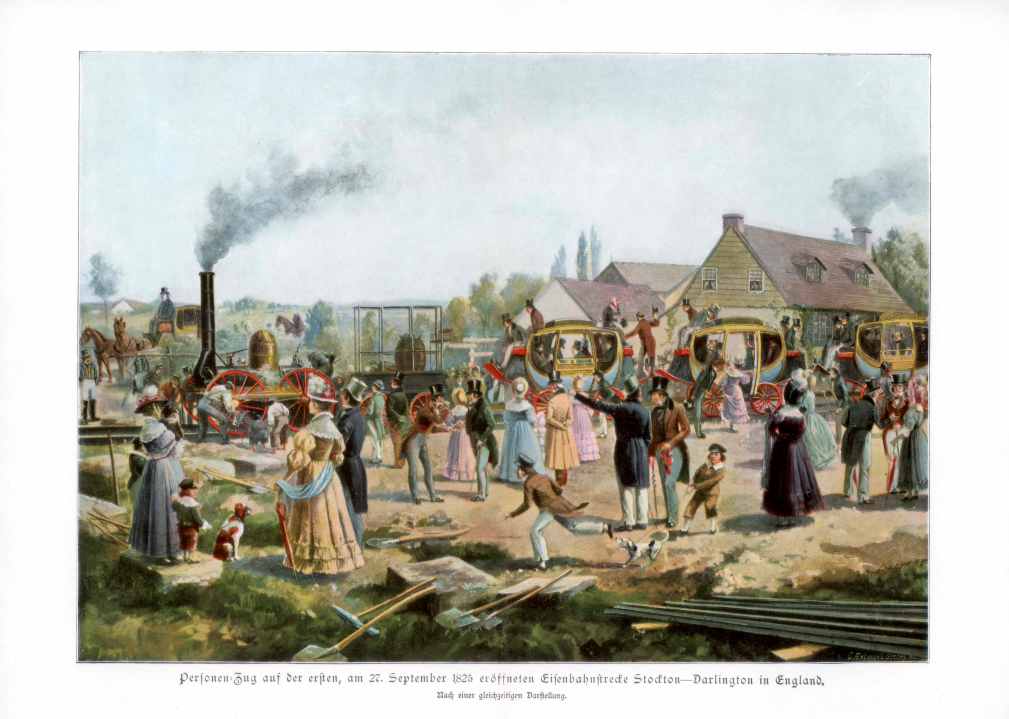
You might have missed this because it hasn’t exactly been saturated with media coverage, but this week is the 200th birthday of Britain’s railway. In fact, it’s the 200th birthday of all railways, since we invented them.
It was on 27 September 1825 that service began on the Stockton and Darlington Railway. Travelling a distance of just eight-and-a-half miles at about 15mph, the world’s first public commercial rail service arrived to a crowd of 10,000 and – as would become a characteristic feature of future British rail travel – was delayed by half an hour due to engineering problems.
Yes, the worldwide rail revolution began in the north-east of England – the Silicon Valley of rail. I know, not since H.G. Wells decided that the Martians should begin their interplanetary assault on Earth by taking out parts of Surrey has provincial England been so fêted. But it really happened. And as a result of what took place in Darlington that day – thanks to the genius of the concept and a thing called the British Empire which we don’t like to crow about any more – the world now has around 800,000 miles of railway, and billions of railway journeys are made each year.
So, what a gift that was. And thank you to George Stephenson, the Northumberland-born engineer and ‘father of the railways’ who together with his son, Robert, put the steam with the trains and the tracks to make it all happen. Of course, they were standing on the shoulders of giants such as the Cornish rail pioneer Richard Trevithick, but they were the ones who did it. Their Locomotion No. 1 hauled those first passengers two centuries ago, and was built at their works in Newcastle – works which would go on to build 3,000 engines by 1900 alone and eventually formed part of the rail division of the great British industrial conglomerate General Electric Company (along with a dozen other venerable names in the business). These would then merge with Alstom of France in 1989, before the GEC component of it was broken up and sold off in 1998.
Which makes you proud (at least up to the point where we sold it off), but the truth is we do still design and build trains in Derby (Alstom boasts that this is the UK’s ‘largest train factory’), and Hitachi also makes trains in Durham. And this matters, because despite inventing and pioneering computers, we no longer build many of them here, so at least we do turn out a few trains. Perhaps it’s beside the point, though, because like computers, antibiotics, democracy and football, railway is a gift that we have given the world – and it’s a gift that each of us can continue to enjoy, too. Because nothing beats rail travel.
Travelling by train is easily more enjoyable than any species of commercial air travel, with its relentless queuing, absurd belt-and-shoe removal and endless stupidity about laptops and certain quantities of fluids. The train is also far better than travelling by car, because on a train you can actually work or read or drink as much as you like. You can walk around and, of course, you get to avoid service stations, which easily qualify as the most repellent places in Britain. Trains are often faster, greener and, most importantly, they will broaden your horizons in a way that driving just doesn’t seem able to match.
Take the train from London King’s Cross to Edinburgh, for instance, and you are transported pell-mell through time and space. Raised on railway embankments you have a front-row seat on a cacophony of geographies ranging from farmland and pasture to villages, towns, light industry; you pass vast cooling towers, suburbs, cities – through the centres of York, Durham and Newcastle upon Tyne – spying cathedrals, castles and a coastline dotted with gems such as Alnmouth and Berwick-upon-Tweed, Richard III’s great gift to England. Travelling by train from London to Edinburgh isn’t just about getting from A to B: it’s a high-speed masterclass in British anthropology, geography and history. Before you know it you’re marvelling at the landscape, gawping through the window, a tourist in your own country.
And every now and then there’s the thrill of the speed when the driver puts his or her foot down. There’s a section outside London where the tables shake and you know you’re doing well over a ton (the trains can do 140mph, apparently). And below there’s the satisfying rhythm of the rolling stock on the tracks and something reassuring about the fact that we’ve been thumping up down these rails (though hopefully not these exact rails) since the line opened between London and Edinburgh in the late 1840s. In the days of the Flying Scotsman it took six hours to do the 393-mile journey between Edinburgh Waverley and King’s Cross. Now it’s a smidge over four. Perhaps there’s life in the old country yet.
But in a way, the time is irrelevant, because when you’re on the train, you’re on the train. It becomes the whole, rather immersive experience. And it’s a joy that you don’t need to be a former Conservative defence secretary with a penchant for nifty jackets to appreciate.
As well as what’s outside and what the Futurist manifesto called ‘the beauty of speed’, there is the spectacle of what is inside: the great British public. Observing our fellow man and woman in their unguarded moments is a significantly rewarding and much overlooked aspect of rail travel. You don’t overhear the intimate personal problems of perfect strangers in the ‘Quiet carriage’ when you’re on the M6 toll road, nor do you have the pleasure of being forced to listen to someone’s boorish sales negotiations. But that’s all part of the pleasure of rail, or at least it can be.
In 200 years, railways have given the world so much: timetables, the first world war (if you believe your A.J.P. Taylor), the concept of commuting itself, plus commuter towns and the resulting notion of working from home. They’ve given us dining cars, Thomas the Tank Engine, Brief Encounter and Murder on the Orient Express. Where would Crewe be without the railways? Letting the train take the strain on iron tracks has in fact enabled the creation of the industrial civilised world as we know it. It’s been quite a journey, and it all began 200 years ago this week on an eight-mile line between Stockton and Darlington – something we should all be very proud of and grateful for.
(personal underlines)
Most of our politicians themselves are not obedient, kindly and loyal. Similarities between candidates and their faithful cat or dog are few – but as trolls now deter supportive spouses and photogenic children from saccharine election leaflet photos, pets are increasingly becoming familial proxies. When Nigel Farage does a TikTok about his dogs Pebble and Baxter, thousands comment approvingly. But finding a family photo of the Reform UK leader is nearly impossible. And that, says Farage and many like him, is entirely deliberate.
Political animals are not new. Caligula threatened to make his horse, Incitatus, a consul. Cardinal Wolsey’s cat is immortalised in a bronze statue in Ipswich. In the 20th century, cats assuaged Winston Churchill’s black dog, so much so that a ginger cat with white socks called Jock – now in its seventh incarnation – must remain at Chartwell in perpetuity. The British bulldog himself loved animals, with a lion and even an albino kangaroo among the beasts he donated to London Zoo.
From the establishment of the republic, animals bounded, leapt and sauntered around the White House. George Washington had hounds named Sweet Lips, Madam Moose and Taster. John Quincy Adams apparently hosted the Marquis de LaFayette’s alligator, with the reptile thrashing in the executive mansion’s bath in the story, which may be apocryphal. Teddy Roosevelt had more than 40 pets, including macaws, zebras, raccoons, roosters, pigs and rats. His son Quentin, aged five, once escorted Algonquin the pony up in the White House lift.
The Chinese invented panda diplomacy, with the People’s Republic first giving the animals to the Soviet Union. Richard Nixon famously received Ling-Ling and Hsing-Hsing in 1972. Less well-known is Nixon’s reciprocal gift to the Chinese: a pair of Musk oxen.
Not as welcomed, perhaps, was the Akhal-Teke stallion given to John Major by the President of Turkmenistan in 1993. A six-month negotiation, a bribe of Moscow customs officials with a truckload of melons, an attack by bandits and unfortunate handlers being injured by the toothache-afflicted animal all featured in the journey. At its conclusion, the Household Cavalry decided that, ultimately, this particular gift horse was not for them, sending it instead to live in a Carmarthenshire sanctuary.
It wasn’t the first time an animal had put a politician under pressure. Jeremy Thorpe had Rinka. In Sochi in 2006, Vladimir Putin brought his labrador, Koni, to a press conference, knowing Angela Merkel was terrified of dogs after being attacked by one in 1995. Tony Blair said the controversy over the departure of Humphrey the cat from Downing Street was the biggest crisis of his first year of office.
In contrast, Nixon’s ‘Checkers speech’, where he paid tribute to his spaniel, humanised him. Warren Harding’s dog, Laddie Boy, ‘wrote’ articles for newspapers and became famous across the USA. Fala, Franklin Delano Roosevelt’s dog, was the subject of a hilarious speech lampooning Roosevelt’s opponents, with the dog today remaining the only Potus pet to be featured in a presidential memorial.
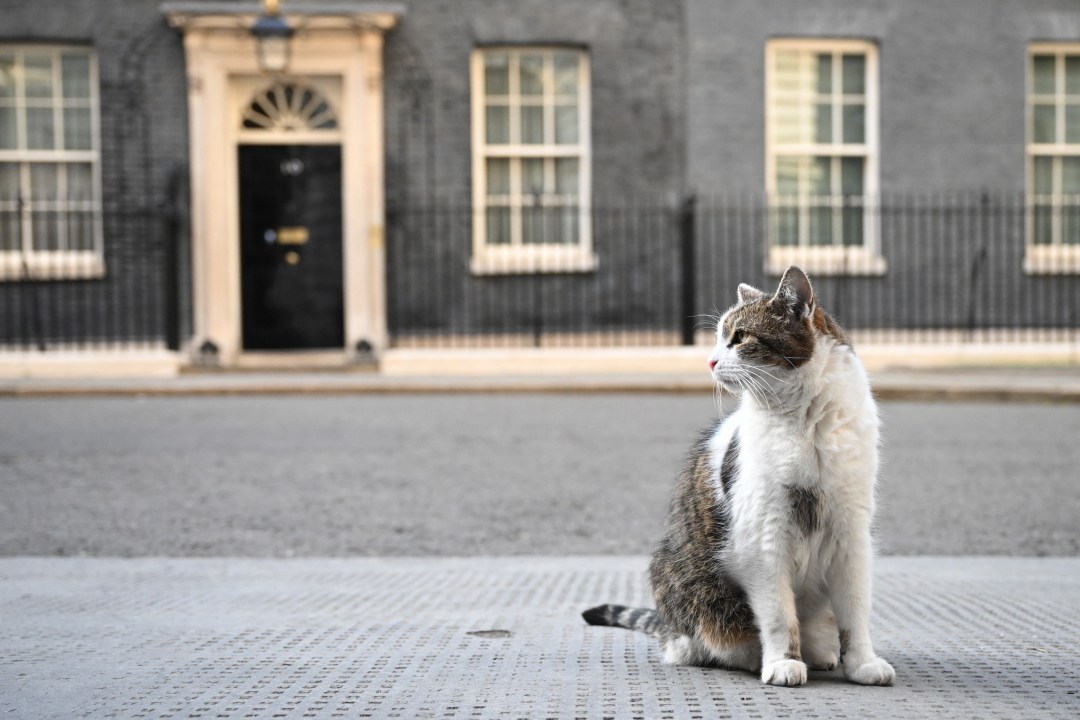
A Deltapoll survey for my book, Political Animals, suggests almost half of people in the UK know Larry, the Downing Street cat – a level of name recognition for which many backbenchers would kill. And woe betide those who mess with the political animals: Ian Murray MP called Larry ‘a little shit’ as Scotland secretary. In the recent cabinet reshuffle, Murray was out. Larry, in contrast, can laze around the cabinet table any time he chooses.


